

The full-back used to be the position you were moved to when you were not quite quick enough to be a winger or quite good enough to be a centre-back. That is no longer true, and the change is measurable rather than merely fashionable. The attacking full-back is now expected to supply the width, start the build-up and sometimes stand in central midfield, all in the same match. Tournament analysis from FIFA and UEFA shows where those jobs came from and what they cost.
Updated October 2026. Figures below are from published tournament and league analyses, named in the sources.
Why the width moved to the defenders
The starting cause was the winger moving inside. Once a wide forward spends most of the match in the inside channel looking to shoot or combine, somebody has to occupy the touchline, and the nearest player is the full-back. UEFA’s technical analysis of recent Champions League seasons describes that relationship directly: full-backs come inside to combine with wingers, or run behind them to open the inside channel for the winger to use.
The idea then went a step further. In a 2025/26 round of 16 tie between Manchester City and Real Madrid, UEFA’s observers recorded Madrid using what they called triple width, with midfielders stepping into wide areas alongside the full-back and the winger. Fifty-four per cent of the first-half receptions by two Madrid midfielders came in the two widest zones of the pitch. Width stopped being one player’s job and became a structural choice.
6 shifts that made the attacking full-back
- Width transferred from the winger. As wide forwards drifted inside, the touchline became the defender’s responsibility.
- The inverted full-back. Rather than overlapping, the full-back steps into the half-space or central midfield to create an overload where the opposition is strongest.
- The false full-back. UEFA’s 2020/21 analysis described attacking midfielders dropping into the wide defensive slot to start attacks from there, while a defender such as Joao Cancelo moved centrally instead.
- Build-up from the goalkeeper. UEFA recorded 44 per cent of goal kicks not leaving the penalty area in 2022/23, against 24 per cent in 2019/20. Short restarts need two defenders who can receive under pressure.
- The wing-back in a back three. One study of professional league matches found wide defenders cover their highest sprinting distances in formations with only three players in the back line.
- A narrower default position. At the FIFA Club World Cup 2025, full-backs on average received the ball 10 metres inside the sideline, 1.6 metres narrower than at the 2022 World Cup.
What the inverted role is actually for
FIFA’s analysis of the 2025 Club World Cup put numbers on the inverted variant. Both finalists, Chelsea and Paris Saint-Germain, used it consistently, as did Manchester City and Bayern Munich, while Real Madrid and Pachuca used it selectively. Inverted full-backs recorded 23.1 per cent more receptions in the inside and central channels than full-backs playing the traditional wide role. Offers to receive in central zones rose 7.7 per cent and actual receptions in those zones rose 7.9 per cent.
The purpose is not decoration. Moving a defender inside creates a numerical advantage in the middle, pulls an opposition player out of position to follow him, and leaves the team better placed to win the ball back immediately if the move breaks down. Pep Guardiola summarised the logic to UEFA in seven words: “The big concept is we defend with the ball.”
The real risk, and how sides cover it
Everything above has the same cost. A defender standing in central midfield or level with the opposition full-back is not standing in the space behind him. That space is exactly where a counter-attack wants to go, and the quickest way to reach it is a single pass. Teams accept the risk and manage it in three ways: keeping the ball long enough that the transition rarely happens, leaving a rest-defence of two or three players who never join the attack, and choosing the inverted side carefully so the remaining wide defender is the faster one.
Physical data suggests the load is not evenly spread either. A study of 244 Premier League players across 50 matches in the 2018/19 season, using roof-level camera tracking and a 19.8 km per hour threshold, found full-backs covered 618 metres of high-intensity distance on average, 34 per cent less than the wider category of wide defensive players at 830 metres, while wing-backs covered about 15 per cent more. The role you are given changes the running you do, which is why squads now carry different kinds of wide defender rather than two interchangeable ones.
What it means if you watch, coach or scout
The attacking full-back is also the clearest example of why single positional labels have stopped being useful. Two players listed identically on a team sheet can be given opposite instructions in the same match.
Watch where the full-back stands when his own goalkeeper has the ball, not when his team is attacking. That first position tells you which of the six shifts above the coach has chosen. Then watch the other side of the pitch, because inverted roles are almost never symmetrical. For related reading, semi-automated offside explains how the technology judges the runs these players make, how football transfer fees work covers why versatile defenders have become expensive, and why goals come in added time is partly a story about tired wide players.
Common questions
What is an inverted full-back? A wide defender who moves into the half-space or central midfield in possession instead of overlapping the winger, creating a central overload and a tighter shape to defend counter-attacks.
What is the difference between a full-back and a wing-back? A wing-back plays in a back three or five and is expected to provide width for the whole length of the pitch. Published tracking data shows wing-backs cover more high-intensity distance than full-backs.
Why do modern full-backs take so many touches in build-up? Because short goal kicks have become standard. UEFA recorded 44 per cent of Champions League goal kicks not leaving the penalty area in 2022/23 against 24 per cent in 2019/20, which puts the ball at a defender’s feet.
Does the attacking full-back weaken a defence? It moves a defender away from the space behind him, which is where counter-attacks aim. Teams offset it with a rest-defence that stays back, sustained possession, and by inverting the side with the faster cover.
Which teams used inverted full-backs most recently? FIFA’s Club World Cup 2025 analysis identified Chelsea, Paris Saint-Germain, Manchester City and Bayern Munich as consistent users, with Real Madrid and Pachuca using the role selectively.
Sources and further reading
Where the figures and rules above come from, so you can check them:
- Receiving positions, inverted full-back receptions and central offers at the Club World Cup 2025: FIFA Training Centre, the emerging positioning of the inverted full-back
- False full-backs, full-backs in midfield and the Guardiola quotation: UEFA technical report, false full-backs
- Goal kicks kept inside the area, and distance covered by sides playing full-backs high: UEFA, 2022/23 Champions League technical report overview
- Triple width and wide receptions by midfielders in 2025/26: UEFA, Champions League performance insights
- High-intensity distance by positional and tactical role in the Premier League: Contextualised high-intensity running profiles of elite football players
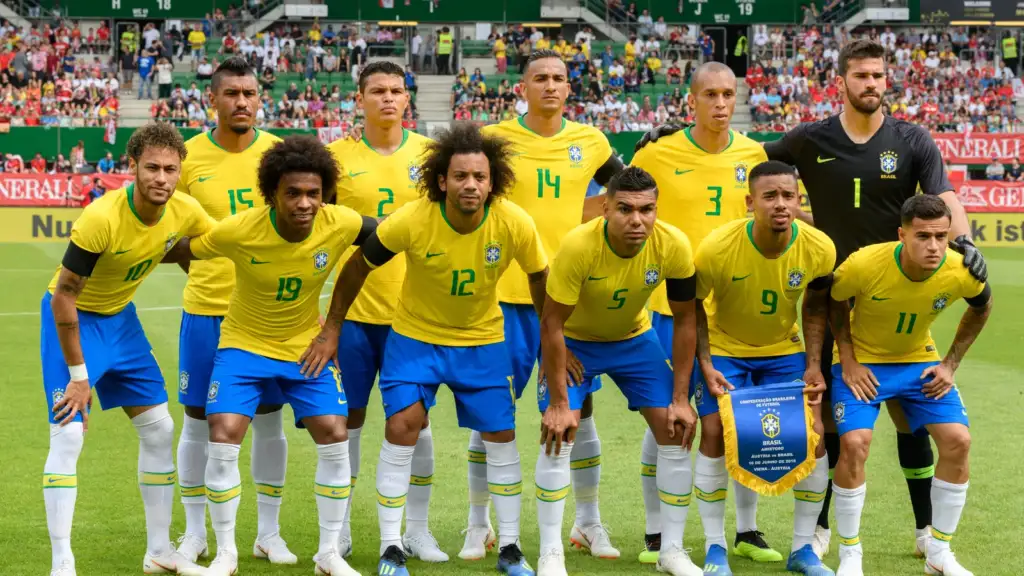
Photo credit: 20180610 FIFA Friendly Match Austria vs. Brazil Gruppenfoto Brasilien 850 0016 by Granada, CC BY-SA 4.0, via Wikimedia Commons.


Join the discussion