

US presidential elections are decided by a count of electoral votes cast by state, not by a national vote total, and almost every misunderstanding about the system starts there. The process has a fixed shape set by the Constitution and by Title 3 of the United States Code: voters choose electors, electors meet in their own states and vote, and Congress counts those votes in January. What follows is the sequence, the deadlines, and what happens when nobody reaches a majority.
Updated October 2026. This describes the process only and takes no position on any party, candidate or policy.
The Electoral College in plain terms
The National Archives, whose Office of the Federal Register administers the process, puts the arithmetic simply: the Electoral College consists of 538 electors, and a majority of 270 electoral votes is required to elect the President. Each state has the same number of electors as members of its congressional delegation, meaning one for each member of the House of Representatives plus two senators. The District of Columbia is allocated three electors and treated like a state for this purpose under the 23rd Amendment.
The Archives is also direct about the consequence: the President is not chosen by a national popular vote, and electoral vote totals determine the winner rather than any plurality in the national count. It records that the two results have diverged in the 1876, 1888, 2000 and 2016 elections. The body itself is best understood as a process rather than a place, since the electors never meet together in one room. Everything else about US presidential elections hangs off that structure.
7 simple steps in US presidential elections
- Candidates get on state ballots. Ballot access is controlled by each state under state law, even for federal office. The Federal Election Commission administers campaign finance law and states plainly that it has no jurisdiction over voting, election results or the Electoral College.
- Parties choose slates of potential electors. Before the general election each party in each state picks a slate, usually at a state convention or by a vote of the party central committee, so every candidate has their own unique slate.
- Election Day. The general election is held every four years on the Tuesday after the first Monday in November. A vote for a presidential candidate is a vote to appoint that candidate’s slate of electors in your state.
- States certify and issue Certificates of Ascertainment. Title 3 requires states to issue and send these at least six calendar days before the electors meet. The 2022 Electoral Count Reform Act added an expedited process, at 3 U.S.C. section 5, for resolving disputes in time to meet that deadline.
- Electors meet and vote. The meeting takes place in each state on the first Tuesday after the second Wednesday in December, with separate ballots for President and Vice President recorded on Certificates of Vote.
- Certificates travel to Washington. Electoral votes must be received by the President of the Senate and the Archivist no later than the fourth Wednesday in December.
- Congress counts, then the winner is sworn in. Congress meets in joint session on 6 January to count the votes, and the President-elect and Vice President-elect take the oath at noon on 20 January.
The 2024 cycle shows the pattern with real dates: Election Day on 5 November 2024, Certificates of Ascertainment by 11 December, electors voting on 17 December, votes due by 25 December, the count on 6 January 2025 and inauguration on 20 January 2025.
Winner take all in US presidential elections, and two exceptions
Most states award every elector to whoever wins the statewide popular vote. The National Archives records that 48 of the 50 states and the District of Columbia use winner takes all, and gives California as the illustration: all 54 of its electoral votes go to the state winner even if the margin is 50.1 percent to 49.9 percent.
Maine and Nebraska work differently. In both, the statewide winner receives two electors and the winner of each congressional district receives one, which permits those states to split their electors between candidates. This is why campaign attention sometimes falls on a single district rather than a whole state.
Are electors obliged to follow the vote?
There is no constitutional provision or federal law requiring electors to vote according to their state’s popular result. Some states require it by law, and some electors are bound by pledges to their party. The National Archives notes that the Supreme Court decided in 2020 that states can enact requirements on how electors vote, and that some state laws provide for so called faithless electors to be fined, or to have an invalid vote disqualified and replaced by a substitute elector. On qualifications, Article II bars senators, representatives and holders of an office of trust or profit under the United States from serving as electors.
What happens if nobody reaches 270
The 12th Amendment takes over. If no presidential candidate wins at least 270 electoral votes, the House of Representatives elects the President from among the three candidates with the most electoral votes, voting by state with each state casting one vote. The District of Columbia does not vote, because it has no voting members in the House. If no vice presidential candidate reaches 270, the Senate chooses between the two leading candidates, with each senator casting one vote.
Objections during the January count are also constrained. They must be in writing and signed by at least one fifth of the members of the House and one fifth of senators, and only two grounds are acceptable: that the state’s electors were not lawfully certified under a Certificate of Ascertainment, or that an elector’s vote was not regularly given.
Where to check your own details
Because elections are administered by states, the authoritative answer to almost any practical question is a state one. The FEC points people to state election offices for results and ballot questions, and the National Archives publishes contact routes for state officials along with the certificates each state filed. If you want the wider context for how federal decisions get made, our explainers on how US immigration policy is made and how government debt works follow the same approach of starting from official documents.
Common questions
How many electoral votes win US presidential elections? A majority of 270 out of 538. Each state has electors equal to its House members plus two senators, and the District of Columbia has three under the 23rd Amendment.
Can someone win the popular vote and lose the election? Yes. The National Archives states that electoral vote totals determine the winner rather than the national popular vote, and records that the results diverged in 1876, 1888, 2000 and 2016.
When do the electors actually vote? In their own states on the first Tuesday after the second Wednesday in December. In the 2024 cycle that was 17 December 2024, with the congressional count on 6 January 2025.
Which states split their electoral votes? Maine and Nebraska. The statewide winner takes two electors and the winner of each congressional district takes one, so the state can award electors to more than one candidate.
What if there is a tie at 269 to 269? Under the 12th Amendment the House elects the President from the top three candidates, voting by state with one vote per state, and the Senate elects the Vice President from the top two with one vote per senator.
Sources and further reading
Where the figures and rules above come from, so you can check them:
- Total electors, 270 majority, apportionment and the 23rd Amendment: US National Archives
- Timeline of events, certificate deadlines, objections and the 12th Amendment: US National Archives
- Selection of electors, Maine and Nebraska district method, faithless electors: US National Archives
- Winner takes all in 48 states, popular vote divergences, Electoral Count Reform Act: US National Archives
- State responsibility for ballot access and results, FEC jurisdiction: Federal Election Commission
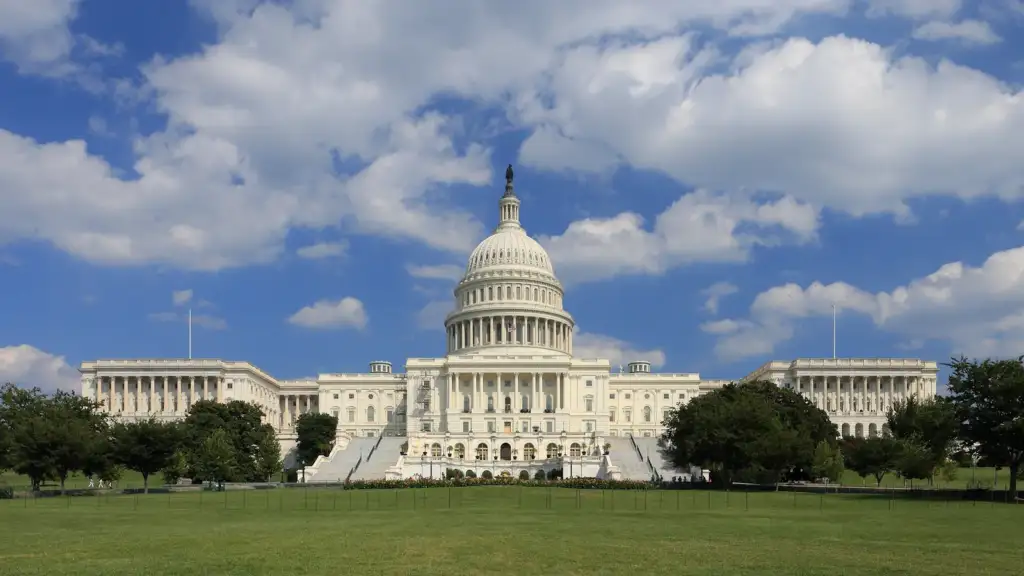
Photo credit: US Capitol west side by Martin Falbisoner, CC BY-SA 3.0, via Wikimedia Commons.



Join the discussion