

An AI certification is a vendor exam that tests whether you can use that vendor’s tools to build or operate AI systems. The market for them has grown quickly and so has the marketing around them, much of it promising outcomes no exam can deliver. This guide lists six current exams with the details published on the vendors’ own pages, then covers the part the adverts skip: how fast these credentials expire, and what the evidence says about whether they help.
Updated September 2026. Pay and hiring figures are from the sources named and change quickly.

What an AI certification actually tests
Almost all of them are platform exams. They test knowledge of one vendor’s services, not artificial intelligence in the abstract, and they are written against a product line that changes every few months. That is not a criticism, it is just what you are buying. A foundational exam checks vocabulary and concepts. An associate or professional exam checks whether you can make specific services work together.
Two things follow. First, choose the platform your employer or target employer actually uses. Second, expect the syllabus to move. Both points matter more than the badge itself.
6 AI certification exams and what they cost
Every figure below comes from the vendor page listed in the sources, read in September 2026. Prices are in US dollars before tax and vary by region.
- AWS Certified AI Practitioner (AIF-C01). Foundational. 65 multiple-choice questions in 90 minutes, $100. Aimed at people in cloud, development, data, IT or business roles who want to validate basic AI, machine learning and generative AI concepts on AWS. Offered in twelve languages, though AWS notes the Italian and German versions retire after 15 October 2026.
- AWS Certified Machine Learning Engineer Associate (MLA-C01). 65 questions in 130 minutes, $150, with at least a year of hands-on Amazon SageMaker experience recommended. An updated version, MLA-C02, is in beta with 85 questions in 170 minutes at a beta price of $75, and adds Amazon Bedrock to the recommended experience.
- Google Cloud Generative AI Leader. 50 to 60 questions in 90 minutes, $99, no prerequisites, valid for three years. Deliberately non-technical: it covers generative AI fundamentals, Google Cloud’s offerings, techniques for improving output and business strategy. Offered in English, Japanese, Spanish and Portuguese.
- Google Cloud Professional Machine Learning Engineer. 50 to 60 questions in two hours, $200, offered in English and Japanese. Google recommends three or more years of industry experience including at least one year designing and managing solutions on Google Cloud. There are no formal prerequisites.
- Microsoft Certified: Machine Learning Operations Engineer Associate (exam AI-300). 120 minutes, English only, proctored. It covers MLOps infrastructure, the model lifecycle, generative AI operations infrastructure, quality assurance and observability, and optimisation. Microsoft does not publish a single fee on the page, stating that the price depends on the country or region where the exam is proctored.
- NVIDIA-Certified Associate: Generative AI LLMs (NCA-GENL). 50 to 60 multiple-choice questions in one hour, $125, English, delivered online with remote proctoring. Entry level, valid for two years, and recertification means retaking the exam. NVIDIA asks only for a basic understanding of generative AI and large language models.
One more is worth naming if your workplace runs on Databricks: the Databricks Certified Machine Learning Associate, 48 scored questions in 90 minutes for $200, valid two years, with six or more months of hands-on experience recommended. It covers AutoML, Unity Catalog, MLflow, feature engineering and deployment.
These credentials retire faster than you expect
This is the strongest practical argument for choosing carefully. Microsoft’s Azure AI Engineer Associate certification and its AI-102 exam, for years the default Azure AI credential, now carry a retirement notice on Microsoft Learn. The replacement path runs through exam AI-103 and a certification called Azure AI Apps and Agents Developer Associate, which was in beta as of September 2026 and is built around generative AI and agent development rather than wiring up pre-built services.
Other examples sit in plain sight on the vendor pages. AWS lists the English version of MLA-C01 as available through 28 September 2026 while MLA-C02 runs in beta. NVIDIA and Databricks both expire their associate credentials after two years. Google Cloud’s Generative AI Leader lasts three. Budget for renewal, not just for the first attempt.
Does an AI certification help you get hired?
Honestly, this is contested, and anyone telling you otherwise is selling a course. What can be said with sources behind it is narrower.
- Demand for the skills is documented. Indeed Hiring Lab found the share of US job postings mentioning AI reached 4.2 percent on 31 December 2025, with 45 percent of data and analytics postings mentioning it. LinkedIn ranked AI engineer the fastest-growing US role in its January 2026 report.
- Employers still screen on degrees and experience. The US Bureau of Labor Statistics lists a bachelor’s degree as the typical entry-level education for software developers and data scientists, and a master’s for computer and information research scientists.
- No vendor claims a job or a raise. The pages for all six exams above describe skills validated, not outcomes promised. Salary uplift figures you see quoted usually come from surveys run by training providers, which have an obvious interest in the answer.
- Tools amplify existing practice. The 2025 DORA report, from nearly 5,000 technology professionals, concluded that AI magnifies an organisation’s existing strengths and weaknesses. The same is broadly true of a credential laid over an existing skill set.
How to choose one
- Pick the platform you will actually use. A credential in a cloud your employer does not run is a hobby.
- Start foundational only if you are new. If you already ship software, the $99 and $100 entry exams will teach you vocabulary you have.
- Read the skills-measured list, not the marketing page, and check the study guide for the version date.
- Check the retirement notice before you book. Several 2025 credentials have already been replaced.
- Build something alongside it. A working project you can explain does more in an interview than a badge, and the two together do more than either.
If the target is a role rather than a badge, our guides to the AI engineer job and to MLOps set out what the work involves, and our guide to becoming a product manager covers a common non-engineering route into AI teams. For the daily reality of the tools these exams cover, see the AI coding assistant guide.
Common questions
Which AI certification is best for beginners? The foundational exams are the cheapest way in: AWS Certified AI Practitioner at $100 for 65 questions in 90 minutes, or Google Cloud Generative AI Leader at $99 with no prerequisites and no technical experience assumed.
How much does an AI certification cost? Among the exams listed here, published fees run from $99 for Google Cloud Generative AI Leader to $200 for Google Cloud Professional Machine Learning Engineer and the Databricks ML Associate. Microsoft prices AI-300 by region.
How long is an AI certification valid? It varies by vendor. NVIDIA and Databricks associate credentials last two years, Google Cloud Generative AI Leader lasts three, and vendors also retire whole certifications, as Microsoft did with its Azure AI Engineer Associate.
Will an AI certification get me a job? No exam promises that, and none of the vendor pages claims it. Certifications structure learning and signal familiarity with one platform. Hiring data still shows employers weighting experience and shipped work heavily.
Do I need to code for an AI certification? Not for the leader and practitioner level exams, which assume no hands-on technical experience. Associate and professional exams such as AI-300 and the Google Cloud ML Engineer exam expect Python and real project experience.
Sources and further reading
Where the figures and rules above come from, so you can check them:
- AWS Certified AI Practitioner (AIF-C01), format and fee: Amazon Web Services
- AWS Certified Machine Learning Engineer Associate, MLA-C01 and MLA-C02: Amazon Web Services
- Generative AI Leader certification, format and fee: Google Cloud
- Professional Machine Learning Engineer, format and fee: Google Cloud
- Machine Learning Operations Engineer Associate, exam AI-300: Microsoft Learn
- Azure AI Engineer Associate, retirement notice: Microsoft Learn
- Azure AI Apps and Agents Developer Associate, exam AI-103: Microsoft Learn
- NVIDIA-Certified Associate: Generative AI LLMs, format and fee: NVIDIA
- Certified Machine Learning Associate, format and fee: Databricks
- AI mentions in US job postings, December 2025: Indeed Hiring Lab
- Announcing the 2025 DORA report: Google Cloud
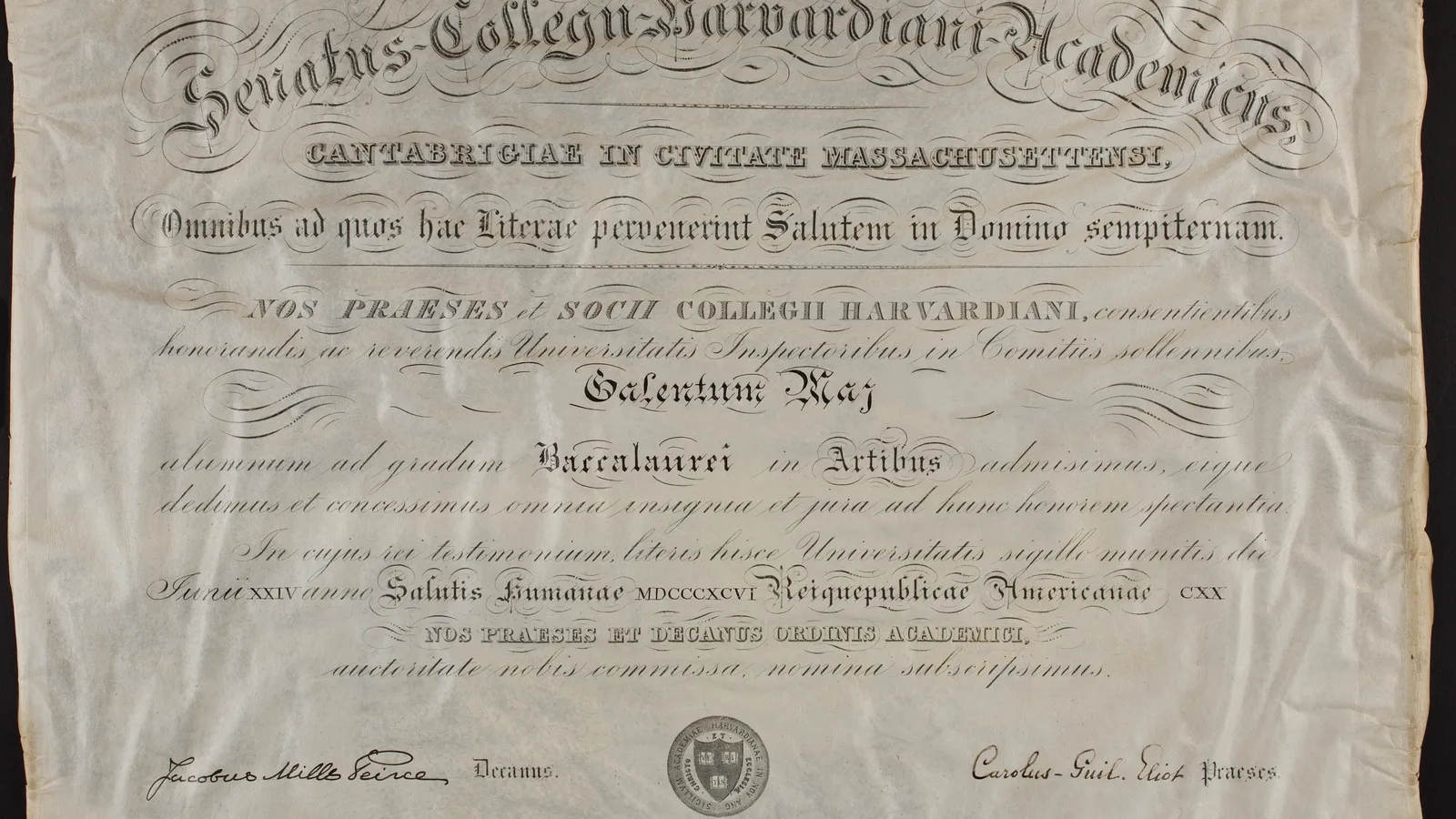
Photo credits: Diploma for a Bachelor of Arts from Harvard University, granted to Walenty Maj by Stanislav A. Starykon-Maj, CC BY 4.0, via Wikimedia Commons. Study Areas on 3rd Floor at the HCC by D00264450, CC BY-SA 4.0, via Wikimedia Commons.

Join the discussion