

Shopping for a cleaning robot means reading a wall of numbers that were not designed to be compared. Suction is quoted in pascals, navigation in acronyms, obstacle avoidance in object counts, and none of those figures comes from a common test. There is an international standard that defines how to measure what a cleaning robot actually picks up, and almost nobody quotes results against it. This guide works from the specifications manufacturers do publish and explains what each one can and cannot tell you.
Updated October 2026. Specifications quoted are the named manufacturers’ own published figures for the named models. They are not test results we produced, and they are not comparable across brands unless the test method is stated.
The standard that exists, and why you never see it
Performance testing for these machines is covered by IEC/ASTM 62885-7:2020, titled Surface cleaning appliances, Part 7: Dry-cleaning robots for household or similar use, Methods for measuring the performance. Published on 28 October 2020 and amended in June 2022, it defines test methods for removing different debris types from hard floors and carpets, removing fibre from carpets, and determining energy consumption. It replaced IEC 62929:2014, which was withdrawn on the same date.
Two things follow. First, the standard explicitly excludes safety and performance requirements: it tells laboratories how to measure, not what a good result is. Second, there is no longer a mandatory comparative label in Europe either, because the General Court annulled the vacuum cleaner energy labelling regulation, and the European Commission notes that the harmonised standards published under it are no longer valid. The ecodesign regulation remains, but the label that let shoppers compare machines does not.
8 specs worth checking in any cleaning robot
- Navigation sensor type. A spinning laser rangefinder or a time-of-flight sensor builds a map and cleans in rows; a bump-and-turn robot does not. Roborock labels its laser systems PreciSense and RetractSense, and quotes multi-level mapping for up to three floors on mid-range models.
- Obstacle recognition hardware. This is separate from mapping. Roborock’s Saros 10 lists triple structured light, an RGB camera and a lateral structured-light sensor. Cables, socks and pet accidents are what this hardware is for.
- Robot height. The single most overlooked number. The Saros 10 is listed at 7.98 cm with its laser retracted, which is the difference between cleaning under a sofa and parking against it.
- Threshold climbing. Published figures matter if your home has door bars or rugs with thick edges. Roborock quotes up to 4 cm for the Saros 10 chassis.
- Mop mechanism and pressure. A damp pad dragged behind a vacuum is not mopping. Look for an active pad and a stated downward force: Roborock quotes sonic vibration at 4,000 times a minute and up to 8 N of pressure, with the pad lifting on carpet.
- Dock functions. Self-emptying is the common one. Washing and drying the mop pad is the one that decides whether you keep using the mop: the Saros 10 dock is quoted at 176F for washing and 140F for drying.
- The pascal figure. Useful only within one brand. Roborock’s own range runs from 2,700 Pa on the Q5 series through 8,000 Pa on the Q7 L5 to 22,000 Pa on the Saros 10. Those are vendor measurements of suction pressure, not debris-removal scores under IEC/ASTM 62885-7.
- Brushes and consumables. Anti-tangle main and side brushes, and the price and availability of filters, pads and bags. This is the running cost nobody checks before buying.
What a cleaning robot specification actually tells you
Treat the numbers as three different kinds of claim. Physical dimensions, battery capacity, dust bin volume and threshold height are facts you can check with a tape measure and plan around. Sensor and dock descriptions are facts about what hardware is fitted, which is genuinely informative even though the marketing names are not standardised. Performance figures, including pascals and object-recognition counts, are vendor measurements under vendor conditions and should be read as a rough tier indicator within one product line only.
The practical consequence is that the specifications worth paying for are the structural ones. A robot that maps properly, sees cables, fits under your furniture, crosses your thresholds and cleans its own mop pad will be used. One with a bigger pascal figure and none of that will end up in a cupboard.
Where these machines genuinely fall short
- Edges and corners. A round robot with a side brush improves edges; it does not finish them.
- Thick carpet. Mopping systems lift the pad for a reason, and deep pile remains the hardest case for any floor cleaner.
- Clutter. Obstacle recognition reduces the tidying you have to do first. It does not remove it.
- Stairs. No consumer floor robot handles them, so a multi-storey home needs either a unit per floor or a carried robot and separate maps.
- Windows. Vertical-surface robots fight gravity and adhesion at the same time, which is a much harder engineering problem than driving across a floor.
A short buying order of operations
Measure the clearance under your lowest furniture and the height of your worst threshold first, then filter by those two numbers. Decide next whether you want mopping at all, because it drives the dock, the price and the maintenance. Only then compare suction, and only within a brand. If you are adding this to a wider setup, AI in the smart home covers how these devices tie together, how robots learn new tasks explains the navigation and recognition side, and home energy monitoring is useful if the running cost of always-on docks matters to you.
Common questions
Is a higher Pa figure always better? Not reliably. Pascals measure suction pressure under the manufacturer’s own conditions, and there is no requirement to publish results under the international test standard. Compare within one brand, and weight navigation and brush design at least as heavily.
Is there an official performance standard for robot vacuums? Yes. IEC/ASTM 62885-7:2020 defines methods for measuring debris removal from hard floors and carpets, fibre removal and energy consumption. It replaced IEC 62929:2014 and sets no pass or fail threshold.
Why is there no energy label on robot vacuums in Europe? The EU vacuum cleaner energy labelling regulation was annulled by the General Court, and the Commission states that harmonised standards published under it are no longer valid. The separate ecodesign regulation remains.
Does a mopping robot replace mopping? Treat it as maintenance between proper cleans. Published specifications to look for are an actively driven pad, a stated downward pressure, pad lifting on carpet, and a dock that washes and dries the pad.
What matters more than suction? Mapping navigation, obstacle recognition hardware, the robot’s height against your furniture clearance, threshold-climbing ability and the cost of consumables.
Sources and further reading
Where the figures and rules above come from, so you can check them:
- Title, scope, publication date and test methods of the current performance standard: IEC/ASTM 62885-7:2020
- The superseded standard and its withdrawal date: IEC 62929:2014
- Annulment of the vacuum cleaner energy labelling regulation and the status of its standards: European Commission, ecodesign and energy labelling: vacuum cleaners
- Published suction, laser navigation, mapping and battery figures for a mid-range model: Roborock Q7 L5 specifications
- Published suction, sensor suite, robot height, mop pressure, dock temperatures and threshold height: Roborock Saros 10 specifications
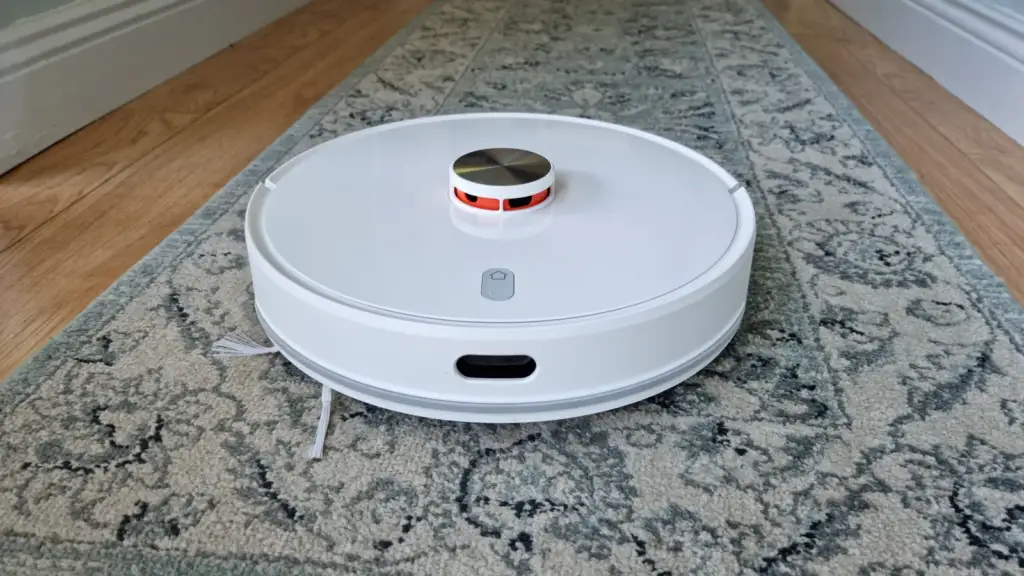
Photo credit: Robot Vacuum & Mop Combo by Xiaomi Lydsto with Self Emptying Dock and LIDAR Radar Navigation (51262170433) by Smart Home Perfected, CC BY 2.0, via Wikimedia Commons.


Join the discussion