

Dolby Atmos is the logo you see on cinema tickets, streaming menus, soundbars, phones and games consoles, and it promises sound that surrounds you from every direction, including overhead. The name covers a single idea applied in very different places: instead of mixing sound into a fixed number of speaker channels, a sound engineer places individual sounds in a three-dimensional space, and the playback system works out how to reproduce them with whatever speakers it has.
Updated September 2026. Service and device requirements change often, so check the provider’s own help page before paying for an upgrade.
What is Dolby Atmos, in plain terms?
Traditional surround sound is channel-based. A 5.1 mix, for example, is prepared as six separate feeds: front left, centre, front right, two surrounds and a subwoofer. Whatever the engineer intended is locked to those six outputs.
Atmos adds audio objects. An object is a sound, such as a helicopter or a single voice, stored together with information about where it should be in the room and how it moves. At playback, a renderer reads that position data and sends the sound to the speakers best placed to create it. The same mix can therefore play in a large cinema, a living room or a pair of headphones, each reproducing it as faithfully as its hardware allows.
The numbers behind the cinema version
Dolby’s professional specifications for cinemas describe the format at full scale:
- A mix can carry up to 128 audio tracks: a 9.1 channel bed plus up to 118 simultaneous audio objects.
- A theatre can drive up to 64 individual speaker feeds, with each speaker powered and addressed independently.
- The bed provides the familiar surround foundation, while objects move freely across the screen, the walls and the ceiling.
Because each ceiling and wall speaker can be addressed on its own, a sound can travel smoothly overhead instead of jumping between large groups of speakers.
What 5.1.2 and 7.1.4 mean
Home Atmos systems use a three-number shorthand. Dolby’s own setup guide for a 7.1.4 system explains it:
- The first number is the main speakers at ear level. In 7.1.4 that is front left, centre, front right, two side surrounds and two rear surrounds.
- The second number is the subwoofer count.
- The third number is the height speakers. In 7.1.4 there are four.
So a 5.1.2 system has five main speakers, one subwoofer and two height speakers. Dolby publishes separate 7.1.4 guides for ceiling-mounted overhead speakers, in-wall speakers and Dolby Atmos-enabled speakers, which are designed for rooms where ceiling installation is not practical. Its general advice is to choose a central seat, angle the main speakers towards it and keep them at seated ear height unless the guide says otherwise. Dolby also promotes a feature called FlexConnect, intended to make speaker placement less rigid.
4 ways to hear Dolby Atmos
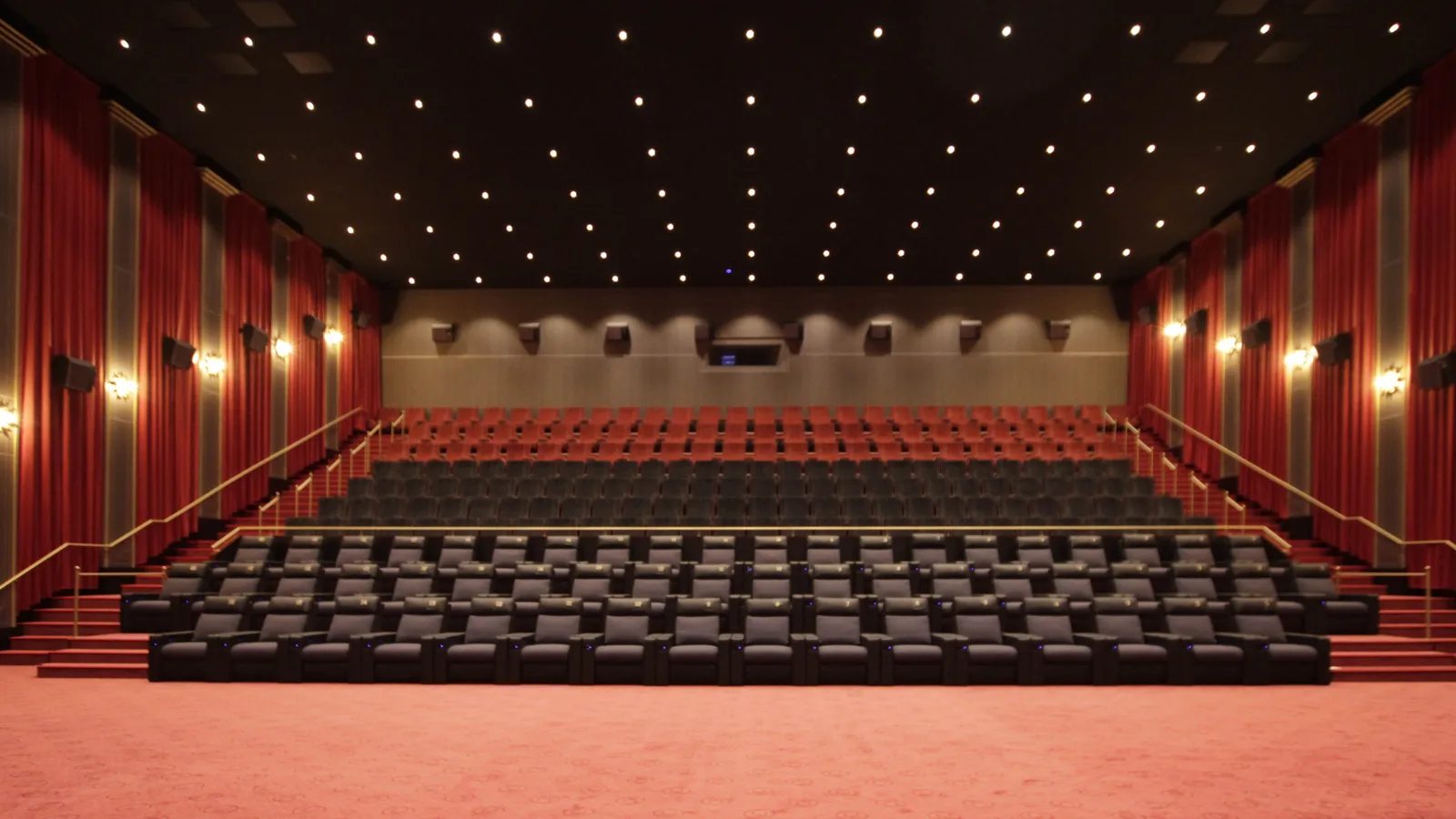
- In a cinema. Atmos screens use the full object-based system described above, with speakers on the ceiling and along the walls.
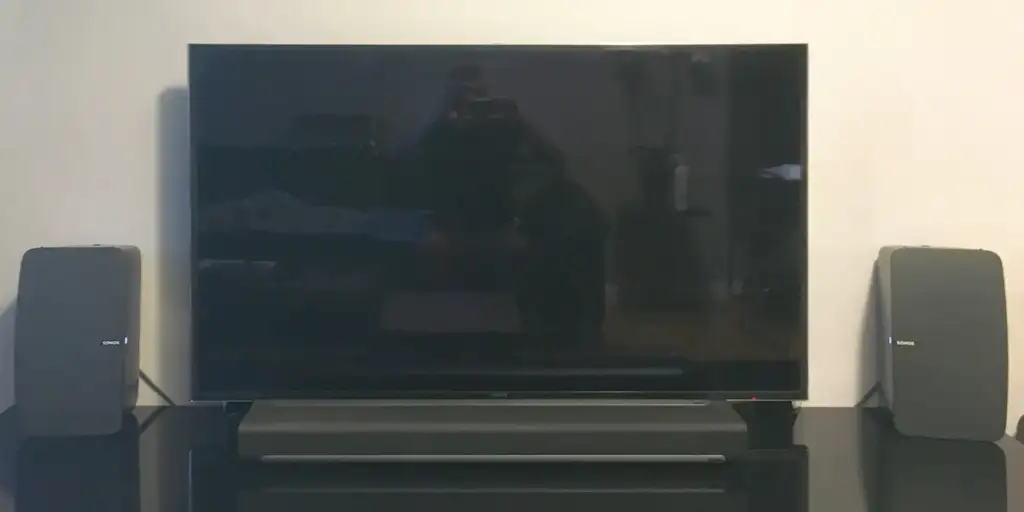
- At home through speakers, a soundbar or a TV. You need a source that outputs Atmos, content mixed in Atmos, and an audio device that can decode it.
- On headphones and phones. Music and video services process the mix for two ears so that sounds appear to come from around and above you.
- In games. Current consoles can pass Atmos game audio to compatible headphones, soundbars and home cinema systems.
Streaming video at home
Requirements are set by each service, not by Dolby. Netflix, for example, lists four conditions on its help centre: a plan that includes Ultra HD streaming, a Netflix-capable device that can play Atmos, an Atmos-capable audio system, and streaming quality set to High or Auto. Only select titles carry Atmos audio. Other services also restrict it to certain plans or titles, so read the plan comparison page before upgrading.
Licensing decides which titles appear on which service in the first place. Our guide to how streaming rights work explains why a film can be in Atmos on one platform and missing from another.
Music and headphones
Apple Music is the most widely documented example. Apple’s support page says an Apple Music subscription is required and that select songs play in Spatial Audio with Dolby Atmos. On supported Apple and Beats headphones, or compatible built-in speakers, the default Automatic setting plays those songs in Atmos. Wired headphones need the setting changed to Always On. Supported hardware includes iPhone XS and later (not iPhone SE), recent iPad and Mac models, HomePod, Apple TV 4K, Apple Vision Pro, and Android or Windows devices whose manufacturer confirms Atmos support.
Dolby’s music pages also describe Amazon Echo Studio as the first smart speaker enabled with Dolby Atmos.
Gaming
According to Dolby, Xbox Series X and Series S were the first consoles to support gaming in both Dolby Vision and Dolby Atmos. On Xbox, the Dolby Access app sets up Atmos devices and offers a free trial of Dolby Atmos for Headphones. On PlayStation 5, Dolby’s instructions are to open Settings, then Sound, choose Audio Format (Priority) and select Dolby Atmos, which applies to HDMI devices such as soundbars, TVs and home cinema systems. For competitive players the appeal is direction: hearing whether footsteps are above, behind or beside you.
If you are not hearing it
When the logo is missing or the sound seems unchanged, the cause is usually a setting rather than faulty hardware. Work through the chain from source to speaker:
- Check the plan and the title. On Netflix, the plan must include Ultra HD and streaming quality must be set to High or Auto, and the specific film or episode must have been released with an Atmos track.
- Check the console output. On PlayStation 5, the audio format priority setting has to be switched to the Atmos option.
- Check wired headphones. Apple Music only uses the spatial mix on wired headphones when the setting is changed from Automatic to Always On.
- Check every link. The streaming device, the TV and the soundbar or receiver all need to support the format, since one older device in the chain can fall back to ordinary surround sound.
Is Dolby Atmos worth it?
It depends on what you already own and watch:
- If you mostly watch on a TV’s built-in speakers, expect a modest change.
- If you add a soundbar or speakers with height channels, the difference is usually much easier to hear, particularly in films mixed for it.
- If you listen on compatible headphones, spatial music is an inexpensive way to try the format, since the hardware may already be in your pocket.
- Dialogue clarity depends heavily on the mix itself. If voices are hard to follow, turning on subtitles is often more effective than new hardware.
Common questions
What is the difference between Dolby Atmos and surround sound? Standard surround sound mixes audio into fixed channels. Atmos adds audio objects with position data, including height, and a renderer maps them to whatever speakers are available.
Do I need ceiling speakers for Dolby Atmos? No. Dolby publishes setup guides for overhead, in-wall and Atmos-enabled speakers, and headphones and soundbars can also play Atmos content, though the effect varies with the hardware.
Does Netflix have Dolby Atmos? Yes, on select titles. Netflix requires an Ultra HD plan, a device and audio system that support Atmos, and streaming quality set to High or Auto.
Can you get Dolby Atmos on headphones? Yes. Apple Music plays supported songs in Atmos on compatible headphones, and on Xbox the Dolby Access app offers a headphone version with a free trial.
What does 7.1.4 mean? Seven main speakers at ear level, one subwoofer and four height speakers.
Sources and further reading
Where the figures and rules above come from, so you can check them:
- Cinema specifications: 118 objects, 9.1 bed, 64 speaker feeds: Dolby Professional
- 7.1.4 speaker setup guide: Dolby
- Netflix requirements for Atmos audio: Netflix Help Center
- Spatial Audio in Apple Music: devices and settings: Apple Support
- Atmos gaming on Xbox: Dolby
- Enabling Atmos on PlayStation 5: Dolby
Photo credits: Svenska Bio screen by SannaHSthlm, CC BY 4.0, via Wikimedia Commons. Samsung TV UE55F9000 with Sonos wireless speakers PLAY 5 and Sonos soundbar by Pittigrilli, CC BY-SA 4.0, via Wikimedia Commons.
Atmos handles the sound. For the picture, read our guide to Dolby Vision.



Join the discussion