

Noise damage is cumulative, permanent and almost entirely preventable, which is an unusual combination. If you want to protect your hearing the useful thing is not a general warning but the published figures: how loud is too loud, for how long, and what the health authorities actually recommend. Those numbers exist, they are free to read, and they are more specific than most advice suggests. What follows sets them out with their sources, including the standard that tells your phone how to track your own exposure.
Updated October 2026. General information, not medical advice. If you have symptoms such as tinnitus, muffled hearing or ear pain, see a doctor or an audiologist.
The scale of the problem, and who counted it
The World Health Organization reports that over 1 billion young adults are at risk of permanent, avoidable hearing loss due to unsafe listening practices, and in its safe listening work puts the figure at more than 1 billion young people aged 12 to 35 at risk from recreational exposure to loud sound. It also projects that by 2050 nearly 2.5 billion people will have some degree of hearing loss, with more than 700 million requiring rehabilitation. Over 5 percent of the world’s population, around 430 million people, already require rehabilitation, including 95.1 million children aged 5 to 19.
For reference, WHO defines normal hearing as thresholds of 20 dB or better in both ears, and disabling hearing loss as loss greater than 35 decibels in the better hearing ear. On the occupational side, the United States National Institute for Occupational Safety and Health is blunt about the upside: hearing loss from routine noise exposure is 100 percent preventable. It also notes that noise exposure initially affects hearing most at frequencies around 3000 to 6000 Hz, which is why early damage is easy to miss in ordinary conversation.
The exchange rate between volume and time
NIOSH sets its recommended exposure limit at 85 dBA averaged over an eight hour workday, and treats noise as hazardous at 85 dBA or higher. The rule that makes this usable is the exchange rate: for each 3 dBA increase in noise level, NIOSH recommends reducing the exposure duration by half.
Apply that rule and a ladder falls out. If 85 dBA is safe for eight hours, 88 dBA is safe for four, 91 dBA for two, 94 dBA for one hour, 97 dBA for thirty minutes and 100 dBA for about fifteen. The practical consequence is that loudness and duration are interchangeable, and a short exposure to something very loud can cost you as much as a long day in a moderately noisy room. It also means the question to ask is never only how loud, but how loud for how long. Getting into the habit of asking both does more to protect your hearing than any single piece of equipment.
What the safe listening standard asks your phone to do
WHO and the International Telecommunication Union jointly published a global standard for safe listening devices and systems, aimed at personal audio devices and the earphones and headphones used with them. Its central idea is a dosimetry function: software that tracks the level and duration of your exposure to sound as a percentage of a reference exposure, described as a sound allowance. Two modes are defined. Mode 1 for adults is 80 dB for 40 hours per week. Mode 2 for children is 75 dB for 40 hours per week.
The standard asks for three more things. A personalised listening profile that summarises your activity as a percentage of your sound allowance and gives cues for action. Volume limiting options, including automatic volume reduction when you have been listening loudly for too long and a password-protected parental volume control. And general information on safe listening and the risks of ignoring it. If your phone offers a weekly listening report or a headphone safety setting, this is the standard behind it, and it is worth switching on rather than dismissing.
6 simple habits to protect your hearing
- Turn on your device hearing protection setting. It implements the sound allowance idea, with 80 dB over 40 hours a week as the adult reference and 75 dB for children.
- Trade volume against time deliberately. Every 3 dBA louder halves the time you should spend there, so a loud hour is not a quiet eight hours.
- Use isolation instead of volume. On a train or a plane, better isolating earphones let you hear detail at a lower setting, which is the only way to win that argument.
- Carry hearing protection to loud events. Filtered earplugs reduce level across the range rather than removing the top end, which makes them easier to keep in.
- Put distance between you and the source. Standing back from speakers is the cheapest reduction available, and it costs nothing.
- Give yourself quiet recovery periods. Exposure is a daily total, so a quiet afternoon genuinely changes the figure for the day.
When to get checked
The NHS notes that gradual hearing loss in both ears is commonly caused by damage from loud noise over many years, and gives two pieces of prevention advice: do not listen to music too loudly, with the volume just high enough to hear it comfortably, and wear ear protection when exposed to loud noises. Ringing in the ears after an event, needing the television louder than other people, or struggling to follow conversation in a busy room are all reasons to arrange a hearing test rather than wait. If you are choosing equipment, our guides to choosing wireless earbuds and setting up a home cinema are worth reading with these figures in mind, and keeping earphones clean matters too, as our piece on cleaning your earbuds explains.
Common questions
How loud is too loud? NIOSH treats noise as hazardous at 85 dBA or higher and sets its recommended exposure limit at 85 dBA averaged over an eight hour workday. Above that, the safe duration falls quickly.
How long can I listen at a given volume? NIOSH recommends halving the exposure duration for each 3 dBA increase. From eight hours at 85 dBA, that gives four hours at 88, two at 91, one at 94, thirty minutes at 97 and about fifteen at 100 dBA.
What is a sound allowance? It is the measure in the WHO and ITU standard for safe listening devices: software tracks your exposure as a percentage of a reference, which is 80 dB for 40 hours a week for adults and 75 dB for 40 hours a week for children.
Does hearing damage heal? Noise induced hearing loss is treated as permanent, which is why prevention is the focus. NIOSH states that hearing loss from routine noise exposure is 100 percent preventable, and WHO describes much listening-related loss as avoidable.
How many people are affected? WHO reports that over 430 million people, more than 5 percent of the world population, require rehabilitation for hearing loss, and projects nearly 2.5 billion people with some degree of hearing loss by 2050.
Sources and further reading
Where the figures and rules above come from, so you can check them:
- Prevalence, projections, thresholds and unsafe listening figures: World Health Organization, deafness and hearing loss fact sheet
- More than 1 billion young people at risk from recreational sound: World Health Organization, Making Listening Safe
- Sound allowance, Mode 1 and Mode 2 reference exposures and device features: WHO-ITU global standard for safe listening devices and systems
- Recommended exposure limit of 85 dBA and hazardous noise definition: CDC NIOSH, noise and hearing loss prevention
- The 3 dBA exchange rate and the 3000 to 6000 Hz effect: CDC NIOSH, Understand Noise Exposure
- Causes of gradual hearing loss and prevention advice: NHS
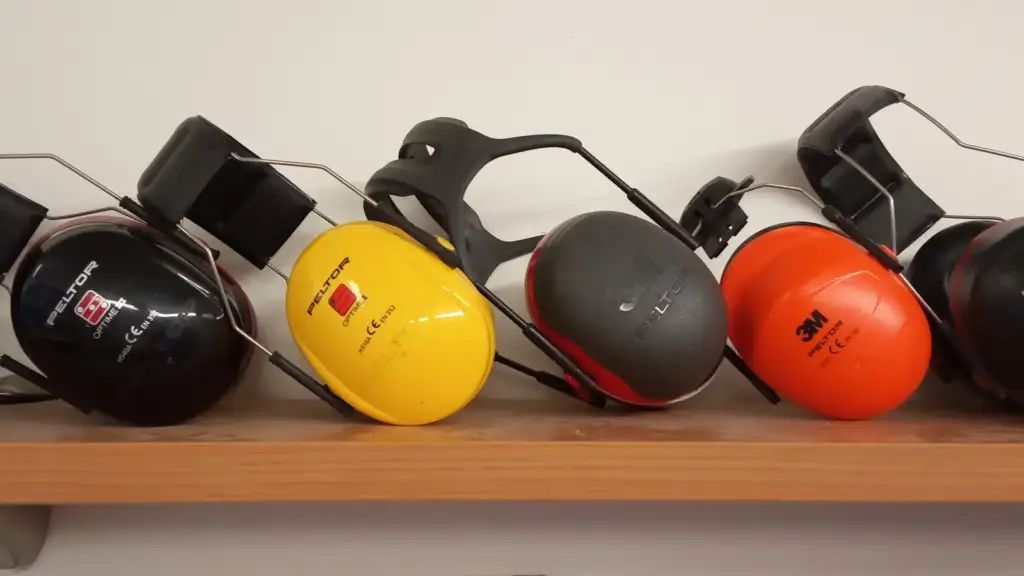
Photo credit: Peltor earmuffs by JiriMatejicek, CC BY-SA 4.0, via Wikimedia Commons.
Thunder is a warning as well as a noise. Our guide to a severe thunderstorm watch covers when to go indoors.

Join the discussion