

Wireless earbuds are marketed on the parts that are easy to put on a box: codec names, driver sizes, decibel claims about noise cancelling. The things that determine whether you still like them in two years are duller. Do they seal in your ears. Does the battery survive daily charging. Can you listen at a volume that will not cost you hearing. This guide sticks to specifications and health guidance you can verify, and ignores the parts nobody can measure for you.
Updated October 2026. General consumer information, not medical advice; speak to a clinician about any hearing concern.
Fit and seal come before every wireless earbuds specification
Everything an in-ear design does acoustically depends on a seal. Without one, bass leaks out, perceived volume drops, and you compensate by turning the volume up. Active noise cancelling depends on the same seal, because the passive block provided by the tip is what the electronics build on top of. This is why two people can review the same product honestly and disagree completely.
Treat the included tip sizes as a specification, not an accessory. More sizes, and materials beyond plain silicone, raise the odds that one of them fits you. Then test by walking, chewing and talking rather than sitting still. If you can hear your own footsteps loudly, the seal is working; if the sound thins out when you move your jaw, it is not.
Water, dust and the rating that describes them
The IP code on the box comes from IEC 60529, a standard whose scope is the classification of degrees of protection provided by enclosures for electrical equipment. The first digit covers solid objects including dust, the second covers water. Apple, for example, lists AirPods Pro and their charging case as dust, sweat and water resistant at IP57.
Read which parts of the product the rating covers. Manufacturers often rate the buds and the case differently, and a rating describes a laboratory test, not a promise about swimming. For gym and rain use, any rating with a water digit of 4 or above is the practical threshold. For anything more demanding, look for an explicit statement from the maker rather than inferring from the number.
Codecs matter less than the marketing suggests
Codec arguments consume a great deal of attention for a small share of the result. What is genuinely new is LE Audio and its LC3 codec, which the Bluetooth special interest group introduced alongside multi-stream audio and the Auracast broadcast feature. The claim it makes for LC3 is specific: “Extensive listening tests have shown that LC3 will provide improvements in audio quality over the SBC codec included with Classic Audio, even at a 50% lower bit rate”, according to Manfred Lutzky of Fraunhofer IIS.
Two practical points follow. First, a codec only helps if both the phone and the buds support it, so check the phone side as well. Second, a better codec cannot repair a poor seal or a heavily compressed streaming tier. Spend the attention on fit and on your source quality before you spend it on acronyms. If spatial formats interest you, our explainer on Dolby Atmos covers what the format does and does not require.
Volume, hearing and the limits health bodies actually publish
This is the section that deserves more weight than it usually gets. The World Health Organization states that over 1 billion young adults are at risk of permanent, avoidable hearing loss from unsafe listening practices. The WHO-ITU global standard for safe listening devices is more concrete still: it defines a sound allowance built on two reference exposures, Mode 1 for adults at 80 dB for 40 hours per week and Mode 2 for children at 75 dB for 40 hours per week.
The standard also sets out what a device should offer: tracking of level and duration as a percentage of that allowance, a personalised listening profile, cues for action, automatic volume reduction and parental volume limits. Several phones now implement parts of this, so the feature to look for is not a decibel figure on a box but whether your phone and buds will report your exposure back to you. Good noise cancelling helps here for an indirect reason: it lowers the volume you need in order to hear anything on a train. Our guide to protecting your hearing goes further into the behaviour side.
A related development is worth knowing. The United States Food and Drug Administration authorised over-the-counter hearing aids for use by people aged 18 and over to help with perceived mild to moderate hearing loss, and notes that they are limited in maximum output and may not be adequate for more severe loss. Some mainstream wireless earbuds now carry authorised hearing test and hearing aid features, which blurs the line between a consumer accessory and a medical device.
7 checks before you buy wireless earbuds
- Count the tip options. More sizes and materials mean a better chance of a seal, and the seal governs bass, volume and noise cancelling.
- Test fit in motion. Walk, chew and talk. A seal that survives sitting still and fails on a commute is not a seal.
- Check which parts the IP rating covers. Buds and case are often rated separately, and the rating reflects a defined test, not real weather.
- Match the codec on both ends. LE Audio and LC3 need support in the phone as well as the buds, and a codec cannot fix a leaky fit.
- Look for exposure tracking, not decibel claims. The WHO-ITU reference points are 80 dB over 40 hours a week for adults and 75 dB for children; a device that reports your dose is more useful than one that quotes a peak.
- Read the battery service terms before you buy. Apple states that its warranty does not cover accidental damage or batteries that wear down from normal use, with replacement under AppleCare once capacity drops below 80 percent.
- Check hearing features if you need them. Authorised hearing test and hearing aid functions are now a genuine differentiator for some adults, and are not a substitute for an audiologist.
Expect the battery to be the end of the product
Published figures show how little capacity there is to lose. Apple lists AirPods Pro at up to 8 hours of listening with noise cancelling on, 7.5 hours with spatial audio and head tracking, and up to 24 hours with the case. Cells that small, charged daily, degrade visibly within a couple of years, and the battery is not user-replaceable in most designs. That makes the service policy part of the purchase decision rather than an afterthought, and it makes basic upkeep worth the effort; our guide to cleaning your earbuds covers the part you can control.
Common questions
Do expensive wireless earbuds sound better? Up to a point, and only if they fit. Above a modest price the differences are mostly in noise cancelling, microphones and software. A cheaper pair that seals properly will outperform a costly pair that does not.
How long should a pair last? Plan on a few years and treat the battery as the limiting part. Cells this small lose capacity with daily charging, and Apple states that its warranty does not cover batteries that wear down from normal use.
What volume is safe? The WHO-ITU standard for safe listening devices uses 80 dB over 40 hours a week as the adult reference exposure and 75 dB for children. The useful feature is a device that tracks your dose against that allowance rather than a single volume number.
Does the codec matter? Less than fit and source quality. LE Audio’s LC3 is claimed to improve on SBC even at half the bit rate, but both your phone and your buds have to support it before you hear any of that.
Can earbuds work as hearing aids? Some now include features authorised by the FDA for adults aged 18 and over with perceived mild to moderate hearing loss. That is not the same as a fitted device, and anyone with a hearing concern should see a clinician.
Sources and further reading
Where the figures and rules above come from, so you can check them:
- Sound allowance, Mode 1 at 80 dB and Mode 2 at 75 dB over 40 hours per week, and recommended device features: WHO-ITU global standard for safe listening devices and systems
- Risk to young adults from unsafe listening practices: World Health Organization, deafness and hearing loss
- LE Audio, LC3, multi-stream audio and Auracast, including the LC3 bit rate claim: Bluetooth Special Interest Group
- Battery life figures and the IP57 rating: Apple AirPods Pro technical specifications
- Warranty wording on battery wear and replacement below 80 percent capacity: Apple AirPods repair and service
- Eligibility for over-the-counter hearing aids and their output limits: US Food and Drug Administration
- Scope of the IP code for enclosures: IEC 60529, International Electrotechnical Commission
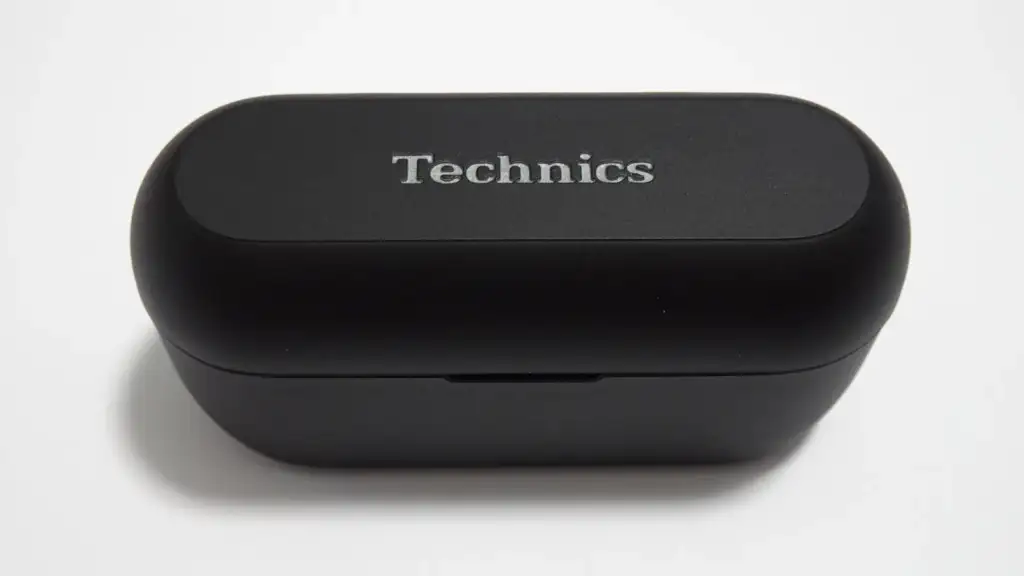
Photo credit: Technics-EAH-AZ60M2 09 by RuinDig/Yuki Uchida, CC BY 4.0, via Wikimedia Commons.

Join the discussion