


University chancellors attract attention out of all proportion to what the job can actually do, because the people who stand for the post are often famous and the contests are sometimes genuinely competitive. The confusion is understandable: the same word describes a ceremonial figure elected by graduates in one country and the salaried chief executive of a campus in another. This guide sets out the five routes by which university chancellors are chosen, what each electorate actually is, how long the term runs, and where the real operational authority sits.
Updated October 2026.
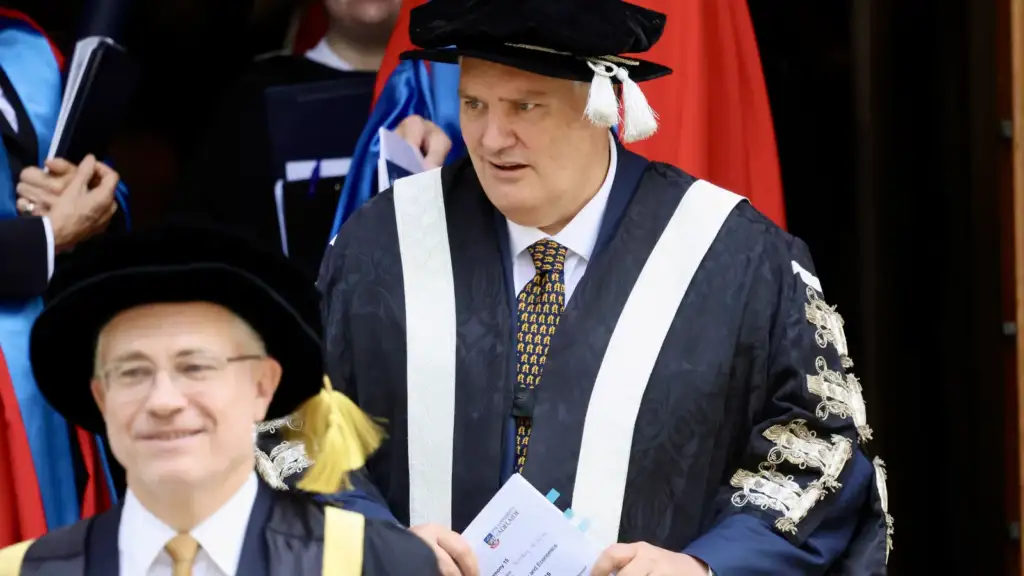
The title means two different jobs
In the British tradition the chancellor is the titular head and the vice-chancellor runs the institution. The University Grants Commission’s handbook for vice-chancellors describes the same split in India, calling the chancellor or visitor the “titular head whose function is largely ceremonial”, while the vice-chancellor is the principal executive and de facto head of the university.
In the United States the words are effectively swapped. University of California Bylaw 31 makes campus chancellors the executive heads of their campuses, appointed by and serving at the pleasure of the Board of Regents on the recommendation of and in consultation with the President. They are responsible for the organisation, internal administration, operation, financial management and discipline of their campuses, oversee faculty and staff appointments, act as principal spokespersons, and preside at formal functions unless they delegate that. That is a chief executive, not a figurehead. So the first question to ask about any chancellor is which of the two jobs the title describes in that system.
5 simple routes by which university chancellors are chosen
- Election by graduates. Oxford opens the vote to Convocation, which is made up of graduates whose degrees have been conferred, members of Congregation, and retired staff who were members of Congregation when they retired. The University put the eligible electorate at more than 250,000 people for the 2024 contest.
- Election by a degree-holding senate. Cambridge votes through its Senate, which comprises holders of any Master’s or doctoral degree of the University, or the degree of Bachelor of Divinity, plus the current membership of the Regent House. A nomination needs the written, signed support of at least 50 Senate members.
- Election by students. The ancient Scottish universities elect a rector rather than choosing a ceremonial chancellor by the same route. At Glasgow the Rector is elected by the student body every three years and is, ex officio, chair of the University Court, the body that administers the University’s resources.
- Ex officio, by virtue of another office. The UGC handbook records that the President of India is ex officio Visitor of all Central Universities and the Governor of a state is Chancellor of all universities in that state. Nobody campaigns; the post follows the office.
- Appointment by the governing board. Under University of California Bylaw 31 the Regents appoint chancellors and they serve at the Board’s pleasure. There is no electorate at all, which is consistent with the role being an executive one.
What an election actually looks like
Published results are the fastest way to see how thin the mandate can be. Oxford announced on 27 November 2024 that Lord Hague of Richmond had been elected, the 160th recorded holder of a post the University says dates back at least 800 years. Voting ran online in two rounds. In the first round 23,008 members of Convocation voted across 38 candidates. In the second round, held under the Alternative Vote among a shortlist of five, 24,908 members voted, with 12,609 for Lord Hague and 11,006 for Lady Elish Angiolini. Set those turnout figures against an electorate of more than 250,000.
Cambridge published a fuller record. Voting took place between 9 and 18 July 2025, online and in person on 12 and 16 July, under Single Transferable Vote regulations with ten candidates. There were 25,054 valid votes and 16 invalid ones, giving a quota of 12,527. No candidate reached the quota on the first count, where Dr Mohamed Ali El-Erian led on 4,818 to Lord Smith of Finsbury’s 4,500 and Ms Sandi Toksvig’s 4,114. After eight counts Lord Smith was elected on 10,569 to Dr El-Erian’s 8,440, with 6,045 votes non-transferable. He holds the office for ten years. Oxford’s statutes were amended in 2024 so that the Chancellor serves a fixed term of no more than ten years, which is also a change worth noting: the post used to run until resignation or death.
Who the candidates tend to be
Lord Smith’s record is representative of the type. He was Master of Pembroke College from 2015 until the end of July 2025, served as Secretary of State for Culture, Media and Sport until 2001, chaired the Environment Agency from 2008 to 2014 and the Advertising Standards Authority from 2007 to 2017. The pattern is public standing plus institutional familiarity, because the work that follows is advocacy, advisory and fundraising rather than management. If you are interested in how transferable-vote contests behave in practice, our explainer on how the Ballon d’Or is voted on covers the same arithmetic in a different setting, and how US presidential elections work shows what happens when an electorate is defined by rule rather than by interest.
What the job does not control
In the ceremonial model, almost nothing operational. The UGC handbook shows where the lever actually is: the visitor or chancellor appoints the vice-chancellor from a panel of names recommended by a search committee, typically three to five names, with the committee itself including a nominee of the visitor or chancellor. That appointment power matters. Day to day decisions about courses, staff, budgets and discipline do not sit with the chancellor, and in the Indian model the vice-chancellor carries out ceremonial duties such as convocation in the chancellor’s absence.
- Convening power, not command. Access to donors, governments and alumni networks is real; authority over departments is not.
- Appointment influence. Where the chancellor or visitor signs off the vice-chancellor from a shortlist, that is the single point where the ceremonial office touches executive reality.
- Chairing, in some systems only. A Scottish rector chairs the governing Court. A chancellor in the Oxford or Cambridge sense does not run the equivalent body.
- Long tenure, weak removal. Ten-year fixed terms are now standard at Oxford and Cambridge, and the statutes are not written around easy removal.
Common questions
Who chooses university chancellors? It depends on the system. Graduates vote at Oxford, a degree-holding Senate votes at Cambridge, students elect the rector at the ancient Scottish universities, the post is held ex officio by the Governor or President in India, and the Regents appoint campus chancellors in the University of California.
How long is a chancellor’s term? Oxford amended its statutes in 2024 so the Chancellor serves a fixed term of no more than ten years, and Cambridge elected Lord Smith of Finsbury in July 2025 for ten years. Glasgow’s Rector is elected every three years.
Is the chancellor the same as the vice-chancellor? No. In the British and Indian pattern the chancellor is the titular head and the vice-chancellor is the principal executive officer. In the United States the chancellor is often the executive head of a campus instead.
Do you have to be an alumnus to stand? Not necessarily, and the rules differ by institution. What is consistent is a nomination threshold, such as the written support of at least 50 Senate members required for the Cambridge Chancellorship.
Can a chancellor be removed? Rarely and with difficulty. The statutes are written around fixed terms and resignation rather than removal, which is one reason the move to ten-year limits mattered.
Sources and further reading
Where the figures and rules above come from, so you can check them:
- Election result, vote counts in both rounds, electorate and ten-year term: University of Oxford
- Result of election to the Chancellorship, valid votes, quota and all eight counts: Cambridge University Reporter
- Current Chancellor, date of election and career record: University of Cambridge
- Rector elected by students every three years and chairing the University Court: University of Glasgow
- Chancellor and visitor as titular heads, and appointment of vice-chancellors from a panel: University Grants Commission handbook for vice-chancellors
- Bylaw 31, duties and appointment of campus Chancellors: Regents of the University of California
Photo credit: March 2026 Graduation Ceremonies (University of Adelaide) – 19 by Yu Chu Chin, CC BY-SA 4.0, via Wikimedia Commons.



Join the discussion