

When restaurant chains expand abroad, the interesting decision is not which country to enter but who pays for it. The structure chosen governs who funds the buildings, who holds the lease, who hires the staff, who sources the ingredients and who carries the loss if the market does not respond. Company filings set all of this out in plain language, because investors need to know where the capital and the risk actually sit. This article uses those filings rather than guesswork.
Updated October 2026.
The three ownership structures, as the filings describe them
McDonald’s annual report on Form 10-K for 2025 states that of its 45,356 restaurants at year-end 2025, approximately 95 per cent were franchised, and that it operates in more than 100 countries. It names three structures: conventional franchise, developmental licence and affiliate. The split is uneven by region. Around 95 per cent were franchised in the United States, 89 per cent in the International Operated Markets, and 99 per cent in the International Developmental Licensed Markets, a segment that covers over 75 countries.
- Conventional franchise. McDonald’s states that it generally owns or secures a long-term lease on the land and building, while the franchisee pays for equipment, signs, seating and decor. Its income comes primarily from rent and royalties based on a percentage of sales, with specified minimum rent payments, plus initial fees on opening.
- Developmental licence. The licensee provides the capital, including the real estate interest, and develops and opens new restaurants. The company says it generally does not invest any restaurant capital under this arrangement and receives a royalty based on a percentage of sales.
- Affiliate. Largely the same as a developmental licence, but used in a limited number of foreign markets, primarily China and Japan, where McDonald’s also holds an equity investment and records its share of results in equity in earnings of unconsolidated affiliates.
Franchise and licence agreements generally run for 20-year terms. McDonald’s says the optimal structure for a restaurant, trading area or country depends on the availability of individuals with entrepreneurial experience and financial resources, and on the local legal and regulatory environment in areas such as property ownership and franchising. That is the whole answer to why restaurant chains expand abroad the way they do: the model follows the local legal and capital conditions.
How heavily restaurant chains lean on the model
Yum! Brands reports that at 31 December 2025, 97 per cent of its concepts’ units were operated by independent franchisees or licensees, across over 63,000 restaurants in 155 countries and territories. By division it gives KFC 33,897 units at 99 per cent franchised, Pizza Hut 19,974 units at 99 per cent, Taco Bell 9,030 units at 93 per cent, and Habit Burger and Grill 384 units at 22 per cent. The outlier is instructive: Habit is the smallest and least international brand in the group, and it is the one still largely company-operated.
Domino’s describes the international side in more detail. Its master franchise agreements generally grant the franchisee exclusive rights to develop and sub-franchise stores, plus the right to operate supply chain centres in a defined geography. Terms are generally ten years with renewal options. Agreements typically contain growth clauses requiring a minimum number of store openings within a specified period. The master franchisee pays an initial one-time franchise fee, a further fee on each new store opening, and a continuing royalty as a percentage of sales that varies by market and averaged approximately 3.0 per cent in 2025.
Why the local partner matters more than the brand
Domino’s states what it looks for in a prospective master franchisee: local market knowledge to establish and develop stores, the ability to identify and access targeted real estate sites, expertise in local laws, customs, culture and consumer behaviour, and access to sufficient capital to meet growth and development plans. Three of those four are things head office cannot supply from abroad, and the fourth is the reason the model exists at all.
That is also why restaurant chains rarely enter a market and keep it company-operated for long. Direct operation ties up capital and local management in a place where head office has the least knowledge, which is the opposite of where a listed company wants its balance sheet.
The concentration that results is visible in the numbers. Domino’s reports that its ten largest international markets accounted for approximately 66 per cent of international stores as of 28 December 2025, led by India with 2,396 stores, the United Kingdom with 1,325, China with 1,321, Mexico with 990 and Japan with 773. Stores in eight of those ten markets are operated by master franchise companies that are themselves publicly traded. Your local branch may be run by a listed company with its own shareholders and its own reporting pressures.
6 risks that sink an entry
- Property terms signed at opening optimism. Where the partner holds the real estate interest, as under a developmental licence, the lease risk is theirs and a long term signed on launch-week expectations is hard to unwind.
- Growth clauses outrunning the operation. If the agreement requires a minimum number of openings in a set period, the pressure to open can get ahead of the training and supply systems that make the openings work.
- A supply chain that cannot hold specification at volume. Master franchise agreements can include the right to operate supply chain centres, which means building that capability locally is part of the deal rather than an afterthought.
- Pricing set against the wrong competitors. Royalties are charged as a percentage of sales, so the brand owner is paid on turnover while the partner carries the margin problem if local pricing is misjudged.
- Standards enforced at a distance. The brand owner’s leverage is the agreement and its audits, with non-renewal as the ultimate sanction. In a 20-year term, that is a slow instrument.
- Legal environments that rule the model out. McDonald’s explicitly lists property ownership and franchising law as factors in choosing a structure, which is why the same brand uses different arrangements in different countries.
What the law requires before a franchise is sold
In the United States the FTC Franchise Rule defines a franchise by three elements: the right to operate a business identified with the franchisor’s trademark, the franchisor exerting or having authority to exert significant control over or provide significant assistance to the franchisee’s method of operation, and a required payment by the franchisee. Where those apply, the franchisor must give a prospective franchisee the current disclosure document at least 14 calendar days before that person signs a binding agreement or makes any payment, and seven calendar days before signing if the franchisor unilaterally and materially alters the agreement. If you want the wider trade context, see how tariffs affect prices, how food export certification works and why tech companies open offices for the same build-or-partner question in other sectors.
Common questions
Why do restaurant chains expand abroad through franchising? Because the partner supplies the capital and local knowledge. McDonald’s says it generally invests no restaurant capital under a developmental licence and receives a royalty on sales instead, and 97 per cent of Yum! Brands units are run by independent franchisees or licensees.
Why does the same chain taste different in another country? Sourcing and local regulation. Supply chain capability is built locally, and in Domino’s case master franchisees may hold the right to operate the supply chain centres in their territory.
Who sets the prices? The local operator, within the brand owner’s standards. Royalties are calculated as a percentage of sales, so the brand owner’s income tracks turnover rather than local margin.
How long do these agreements last? McDonald’s says its franchise and licence agreements generally have 20-year terms. Domino’s says its international master franchise agreements are generally ten years with options to renew.
Does the brand owner control quality? Through standards and audits, with non-renewal or withdrawal of the franchise as the ultimate sanction. McDonald’s describes adherence to its Global Brand Standards as fundamental to protecting the brand.
Sources and further reading
Where the figures and rules above come from, so you can check them:
- Restaurant count, franchised percentages by segment, the three ownership structures and 20-year terms: McDonald’s Corporation 2025 annual report on Form 10-K
- 97 per cent franchised, 63,000 restaurants in 155 countries and division unit counts: Yum! Brands 2025 annual report on Form 10-K
- Master franchise terms, growth clauses, average royalty rate and the ten largest international markets: Domino’s Pizza 2025 annual report on Form 10-K
- Definition of a franchise, 16 CFR 436.1(h): Cornell Legal Information Institute
- Obligation to furnish the disclosure document, 16 CFR 436.2: Cornell Legal Information Institute
- Franchise Rule overview and compliance resources: US Federal Trade Commission
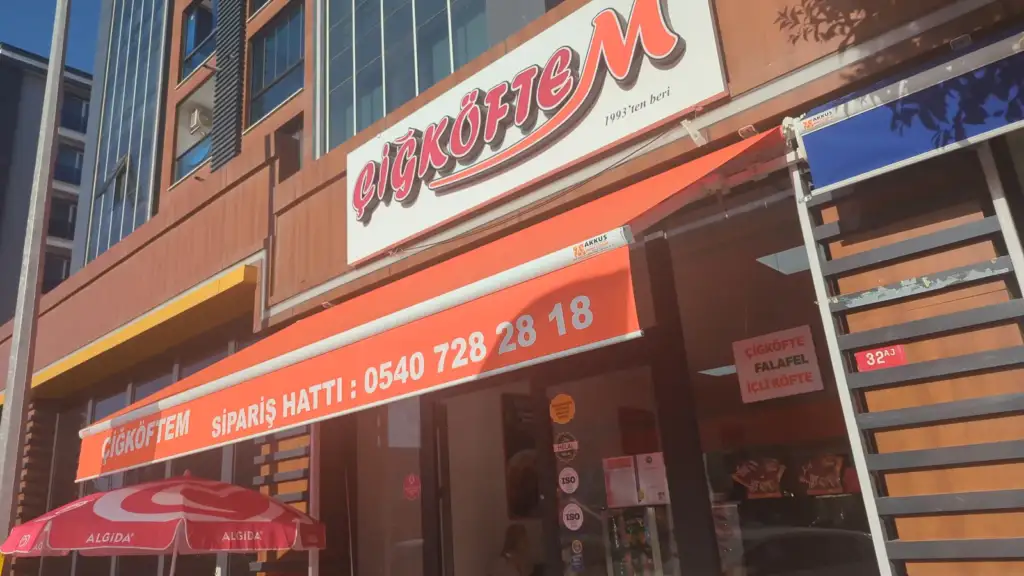
Photo credit: Storefront of Çiğköftem by Owqifh, CC0, via Wikimedia Commons.



Join the discussion