
The US winter weather forecast for 2026 and 2027 came out in October, and people immediately started asking about snow. Here is what the forecast actually says, what it cannot say, and why one word, El Nino, shapes the whole thing.
Updated October 2026. Seasonal outlooks are updated regularly, so check the official page before planning around any of this.
1. What a seasonal forecast really is
This is the part that causes most of the arguing. A seasonal outlook is not a weather forecast. It does not tell you what happens on a given Tuesday.
It tells you which way the whole season is likely to lean, compared with normal. Saying a region leans warm does not mean no cold days. It means the three months added together are more likely to finish above average than below.
2. El Nino is running this winter
El Nino is a pattern where a huge stretch of the Pacific Ocean near the equator gets warmer than usual. The ocean is so big that warming it changes where storms go across the whole planet.
NOAA Climate Prediction Center has an El Nino advisory in place. Its October 2026 discussion said a strong to very strong El Nino is likely to continue through January to March 2027, with a chance above 83 percent. That is a confident statement by seasonal forecasting standards.
3. Who is expected to be warmer
NOAA expects warmer than average temperatures across the northern United States. The strongest lean towards warmth is in the Pacific Northwest, the northern Rockies, the Midwest, the Mississippi Valley, much of the East, and Alaska.
4. Who is expected to be wetter
Wetter than average conditions are most likely across the southern tier, running from the Southwest across to the Southeast, and up the East Coast.
Drier conditions are favoured in Hawaii, much of Alaska, the northern Mountain West, parts of the Great Lakes, and the western Pacific Islands.
There is a practical consequence attached. NOAA expects drought to improve or end by the end of January across the Southwest, the Southern Great Plains, the Southeast and the East Coast.
5. Why the winter weather forecast says nothing about snow
This is the question everyone asks, and the answer is short. NOAA does not forecast seasonal snowfall totals.
The reason is simple once you hear it. Snow depends on temperature and moisture arriving at the same place at the same time, and a few degrees decides between a blizzard and ordinary rain. Nobody can pin that down three months early. Snow forecasts only become reliable a few days out.
6. Two warnings the forecast includes
The outlook itself carries two cautions, and they are worth repeating because they often get stripped out of coverage.
- Another ocean pattern, the Pacific Decadal Oscillation, is in a phase that may weaken the usual El Nino effects in some places.
- Cold outbreaks can still happen. The Climate Prediction Center noted that one or more cold spells are possible in the northwestern lower 48, even though they are unlikely to change the three month average much.
So read it as a lean, not a promise. A warm leaning winter can still hand you a brutal week in January. If a storm does arrive where you live, our guide to a severe thunderstorm watch explains how the alerts work.
How to read a winter weather forecast map
The maps that go with these outlooks confuse people, because they do not show temperatures at all. They show chances.
If your area is shaded for a 40 percent chance of being warmer than average, that is not a prediction of 40 degrees, and it does not mean a 40 percent chance of a warm day. It means that out of the three possible outcomes, warmer than normal, near normal and colder than normal, the warm one is the most likely for the season as a whole.
White or blank areas on the map are not missing data. They mean no option is clearly favoured, so the honest answer is that it could go either way.
What to actually do with this
A seasonal outlook is useful for planning, not for deciding what to wear. A few sensible uses:
- If you are somewhere leaning wetter, check drains and gutters before winter.
- If you heat your home, a warm leaning season may mean lower bills, but do not budget on it.
- For anything in the next week, ignore the seasonal map entirely and use your local forecast.
- For snow specifically, wait. Useful snow forecasts arrive a few days ahead, not months.
How often the outlook is updated
The seasonal outlook is not published once and left alone. It is reissued every month, and the El Nino discussion behind it is updated monthly too. So the version you read in October is not the final word on the season.
That matters when somebody shares a map in January that was actually made in October. Check the date on any outlook before arguing about it. A forecast that has since been revised is not proof of anything except that the forecast changed, which is exactly what forecasts are meant to do as new information arrives.
If you only remember one line from all of this, make it this one. A seasonal outlook tells you which way a whole season is leaning. It does not tell you about any particular day, and it will never tell you how much snow is coming.
Common questions
What does the winter weather forecast say for 2026-27? Warmer than average across the northern United States, wetter than average across the southern tier and East Coast, with drought easing in several regions by the end of January.
Will it snow a lot this winter? Nobody can say. NOAA does not forecast seasonal snowfall totals, because snow depends on temperature and moisture lining up on the day.
What is El Nino in simple terms? A warming of the Pacific Ocean near the equator that shifts where storms track around the world.
Does a warm forecast mean no cold days? No. It means the three months together are more likely to finish above average. Cold outbreaks can still happen.
How strong is this El Nino? NOAA said a strong to very strong El Nino is likely through January to March 2027, with a chance above 83 percent.
Sources and further reading
Where the figures and rules above come from, so you can check them:
- The seasonal outlook itself: NOAA, US Winter Outlook
- The El Nino advisory and the odds quoted above: NOAA Climate Prediction Center, ENSO Diagnostic Discussion
- What El Nino and La Nina actually are: National Weather Service, ENSO
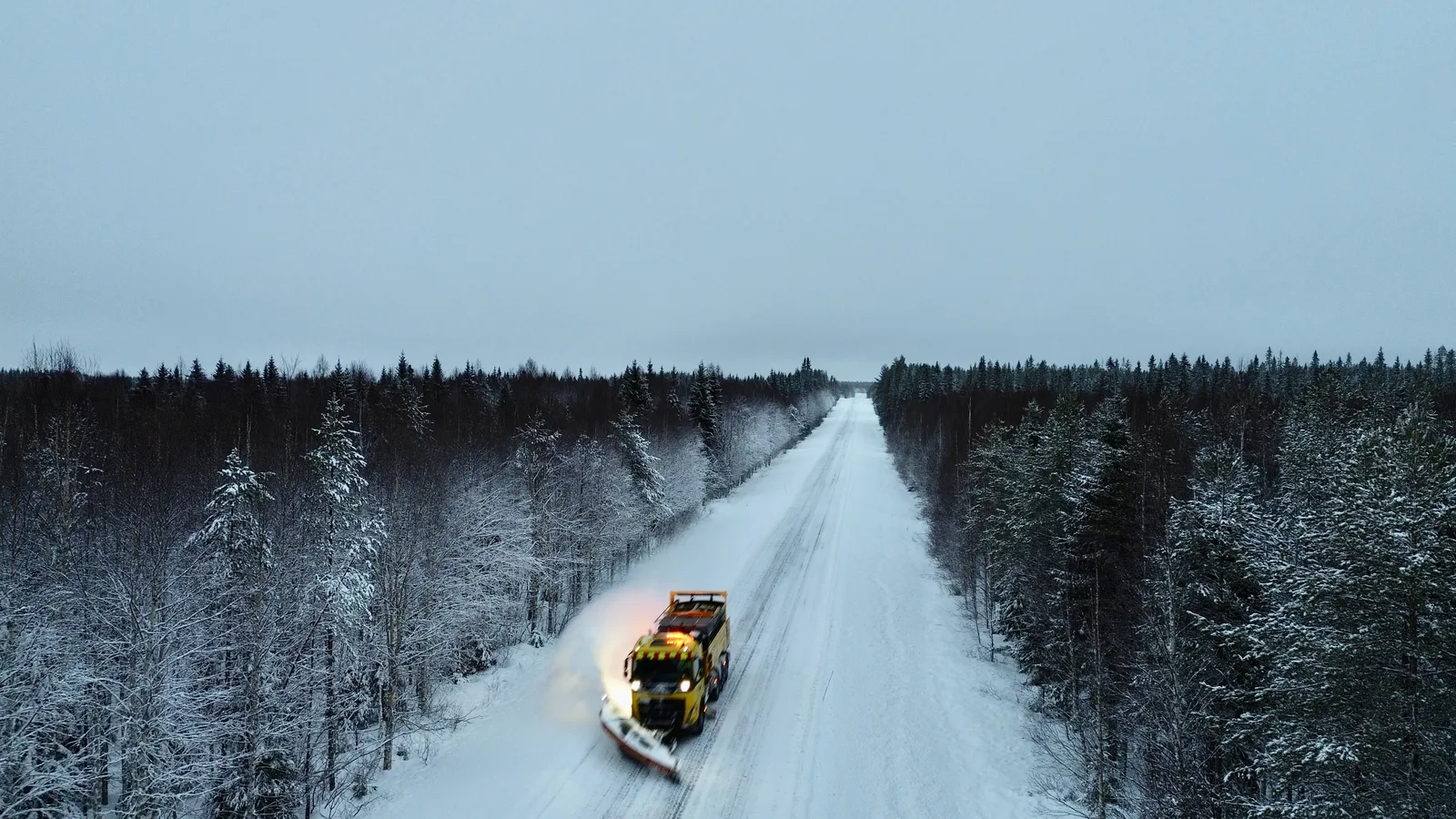
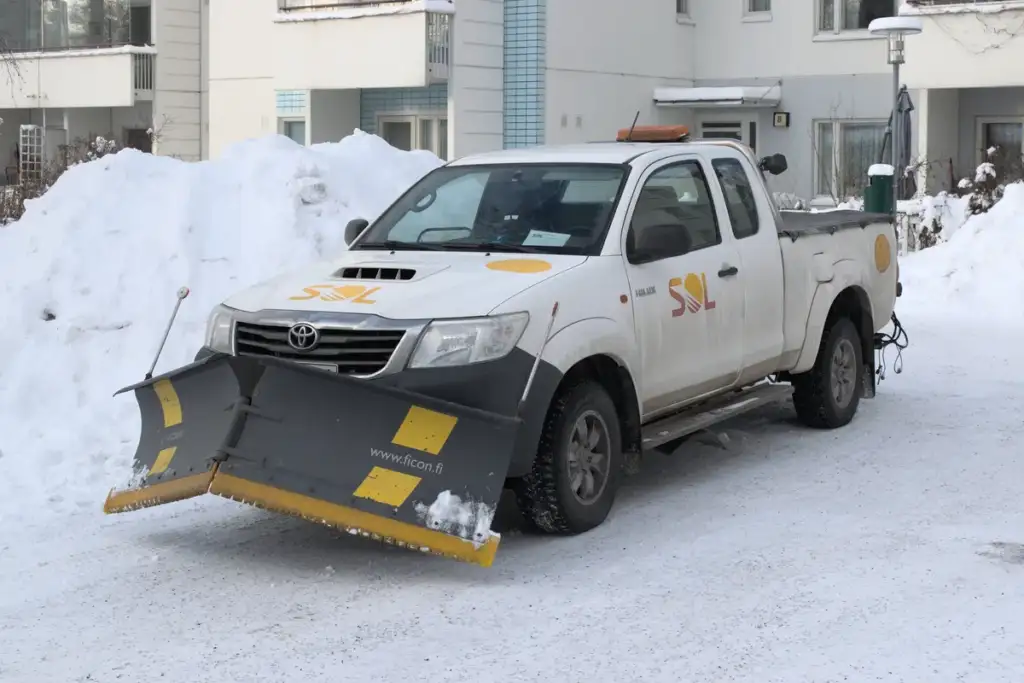
Photo credits: Snowplow in Raiskio, Lapland by YosemiteYamper, CC BY-SA 4.0, via Wikimedia Commons. A Toyota Hilux pickup truck with a snowplow 02 by Sadenäyttely, CC BY-SA 4.0, via Wikimedia Commons. Icicles on a street lamp by Sadenäyttely, CC BY-SA 4.0, via Wikimedia Commons.



Join the discussion