
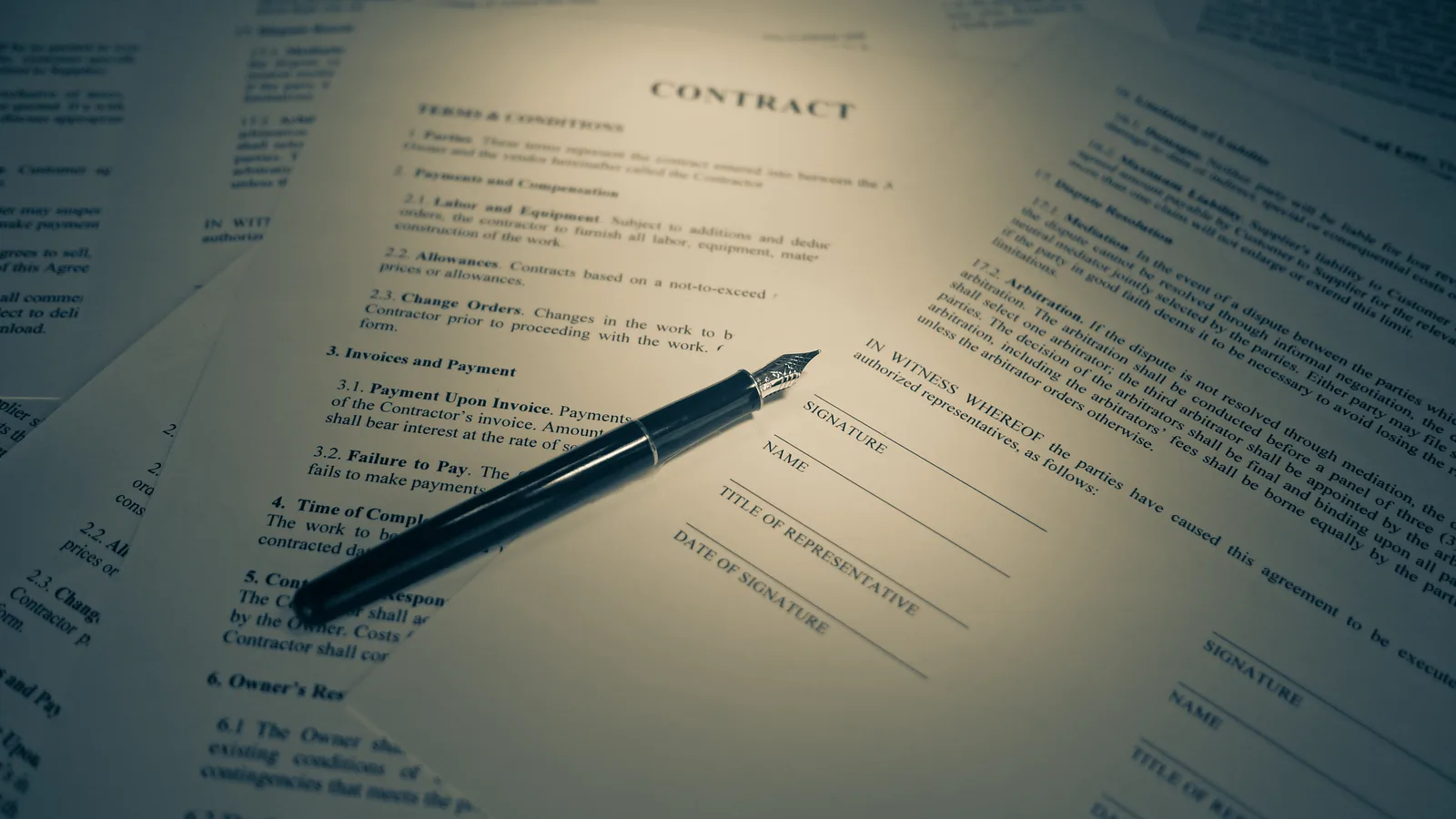
You can convert PDF to Word without paying for anything, and on most machines the tool is already installed. What nobody mentions is why the results vary so wildly. A PDF does not hold a document the way a .docx does. It holds instructions for painting marks on a page, so converting it means a program has to guess which marks were paragraphs, which were table cells and which were headings. Sometimes that guess is nearly perfect. Sometimes it is a mess, and the reason almost always sits in the original file rather than in the converter.
Updated October 2026.
What is actually inside the file
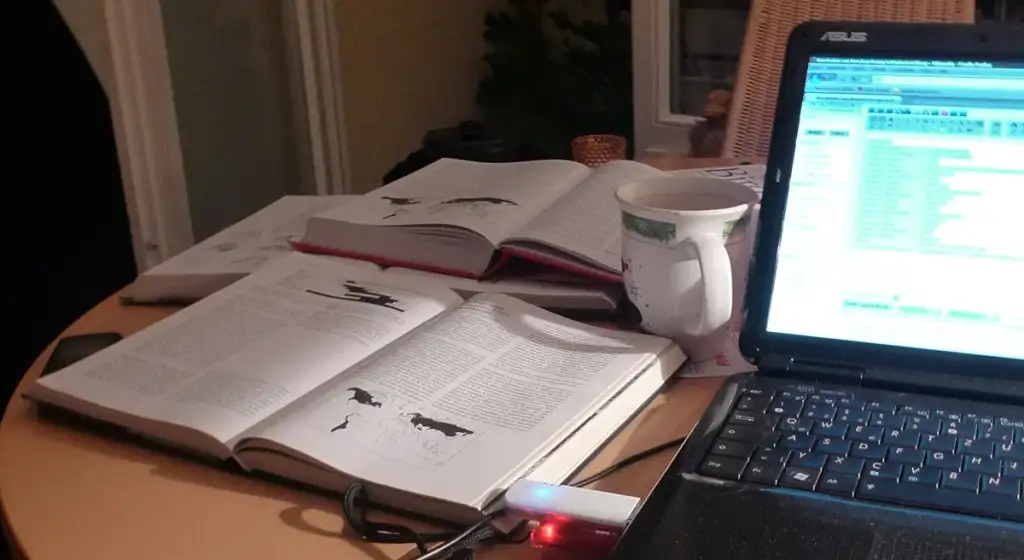
Two kinds of PDF look identical on screen. One carries real text characters, so you can select a word with the cursor. The other is a picture of a page, usually from a scanner or a phone camera, with no characters at all. That distinction explains most conversion disasters.
Even in a text-bearing PDF, structure is often missing. Microsoft is blunt about the consequence in its own support page on editing a PDF: the method works best with PDFs that are mostly text, and a page that looks like a manuscript from a copier will not be formatted well in Word. It also warns that “The converted document might not have a perfect page-to-page correspondence with the original”, with lines and pages breaking in different places. That is not a bug. It is the honest description of a guess.
5 built-in ways to convert PDF to Word
- Microsoft Word itself. Use File then Open and pick the PDF. Microsoft says Word tells you it is going to make a copy of the PDF and convert its contents into a format Word can display, and that the original PDF will not be changed at all. Save the result as .docx and work on that.
- Google Docs. Put the PDF in Drive, open it with Google Docs, then use File, Download, Microsoft Word. Google documents the limits of this conversion precisely, which makes it the most predictable free route.
- Adobe Acrobat. Adobe states that Acrobat exports to .docx and .doc as well as RTF, and that if the PDF contains scanned text the converter runs text recognition automatically. Paid, but documented.
- On a Mac, use Word, not Pages. Apple is explicit: you cannot open PDFs in Pages, which opens Pages, Word, iBooks Author and RTF or plain text only. Word for Mac converts the same way the Windows version does.
- Copy and paste, or retype. Under about two pages this is often the better answer, because you reapply your own styles instead of fighting imported ones. Apple documents holding Option while dragging in Preview to select vertically, which it calls useful for copying a column in a table.
What breaks when you convert PDF to Word, and why
Scans, because there is no text to convert
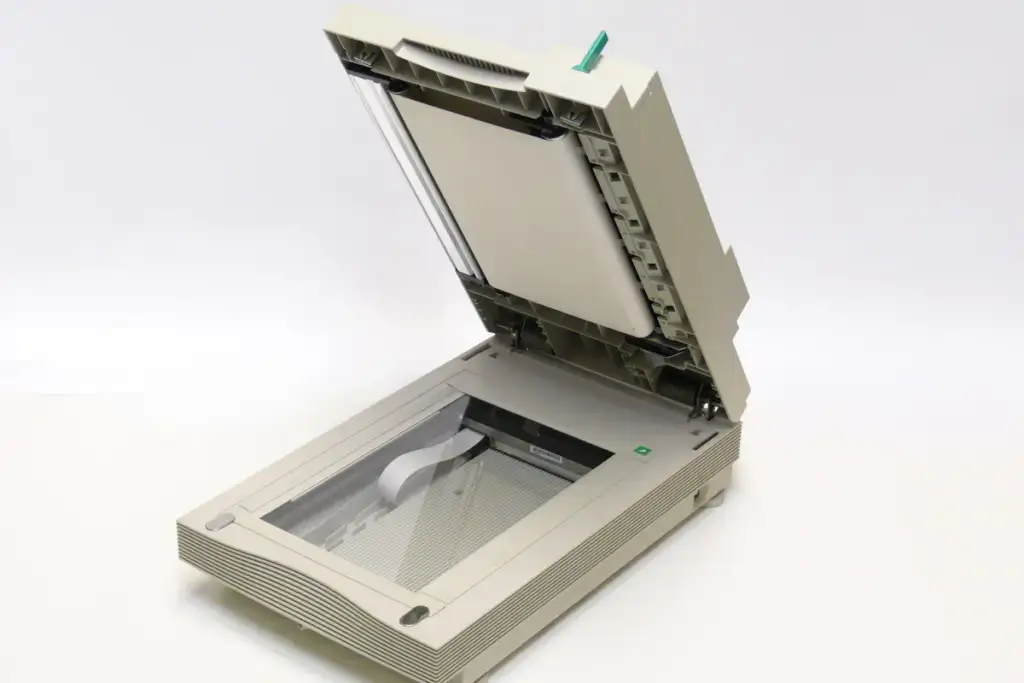
If you cannot select a word in the PDF with your cursor, no amount of converting will produce editable text. Recognition has to happen first. Google’s requirements for its own conversion give you a usable quality bar for any scan: 2 MB or smaller, each line of text at least 10 pixels high, the page the right way up, and common fonts such as Arial or Times New Roman. Google says it recognises more than 150 languages, and that sharp, evenly lit, high-contrast images do better, which is a polite way of saying a photograph taken at an angle in a dim room will not work. If you are scanning yourself, our note on print resolution covers what the numbers on a scanner dialog mean.
Tables, columns and footnotes
Google’s own documentation contains the single most useful sentence on the subject. Bold, italics, font size, font type and line breaks are likely to be retained, while lists, tables, columns, footnotes and endnotes are not likely to be detected. Those are exactly the features that carry meaning in reports, invoices and contracts. A two-column page can come back as one column with the lines interleaved, and a table row that wraps can come back as two half rows.
Fonts, spacing and page breaks
A PDF can embed a font that is not installed on your machine. When Word substitutes a different one, every line length changes, so spacing and page breaks move even when every character is correct. Treat the page count of the converted file as a coincidence rather than a match.
How to check the result before you trust it
- Open the last page first. Silent truncation is common and easy to miss when you read from the top.
- Check every number in every table against the PDF. Cell by cell, especially where a row wrapped onto two lines.
- Turn on formatting marks. If paragraphs turn out to be lines ended with manual breaks, fix that first, or every later edit will fight you.
- Look for what sits outside the main text flow. Footnotes, headers, page numbers, captions, text boxes and anything in a margin.
- On recognised scans, reread numbers and proper nouns. Recognition errors cluster on characters that look alike, and a wrong digit in a total is worse than a wrong letter.
The privacy question before you upload anything
Free web converters are convenient because the work happens on somebody else’s computer. That is also the problem. Uploading a document hands a copy to a company you have not checked, under terms you have not read, for a purpose their privacy policy defines rather than you.
If the file contains other people’s personal data and you are doing this for work, that is not just a matter of taste. The UK Information Commissioner’s Office is clear that whenever a controller uses a processor, processing must be governed by a contract or other legal act binding on the processor. Clicking through a web form is not that contract. Rules differ by country, but the principle that a third party handling personal data on your behalf needs an agreement is common to the UK and the EU.
The built-in routes differ usefully here. Word converts the file on your own machine. Google Docs needs it in your own Drive account, still a transfer to Google but under terms that already cover that account rather than a stranger’s. So the rule is short: if you would not email the file to someone you have never met, do not paste it into a converter. The instinct that helps you spot a phishing email applies to a site offering to handle your contracts for free. If you only need to send something that cannot be edited, keep the PDF, the way a proforma invoice is normally circulated. And if the thing you are trying to convert PDF to Word from is really an image, our comparison of PNG and JPG explains why the format you started from limits what any tool can recover.
Common questions
Can Microsoft Word open a PDF directly? Yes. Use File then Open and select the PDF. Microsoft says Word makes a copy and converts its contents into a format Word can display, and that the original PDF is not changed. Save the converted file as .docx before editing.
Why does my converted document look wrong? Because conversion is an inference. Microsoft warns that the result may not match the original page for page, and Google notes that lists, tables, columns, footnotes and endnotes are not likely to be detected.
How do I convert a scanned PDF to Word? You need text recognition first. Google Drive attempts it on a file of 2 MB or less with text at least 10 pixels high, and Adobe says Acrobat runs recognition automatically when it finds scanned text. Proofread the output.
Is it safe to use a free online PDF converter? It depends on what is in the file, because you are sending a copy to a third party. The ICO says a controller using a processor needs a binding contract, which a web form is not, so confidential documents belong in a route on your own machine or inside an account you control.
Can Pages open a PDF on a Mac? No. Apple states that you cannot open PDFs in Pages, which opens Pages, Word, iBooks Author and RTF or plain text files. Use Word for Mac, Google Docs, or Preview to copy text out.
Sources and further reading
Where the figures and rules above come from, so you can check them:
- Opening a PDF in Word, and the page correspondence warning: Microsoft Support, Edit a PDF
- File size, pixel height, fonts, languages, and what formatting survives: Google Drive Help
- Export formats and automatic recognition of scanned text: Adobe, Convert a PDF to Word
- What recognition does to a scanned page: Adobe, OCR software
- Formats Pages can open: Apple, Pages User Guide
- Selecting a column with Option: Apple, Preview User Guide
- Live Text and its regional limits: Apple, Preview User Guide
- Processors need a binding contract: UK Information Commissioner’s Office
Photo credits: Legal Contract & Signature – Warm Tones by Blogtrepreneur, CC BY 2.0, via Wikimedia Commons. Wikipedia&scops by Ulrich prokop, CC BY-SA 3.0, via Wikimedia Commons. HP-Scanjet4C-ADF-C2525B 09 by Thomas Schanz, CC BY-SA 4.0, via Wikimedia Commons.

Join the discussion