
PNG vs JPG is the image question almost everyone meets eventually, whether exporting a logo, uploading product photos or saving a screenshot for a report. Both formats are decades old and supported everywhere, yet they are built on opposite ideas about how to shrink an image. Pick the right one and the file is small and sharp. Pick the wrong one and you get either a bloated download or smudged edges around text.
Updated September 2026. Browser support figures are from caniuse.com as published in August 2026.
The short answer
Use JPG for photographs and other images with smooth, natural gradients. Use PNG for logos, icons, screenshots, diagrams and anything that needs a transparent background. For images published on a website, also consider WebP or AVIF, which usually produce smaller files than either.
A quick note on names: JPG and JPEG are the same format. The two spellings are just different file extensions for it. JPEG stands for Joint Photographic Experts Group, the committee that first issued the standard in 1992.
How each format works
JPG: lossy compression built around the human eye
JPG throws away information you are unlikely to notice. According to Google’s web.dev image course, the encoder splits a picture into 8 by 8 pixel blocks, separates brightness from colour, and stores colour at a lower resolution, because people are far more sensitive to changes in brightness than to changes in hue. A quality setting from 0 to 100 controls how much is discarded: lower numbers mean smaller files and more visible artefacts.
Progressive JPG is a variant that loads in passes, showing a full-size blurry version first and sharpening as the rest arrives. It often feels faster to viewers and is typically slightly smaller than a standard JPG.
PNG: lossless compression that keeps every pixel
PNG never discards image data. The W3C specification defines it as lossless and uses the deflate compression method, the same family of technique found in zip files. It supports five image types, from greyscale to full colour with transparency, at sample depths from 1 to 16 bits. An indexed mode can store a palette of up to 256 colours, which keeps simple graphics very small.
The format is still being developed. The Third Edition of the PNG specification became a W3C Recommendation on 24 June 2025, formally adding animated PNG, high dynamic range colour signalling and Exif metadata.
PNG vs JPG: 5 differences that matter
- Compression. JPG is lossy, so some detail is permanently removed when you save. PNG is lossless, so the decoded image is identical to the original.
- Transparency. PNG has an alpha channel: in 8-bit images each pixel can be anything from fully transparent to fully opaque, which is what makes soft drop shadows possible. JPG has no transparency at all, so a transparent area is flattened onto a solid colour.
- Best content. JPG handles photographs well because gradients survive its block-based approach. PNG handles hard edges well: text, lines, flat colour and interface screenshots stay crisp.
- File size. For a photograph, PNG files are usually far larger than a good-quality JPG, because every subtle variation in colour has to be stored exactly. For a flat graphic with few colours, PNG can be the smaller file.
- Re-editing. Each time a JPG is opened, edited and saved again, lossy compression runs again and more detail can be lost. PNG can be edited and re-saved without that decline, which is why web.dev suggests it as a sensible master copy before converting to lighter formats.
Which format to choose, by image type
- Camera photos, product shots, travel pictures: JPG, at a quality setting that looks clean at the size it will be displayed.
- Logos and icons: PNG, especially when the logo must sit on different background colours. An SVG vector file is better still where it is available.
- Screenshots of apps, code or documents: PNG. JPG tends to create faint blotches around letters because sharp edges cut across its compression blocks.
- Charts and diagrams: PNG, or SVG if the tool can export it.
- Images with a transparent or soft shadowed edge: PNG.
- A photo that needs transparency, such as a cut-out product: PNG works but is heavy. WebP or AVIF can hold transparency at a much smaller size.
One practical warning: converting a JPG to PNG does not restore anything. The detail JPG discarded is already gone, and the new PNG will simply be a larger file of the same image.
Where WebP and AVIF fit in 2026
For websites, the PNG vs JPG choice is increasingly a question about the master file rather than what visitors download. Two newer formats cover both jobs:
- WebP supports lossy and lossless compression, transparency and animation. caniuse.com lists support at about 96.8 percent of global browser usage, with Safari supporting it fully since version 16.0.
- AVIF, based on the AV1 video format, generally compresses better than WebP, JPG and PNG. caniuse.com put global support at about 95.4 percent in August 2026, with full Safari support from version 16.4 and Chrome support since version 85.
A common workflow is to keep an original as PNG or a high-quality JPG, then serve AVIF or WebP to browsers that accept it, with JPG or PNG as a fallback. Many content management systems and image CDNs handle that conversion automatically.
Images that contain words deserve extra care. Text baked into a picture cannot be resized or read aloud reliably, so wherever you can, set it as live text using well-chosen variable fonts, and when it has to be an image, check it against accessible colour contrast guidelines.
A simple export checklist
- Decide whether the image is photographic or graphic.
- Check whether any part of it needs to be transparent.
- Resize it to the largest size it will actually be displayed at.
- Export photos as JPG and graphics as PNG, then compare the file sizes.
- For web use, generate WebP or AVIF versions and keep the original safely.
Common questions
Is PNG higher quality than JPG? PNG is lossless, so it never loses detail when saved. That does not always mean it looks better: a high-quality JPG of a photograph can be visually indistinguishable from a PNG at a fraction of the size.
Is JPG the same as JPEG? Yes. They are two file extensions for the same format, named after the Joint Photographic Experts Group.
Why is my PNG file so large? Usually because it is a photograph. Lossless compression has to keep every subtle colour variation, so photos saved as PNG are much bigger than the same image as a JPG.
Which is better for a logo, PNG or JPG? PNG, because it supports transparent backgrounds and keeps edges sharp. If you have the logo as an SVG vector file, that is better still for websites.
Should I use WebP instead of PNG and JPG? For images on a website, often yes. WebP supports both lossy and lossless compression plus transparency, and nearly all current browsers support it. Keep a PNG or JPG original for editing.
Sources and further reading
Where the figures and rules above come from, so you can check them:
- PNG Specification, Third Edition, W3C Recommendation: W3C
- How JPEG compression works: web.dev (Google)
- PNG transparency and use cases: web.dev (Google)
- WebP browser support: caniuse.com
- AVIF browser support: caniuse.com
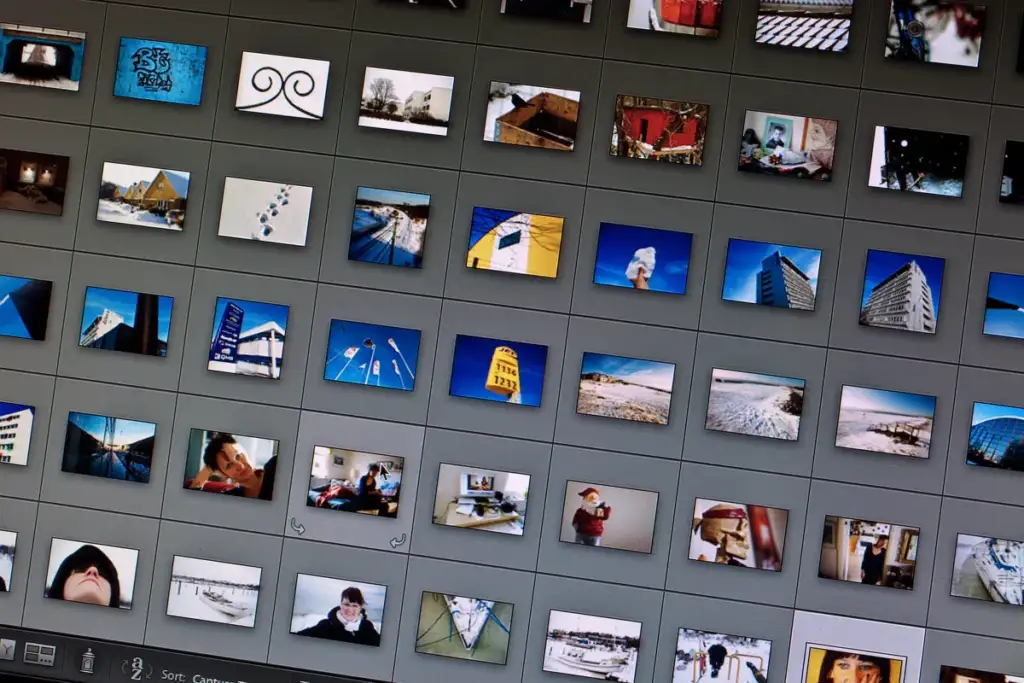
Photo credits: Photographer Camera by Leeroy, CC0, via Stocksnap. Photo editing (4337933719) by Håkan Dahlström from Malmö, Sweden, CC BY 2.0, via Wikimedia Commons.
Documents have the same format trap as images. Here is how to convert a PDF to Word without wrecking the layout.

Join the discussion