
GPT-6 is here, and it arrived as a family rather than a single release. OpenAI introduced Astra, the flagship, on 3 September 2026, added Sol and Luna on 22 September, then shipped a 6.1 revision of Sol on 29 September at DevDay. Astra is also the model that now powers OpenAI’s new always-on agents. This piece sticks to what OpenAI has published on its own pages, and flags the claims you should not take on trust.
Updated October 2026.

What GPT-6 Astra is, and when it launched
OpenAI announced Astra on 3 September 2026, describing it as “the world’s most intelligent and aligned model”. That is the company’s own framing, worth reading as marketing until independent testing catches up. The substance underneath it is that OpenAI positions the model as state of the art on computer use, browsing, software engineering, cybersecurity, science and professional work.
The API page gives the harder numbers: a 1,050,000-token context window, a maximum output of 128,000 tokens, and a knowledge cutoff of 30 April 2026. The reasoning effort setting accepts low, medium, high, xhigh and max. It takes text and image input and produces text output, with audio and video unsupported. The developer model string is gpt-6-astra.
What OpenAI claims GPT-6 does better
Three themes run through the announcement, and they are more interesting than any score.
- Computer use and speed. OpenAI presents this as its strongest model for operating software directly: filling in forms, updating records, running quality checks on a site it has built, installing and testing software. It also updated the Codex harness alongside the model to make computer use faster.
- Producing finished work. OpenAI says it is its best model for following existing templates and producing documents, spreadsheets and presentations that match a house style, and that it pulls only relevant context into an output.
- Staying inside the brief. OpenAI calls it its most aligned model: better at respecting task boundaries, better at asking a focused question when an ambiguous instruction would change the outcome, and better at absorbing a mid-task correction without losing the original goal.
Two claims cut both ways. OpenAI states the model meets the Critical threshold for cybersecurity under its Preparedness Framework, that the launch version refuses advanced offensive tasks such as writing proof-of-concept exploits, and that less restrictive access will follow through its Daybreak programme. It also reports that its evaluations found the written reasoning harder to monitor than the previous generation’s, and says it takes that decline seriously. A vendor publishing an unflattering result about its own model is unusual enough to notice.
GPT-6 pricing and availability
Astra is the expensive end of the range, and OpenAI’s own pricing table is the place to check it rather than any summary.
- Standard API pricing: $10 per million input tokens and $50 per million output tokens, with cached input at $1 and cache writes at $12.50 per million.
- Long prompts cost more. Requests over 272,000 input tokens are priced at twice the input and cache rates and 1.5 times the output rate, for the whole request.
- Speed and batching change the multiplier. Fast mode costs twice the applicable rates for up to twice the speed. Batch and Flex are half the standard rates.
- In ChatGPT: it reached a limited set of organisations first, then Plus, Pro, Business and Enterprise users. Usage sits inside existing subscription allowances, with credits available for more, and Enterprise access was off by default until an administrator enabled it.
- Elsewhere: the OpenAI API, Microsoft Azure and AWS Bedrock, with Zero Data Retention supported for eligible API customers.
The rest of the GPT-6 family
If Astra is the wrong tool for your budget, the cheaper members of the line are the more relevant news. On 22 September 2026 OpenAI introduced Sol at $2 per million input tokens and $10 per million output tokens, and Luna at $0.10 and $0.50. Both were priced at half their GPT-5.6 predecessors’ promotional rates, which OpenAI attributed to caching and inference improvements.
A week later it shipped GPT-6.1 Sol at the same $2 and $10 headline prices with cached input at $0.10 per million, describing it as nearly matching Astra on agentic coding, computer use and professional work at one fifth of Astra’s standard token prices. It is available to Plus, Pro, Business, Enterprise and Edu users in ChatGPT Work and Codex, and through the API as gpt-6.1-sol, though not yet in Chat. OpenAI’s guidance is still to reach for Astra on the hardest work. A tenfold price gap inside one family is a decision you have to make per task, which is the same argument our piece on small language models makes from the other direction.
6 GPT-6 claims worth checking yourself
Model launches arrive with a lot of numbers attached. These six habits keep you from repeating a marketing figure as a fact.
- Check who ran the benchmark. Scores in a launch post are almost always the vendor’s own runs of someone else’s test. OpenAI notes its evaluations ran in its research environment or via its API, which may differ from production ChatGPT, and that competitor scores came from public reports.
- Check the settings. There are five reasoning effort levels, and OpenAI’s own comparisons move between them. A score without an effort level and a cost per task is not a comparison.
- Check the version string. Benchmarks are versioned. OpenAI cites a specific dated release of one computer-use benchmark and a partial score on its offline set, which is not the same as the headline name.
- Check the price you will actually pay. The $10 and $50 headline is the short-context standard rate. Long prompts, fast mode and cache writes all change it, and long-running agents spend most of their tokens on context.
- Check whether it is switched on. Enterprise access was off by default at launch, and the 6.1 revision reached ChatGPT Work and Codex before Chat. Announced and available are different states.
- Check it against your own task. The only evaluation that predicts your results is one built from your work, which is the argument our guide to prompt engineering keeps returning to.
What we have left out, and why
We have not reprinted the benchmark table. The figures are self-reported, and the announcement is internally inconsistent in at least one place: the introduction rounds a mathematics result up while the table below states a lower number. That is not a scandal, it is a reminder that a number in a launch post is a claim rather than a measurement you made. Where a benchmark’s own publisher has commented, that carries more weight: Greg Kamradt of the ARC Prize Foundation, quoted in OpenAI’s post, said Astra effectively reached human parity on the ARC-AGI-3 benchmark and called it a meaningful step change. Treat that as one expert’s read of one test.
Why GPT-6 matters beyond the API
The practical reason to care is that Astra is the engine inside OpenAI’s new agent products. The dots announced on 29 September 2026 run on it, with their own cloud computer and browser, which is why the computer-use and boundary-respecting claims are the ones to scrutinise rather than the exam scores. Our companion pieces on ChatGPT Dots and agentic AI cover what that means in practice, and prompt injection remains the risk that scales with capability.
Common questions
When did GPT-6 come out? OpenAI introduced GPT-6 Astra on 3 September 2026, followed by GPT-6 Sol and GPT-6 Luna on 22 September 2026 and GPT-6.1 Sol on 29 September 2026.
How much does GPT-6 Astra cost? Standard API pricing is $10 per million input tokens and $50 per million output tokens, with cached input at $1. Prompts over 272,000 input tokens are charged at twice the input rate and 1.5 times the output rate for the whole request.
What is the GPT-6 context window? OpenAI lists a 1,050,000-token context window for GPT-6 Astra, a maximum of 128,000 output tokens, and a knowledge cutoff of 30 April 2026.
Is GPT-6 available in ChatGPT? Yes. Astra rolled out to a limited set of organisations first, then to Plus, Pro, Business and Enterprise users, with Enterprise access off by default until an administrator enables it. GPT-6.1 Sol reached ChatGPT Work and Codex first.
What is the difference between GPT-6 Astra, Sol and Luna? Astra is the flagship for the hardest work. Sol and Luna are cheaper and faster, trained with similar methods, and priced at $2 and $0.10 per million input tokens respectively. OpenAI still recommends Astra for the most demanding tasks.
Sources and further reading
Where the figures and rules above come from, so you can check them:
- GPT-6 Astra: A new generation of intelligence, 3 September 2026: OpenAI
- GPT-6 Astra model page: context window, output limit, cutoff and full pricing table: OpenAI API documentation
- Introducing GPT-6 Sol and Luna, 22 September 2026, with the API price table: OpenAI
- Introducing GPT-6.1 Sol, 29 September 2026: pricing and availability: OpenAI
- Introducing dots, on GPT-6 Astra powering always-on agents: OpenAI
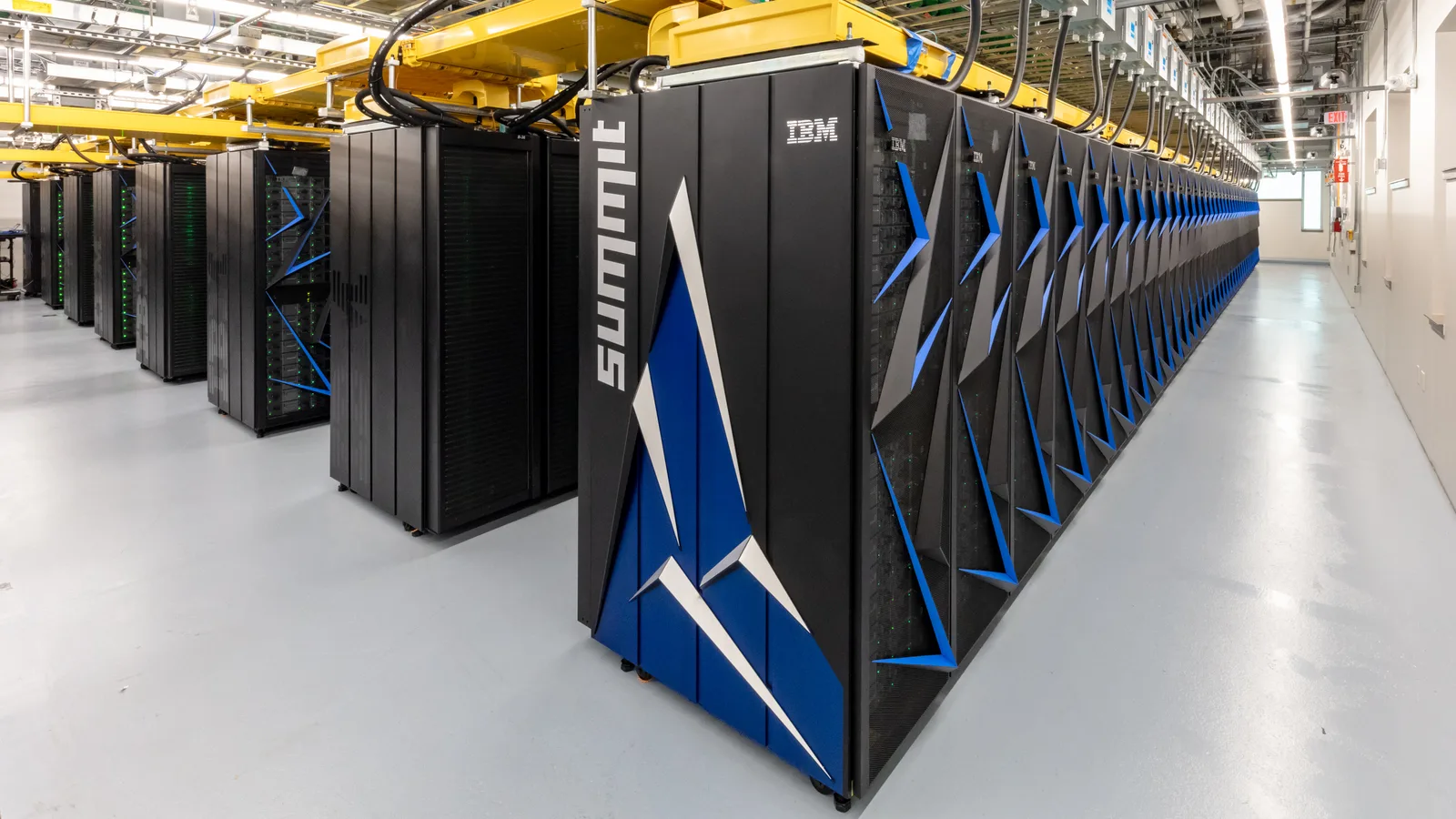
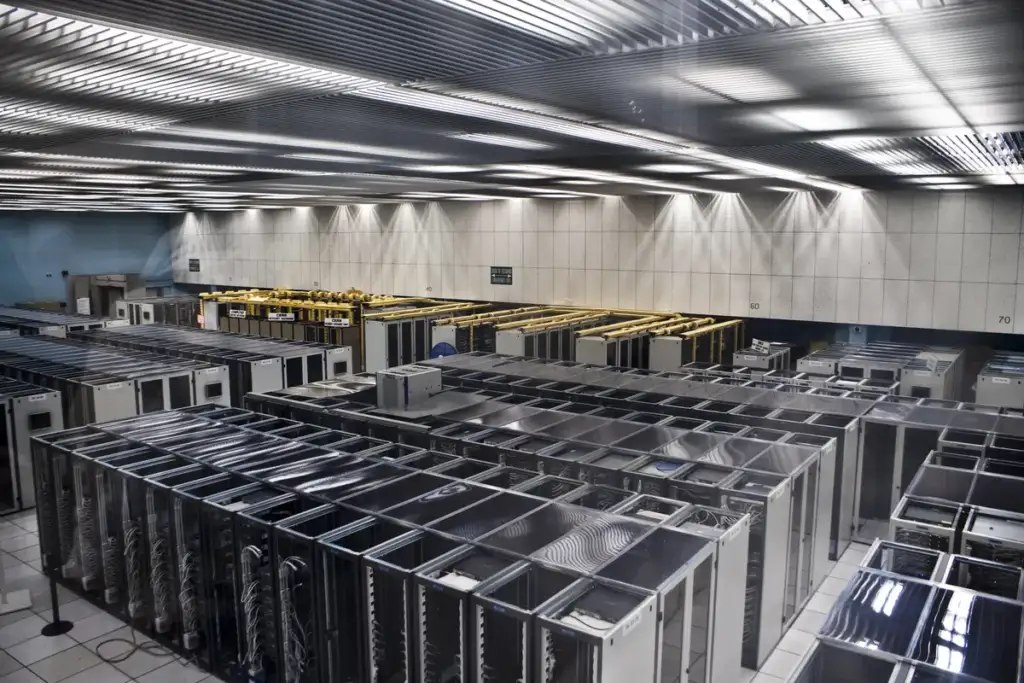
Photo credits: Summit Supercomputer 2018 by OLCF at ORNL, CC BY 2.0, via Wikimedia Commons. Man typing on laptop (Unsplash) by Alejandro Escamilla alejandroescamilla, CC0, via Wikimedia Commons. CERN Server 03 by Florian Hirzinger – www.fh-ap.com, CC BY-SA 3.0, via Wikimedia Commons.
This is the model the new always-on agents run on. Our guide to the components of a ChatGPT Dot explains what is built around it.


Join the discussion