

Lenovo runs two gaming lines that overlap awkwardly. The LOQ is the value range; Legion is the premium one. Both reach RTX 5060 performance, which means the price difference buys you something other than speed — and whether that something is worth it depends entirely on what you do between games.
Specifications checked August 2026. Street prices on laptops move constantly and vary by region and retailer, so this compares what the machines are rather than quoting a figure that will be stale within weeks.
What the extra money actually buys
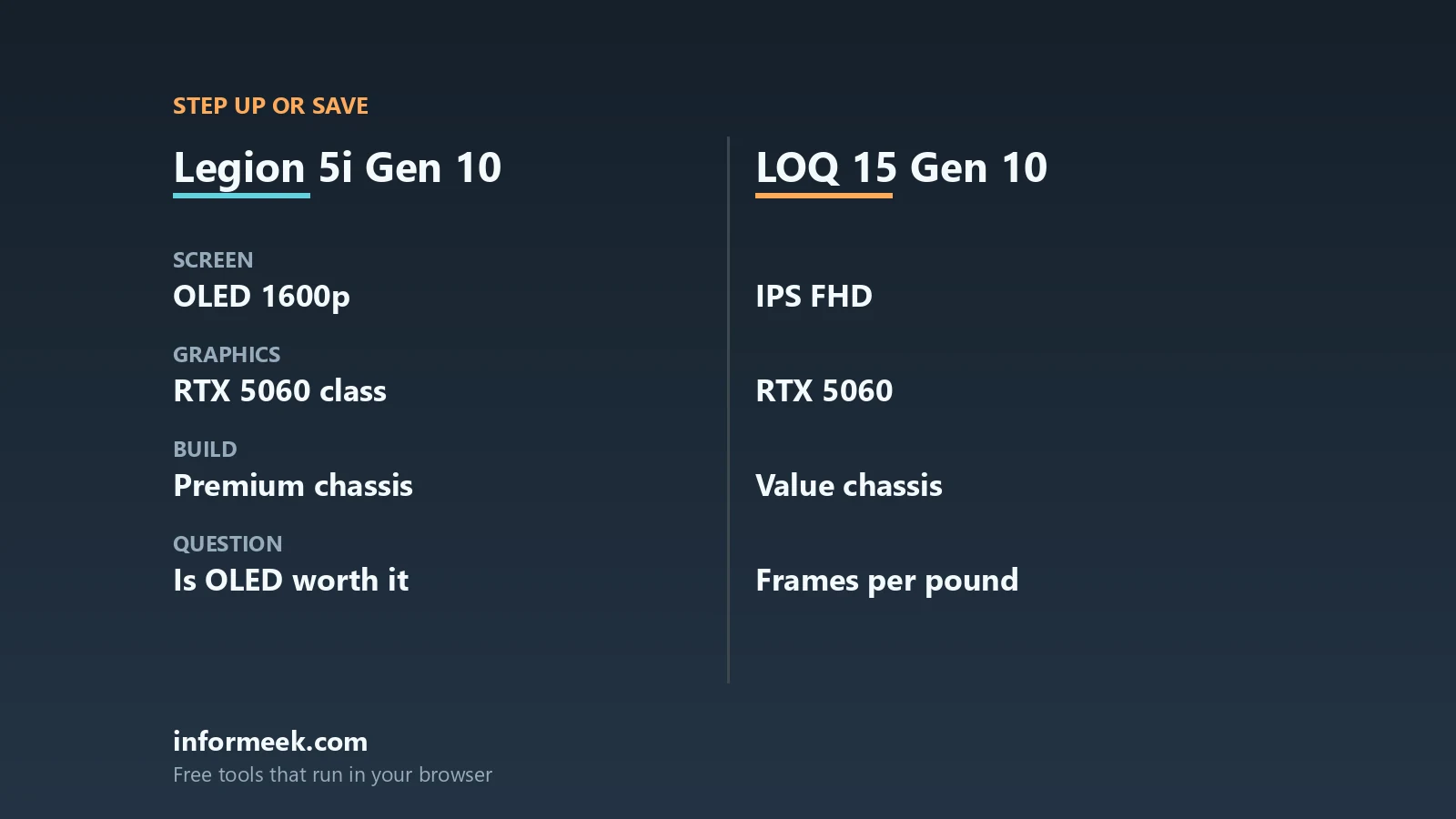
The Legion 5i Gen 10 offers an OLED screen at 1600p, and that is the headline difference. OLED gives true blacks and per-pixel lighting, which is genuinely striking in dark games and in video. The 1600p resolution is taller than 1080p, so it also helps for documents and code.
The chassis is the quieter half of the upgrade. Premium gaming laptops generally get better keyboards, sturdier lids and more cooling headroom, and cooling headroom is what sustains graphics performance over a long session.
What the LOQ gives up, and what it does not
It does not give up much speed. The LOQ 15 Gen 10 posted chart-topping gaming performance among the RTX 5060 machines Tom’s Hardware benchmarked, so the value line is not the slow line. If frames per pound is the metric, the cheaper Lenovo is the better buy and it is not close.
What you give up is the screen, some build quality, and usually some port selection. Those are real, and none of them show up in a benchmark chart.
The OLED question, honestly
- It genuinely looks better. Contrast is the specification you notice most in daily use, more than resolution or refresh rate.
- Burn-in risk exists but is manageable. Static elements like a taskbar over thousands of hours are the concern. Modern panels mitigate it; they do not eliminate it.
- It costs battery in some workloads. Bright, mostly-white screens such as documents draw more power on OLED than on IPS.
- Higher resolution costs frames. Driving 1600p takes more graphics work than 1080p, so some of the Legion’s performance goes into pushing its own screen.
How to decide
If the laptop is mostly for games and you want the most performance for the money, take the LOQ. If you will spend as many hours reading, writing and watching things on it as gaming, the Legion’s screen improves more of your week than the difference in frame rates will.
One caution that applies to both: check the Total Graphics Power of the exact configuration. Lenovo, like everyone, ships the same model with different power limits, and that number predicts gaming performance better than the model name does.
Common questions
Is OLED worth it on a gaming laptop? For contrast, yes, noticeably. Weigh it against burn-in risk if you leave static interfaces on screen for very long sessions.
Does 1600p hurt frame rates? Somewhat, since there are more pixels to draw. You can run games at 1080p on a 1600p panel if you prefer the frames.
Is the Legion much faster? No. Both reach RTX 5060 performance. Buy the Legion for the screen and build, not for speed.
Which has better battery life? Neither is strong. Gaming laptops trade battery for cooling and power, and both do.
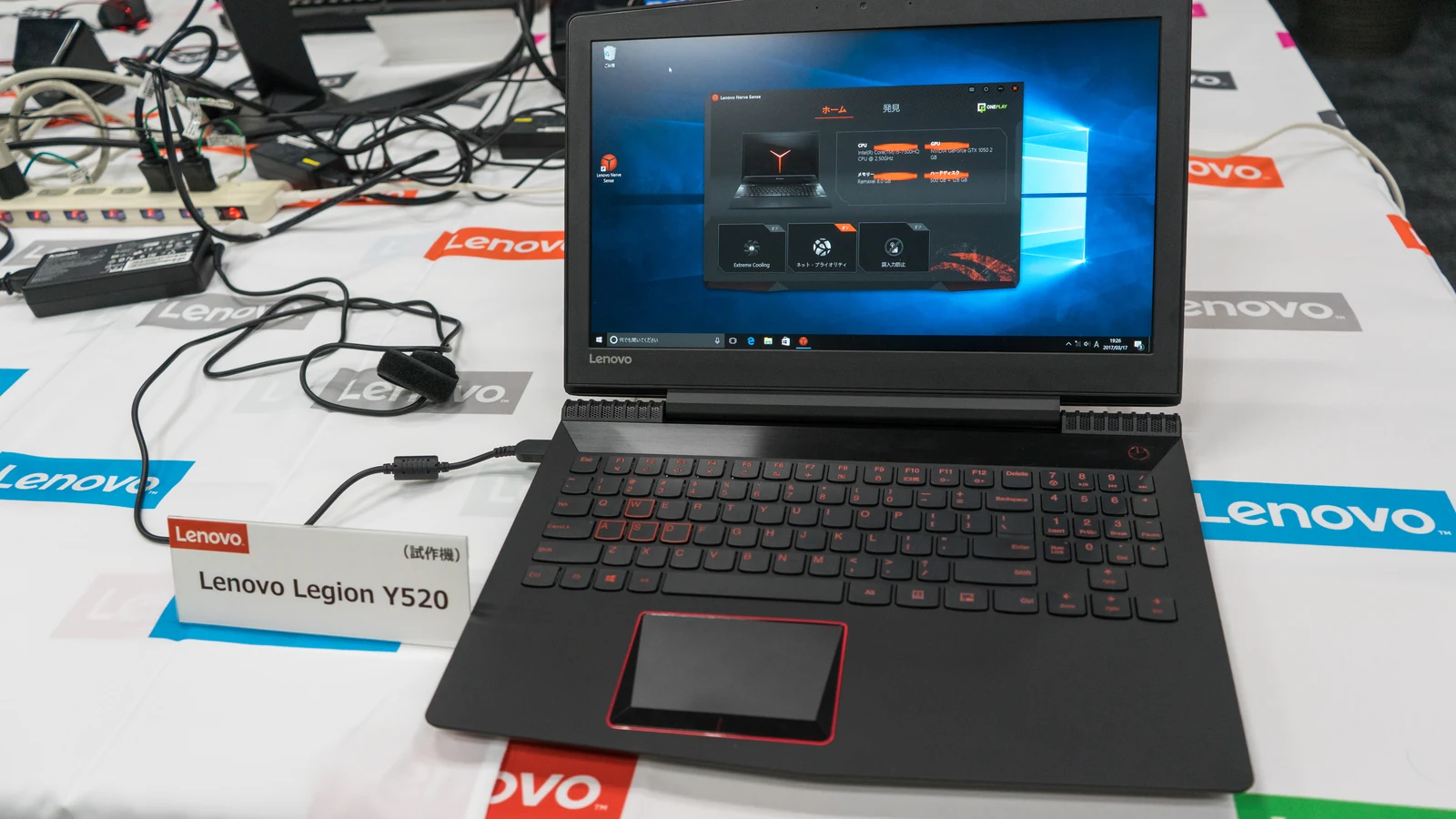
Cover photograph: Lenovo Legion Y520, by TAKA@P.P.R.S, licensed CC BY-SA 2.0 via Wikimedia Commons. The photograph shows an earlier model from the same range rather than the machines compared above.

Join the discussion