


Number plate recognition is two very different things wearing one name. The first is a solved engineering problem: find a rectangle, correct its geometry, read the characters. The second is a governance question about what happens to tens of millions of location records a day, who may search them, for how long, and with what audit trail. The second part is where all the consequence sits, and in the UK it is written down in unusual detail.
Updated October 2026. General information, not legal advice. The standards described are those of the UK national system; rules on retention and access differ by country and by US state.
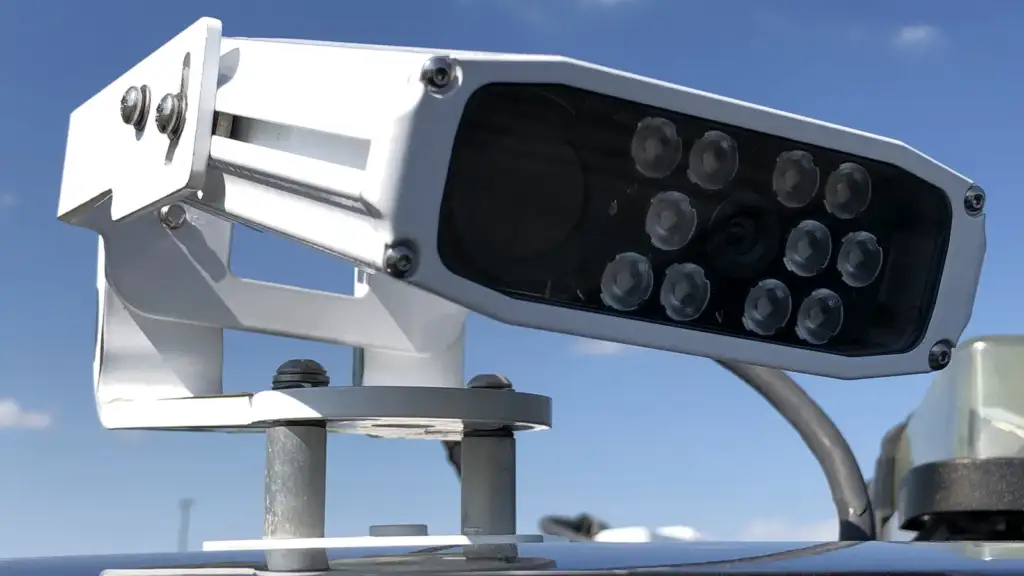
The reading part, and the standards it depends on
A camera captures a frame, software locates the plate, straightens it, segments the characters and classifies each one. Reliability comes less from clever software than from the plate itself being designed for machines: a retroreflective surface, a fixed character set and legally required spacing. UK rules state plainly that a plate “must show your registration number correctly” and that you cannot rearrange or alter letters and numbers so that they are hard to read.
The accuracy expected is published rather than claimed. The National ANPR Standards for Policing and Law Enforcement require fixed and moveable systems to capture 98 percent of all registration marks that meet the reflectivity requirements of the relevant British Standard and are visible to the human eye, and to accurately read 95 percent of those captured. If a camera’s performance falls below standard, it must be corrected and reassessed within 30 days, and if it is not, the feed of data from that camera must stop.
What a read record actually contains
The standards define the record precisely. A read places a registration mark at a specific location and time, and must include the registration mark, the time, the location of the read and a camera identifier. Location must be accurate to within 10 metres, and fixed cameras must have their coordinates recorded to within 5 metres. System clocks must be shown to synchronise at least once every 10 minutes.
Images can be attached. A plate patch showing the number plate alone is mandatory for systems owned or controlled by a law enforcement agency, so that a human can compare the image against the text the software produced. An overview image showing the vehicle, which allows make, model and colour to be identified, is optional, as is geotagging of images. All images must be linked to the corresponding read record.
Scale, and why retention is the real question
The Home Office data protection impact assessment for the National ANPR Service gives the numbers. It describes over 100 million read records being submitted to national ANPR systems daily, from 12,076 camera sets and 1,878 mobile cameras nationally. At that volume the question stops being about reading plates and becomes about the searchable history those reads create.
Retention is tiered. Read records in the national components must be deleted 12 months after initial capture, unless retained under criminal procedure provisions, and records in local components must be deleted after 90 days. Data may only be accessed up to 12 months after capture other than in defined circumstances. Lists of vehicles of interest are separately controlled, and the impact assessment describes them being reviewed every 28 days and automatically deleted after 56.
Access is layered too. The impact assessment describes role-based access restricting most staff to a 90 day window for routine investigations, mandatory audit logging of searches and access, and oversight by national auditors and the Information Commissioner’s Office. The standards require a written policy at every agency, logging of disclosures with justification, and a data protection impact assessment for all planned new infrastructure.
7 facts worth knowing about number plate recognition
- It is held to a published accuracy standard. Capture 98 percent of eligible plates, read 95 percent of those captured, or the camera feed is switched off after 30 days of unresolved underperformance.
- A read is a location record. Registration mark, time, place to within 10 metres and camera identifier, with a plate image attached for law enforcement systems.
- The volume is the story. Over 100 million reads a day in the UK national service, from 12,076 camera sets and 1,878 mobile cameras.
- Retention is 12 months nationally, 90 days locally. Longer retention requires a specific legal basis tied to an investigation.
- Searches are logged and audited. Most staff are limited to a 90 day window, disclosures must be recorded with their justification, and the ICO is named in the oversight arrangements.
- The data is personal data. Once a read is in the national system it is treated as personal data under the Data Protection Act, handled at an official sensitive classification.
- You can ask what is held. Subject access requests, and requests for erasure or restriction, are referred to the controller under the joint controller arrangements.
Vehicle fingerprinting changes the obscuring argument
A point worth understanding before anyone reaches for a plate cover. The optional overview image exists specifically so that make, model and colour can be identified from the vehicle rather than the plate. That means an unreadable plate does not make a vehicle invisible to a system that has already captured an image of it, and in the UK altering a plate so that it is hard to read is itself against the rules. The honest lever is governance, not obstruction.
It is the same shift that has happened across other recognition technologies, where the identifier stops being one field and becomes a combination of attributes. Our explainers on reverse face search and on what smart glasses record describe the same pattern in other settings.
What the published risks are
The impact assessment is candid about where things go wrong. It rates data quality as a high risk, noting that reads can be inaccurate where standards are not followed because of external factors such as poor quality number plates. It rates inconsistent local operation as a high risk. And it flags that large volumes of data extracted for analysis and held in local systems may be processed for purposes other than those the standards authorise. Those are the three things to watch, and they are not technical problems with reading plates. They are problems of discipline around a very large database.
Common questions
How accurate is number plate recognition? The UK national standards require fixed and moveable systems to capture 98 percent of registration marks that meet the reflectivity standard and are visible to the human eye, and to correctly read 95 percent of those captured.
How long is the data kept? In the UK national components of the service, read records are deleted 12 months after capture unless retained under criminal procedure provisions. Records in local components are deleted after 90 days.
What is stored about my vehicle? The registration mark, the time, the location to within 10 metres and a camera identifier. A close image of the plate is mandatory for law enforcement systems and a wider image of the vehicle is optional.
Can I find out what is held about my car? You can make a subject access request. The standards say requests under data protection law, including subject access and requests for erasure or restriction of processing, are referred to the controller for consideration.
Does covering a plate help? No, and in the UK it is not permitted: the rules require a plate to show the registration number correctly and forbid altering it so it is hard to read. Systems can also record an image allowing make, model and colour to be identified.
Sources and further reading
Where the figures and rules above come from, so you can check them:
- Accuracy requirements, read record composition, location tolerances, retention periods, image rules and subject access handling: National ANPR Standards for Policing and Law Enforcement, Home Office
- Daily read volume, camera counts, access tiers, audit logging and the identified high risks: National ANPR Service data protection impact assessment, gov.uk
- Requirement that a plate shows the registration number correctly and is not altered: Displaying number plates, gov.uk
- Audio and video surveillance principles, retention and proportionality: Information Commissioner’s Office
Photo credit: ANPR Camera Front by Mbrickn, CC BY 4.0, via Wikimedia Commons.
Cars are picking up stranger abilities than cameras. Our guide to the Tesla flying car covers what one actually did.



Join the discussion