
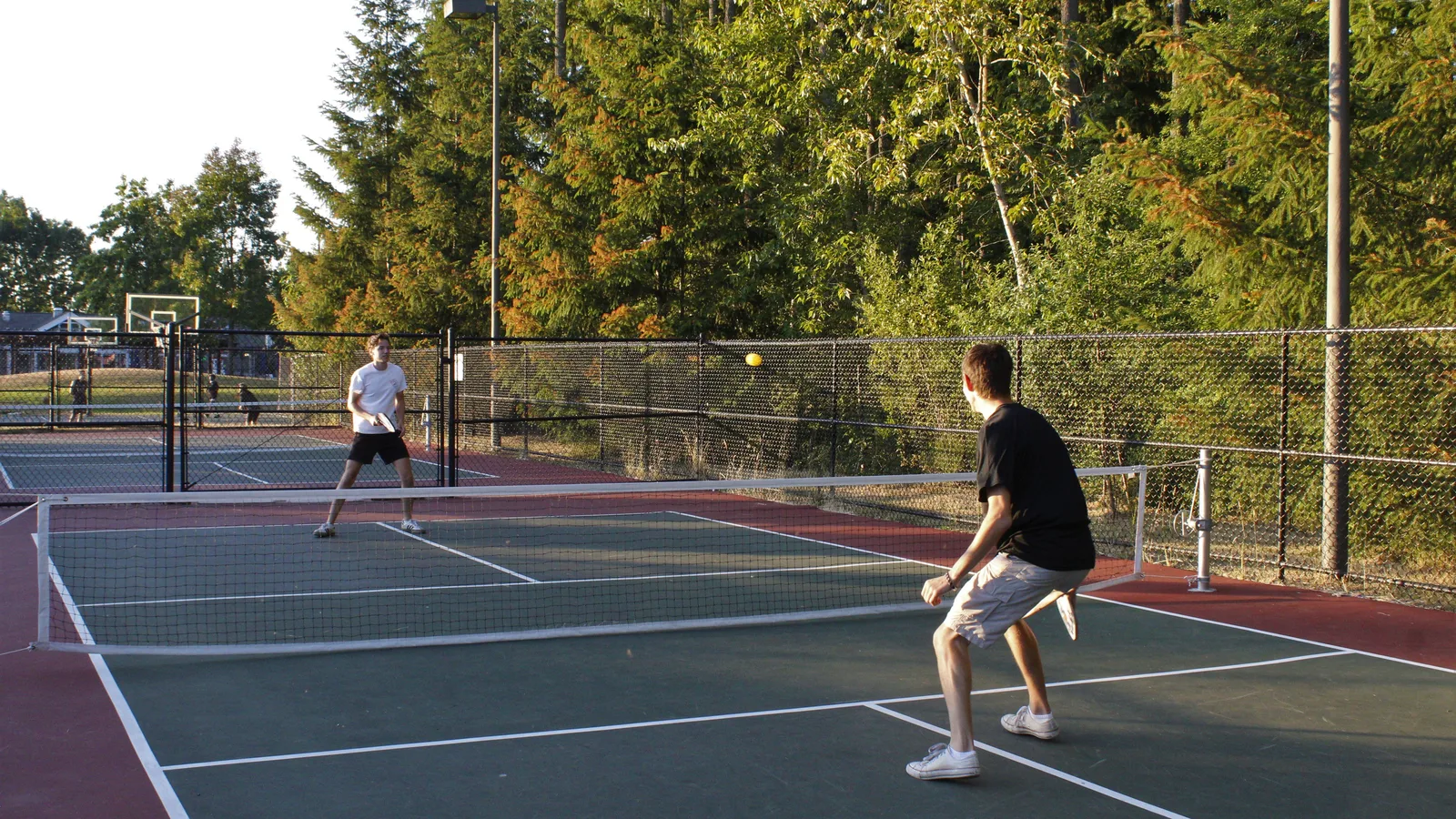
The pickleball rules that decide most recreational arguments are not the obscure ones. They are the everyday mechanics: who may score, where the server’s feet may be, what the kitchen actually forbids, and which faults you may call on an opponent. This guide works through them using the 2026 USA Pickleball Official Rulebook, the document national bodies elsewhere point their own players to, and flags what changed this year.
Updated October 2026. The pickleball rules quoted here are from the 2026 USA Pickleball Official Rulebook, effective 1 January 2026.
Pickleball rules for scoring
Standard play uses side-out scoring. Rule 4.A states that a point is scored by serving the ball and winning the rally, so the receiving side cannot score; it can only win the serve back. The rulebook says that typically the first player or team scoring 11 points and leading by at least a 2-point margin wins the game, and tournament formats include best two of three to 11 and single games to 11, 15 or 21.
Calling the score is itself a rule. In singles it is two numbers, the server’s then the receiver’s, starting at zero zero. In doubles it is three, the serving team’s score, the receiving team’s score, then the server number, so each game starts at zero zero two. The whole score must be called before the serve is hit, serving during the call is a fault, and the server then has 10 seconds.
Rally scoring, where whoever wins the rally scores, remains a provisional option under Rule 14.A rather than the standard method. Tournament directors may use it, but not in double-elimination doubles events or the 2026 Golden Ticket and National Championship events.
Pickleball rules for serving
Two serves are legal. A volley serve strikes the ball out of the air; a drop serve bounces it first. For the volley serve the paddle must be moving in a clear upward arc at contact, the highest point of the paddle head must clearly not be above the highest part of the wrist joint, and the ball must clearly be no higher than the waist. Breaking any of the three is a fault. The drop serve is more forgiving: the ball may bounce any number of times anywhere, but it must be released from a natural, unaided height and must not be propelled.
Feet matter. At least one foot must contact the correct serving area, and neither foot may touch the court or the surface outside that area. Each is a separate fault.
Spin has a clear answer. The server must not manipulate the ball to add spin with the body or the paddle before hitting it, but spin may be applied to the ball upon contact by the paddle. The rulebook change document calls this one of the most misunderstood rules: no spin from the hand on release, spin from the paddle is fine. Placement is simpler: serve diagonally, clear the opponent’s non-volley zone, and land in the correct service court.
The two-bounce rule
Rule 10.A is one sentence: the serve and the return of serve must each bounce before being returned. If the receiver hits the serve out of the air it is a fault against the receiver; if the serving side hits the return of serve out of the air it is a fault against them. This is what stops serve-and-volley tactics and produces the long dinking exchanges the sport is known for.
The kitchen: what the non-volley zone forbids
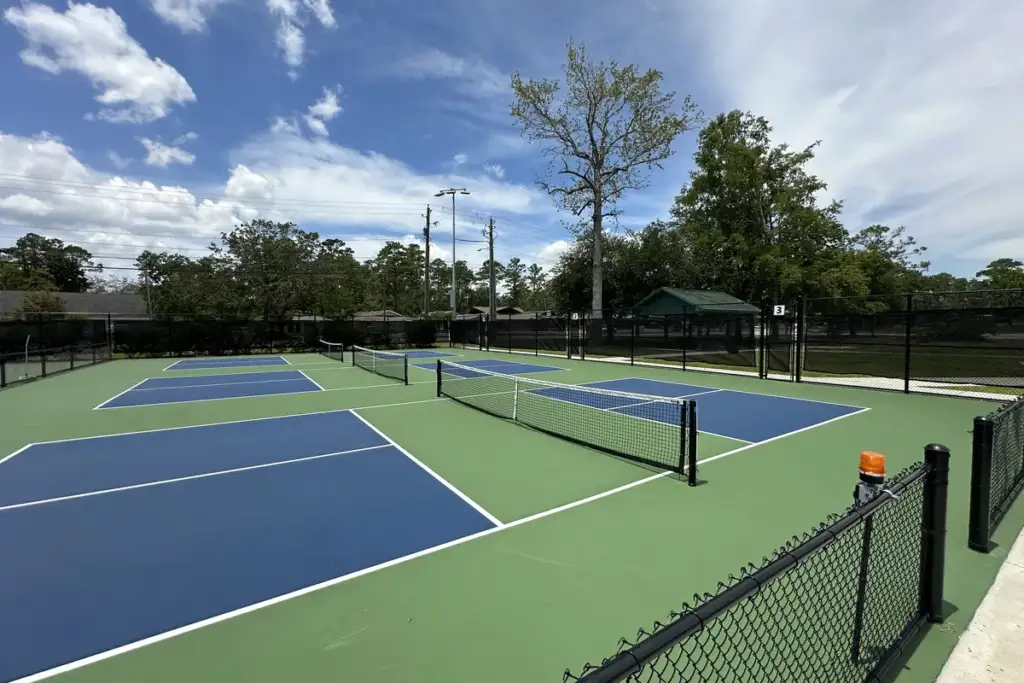
The non-volley zone is the 7-foot by 20-foot area on each side of the net, and a volley is a strike of the ball before it bounces. Rule 11.A is precise: all volleys must be initiated outside the zone, and a player may contact the zone at any time except during the act of volleying. Standing in the kitchen is legal. Volleying from it is not.
- Touching the zone while volleying is a fault, and so is anything touching the volleying player, including their partner.
- Momentum counts. If the volleying player’s momentum causes them to contact anything touching the zone, it is a fault even after the ball becomes dead. The act of volleying ends when the follow-through stops.
- After contacting the zone, a player who volleys before both feet are back completely outside it commits a fault.
A ball that bounces in the kitchen may be played from inside it.
Faults and who may call them
This is where recreational play most often goes off the rails. Players are expected to call faults on themselves or their partner as soon as the fault is committed or detected, and they may only call non-volley zone faults and service foot faults on an opponent, before the next serve. For any other fault you may mention it, but the pickleball rules are blunt that you have no authority to enforce it: the decision belongs to the player who committed it.
Disagreements have set outcomes. Between teams, the rally is replayed. Between partners, the call goes to the benefit of the opponents. Line calls follow the same spirit: players are responsible for out calls on all lines at their own end, and from 2026 a partner disagreement means the team must treat the ball as in.
Singles and doubles
In singles, position is set by the server’s score: serve from the right when the score is zero or even, from the left when it is odd. The server keeps serving, alternating sides, until they lose a rally, which is a side out.
In doubles, both players serve before a side out, with one exception that catches every beginner: at the start of each game the first serving team gets only one server, because that starting server is designated the second server for that rotation. Rule 14.B also adds mini-singles, a half-court variation where only one side of each end is in play. For how other sports handle numbers and officiating, see how many players are on a soccer team and semi-automated offside.
8 pickleball rules in one list
- Only the serving side scores in standard play; games are typically to 11, win by 2.
- Call the entire score before serving, and serve within 10 seconds.
- Volley serve: clear upward arc, paddle head below the wrist, ball below waist.
- No spin from the hand on release; spin from the paddle at contact is legal.
- Serve diagonally, clearing the opponent’s non-volley zone.
- The serve and the return of serve must each bounce.
- Never volley while touching the kitchen, and watch your momentum afterwards.
- You may only call kitchen faults and service foot faults on an opponent.
What changed in the pickleball rules for 2026
The rulebook was renumbered, so older references no longer match. The substantive changes include the spin clarification above, the stronger wording that the upward arc, paddle head and ball height must “clearly” comply, and, under rally scoring, the removal of the restriction that only the serving side could score the game-winning point. USA Pickleball says its research and polling showed most players and spectators preferred awarding a point on every serve, even when the receiving player has game point.
Two smaller ones matter. Spectators must not be consulted on any call. And a ball that bounces in your court and then hits a permanent object such as the net post before you return it is a fault against you, so a shot that lands in and drifts into the post now wins the rally.
Internationally the picture is simpler than the number of governing bodies suggests. Pickleball England links members straight to the 2026 USA Pickleball rulebook, and the Global Pickleball Federation publishes an edition of the 2026 Rulebook provided by USA Pickleball. The older International Federation of Pickleball site still offers a 2022 rulebook, so check which one your competition names.
Common questions
Can the receiving team score a point? Not in standard scoring. Rule 4.A says a point is scored by serving and winning the rally. Under the provisional rally scoring option, whoever wins the rally scores.
Is a spin serve legal in 2026? Yes, if the spin comes from the paddle. No spin may be added while releasing the ball, but spin at paddle contact is allowed.
Can you stand in the kitchen? Yes. The non-volley zone only forbids volleying, so you may be in it whenever you are not hitting the ball out of the air.
Why does doubles start at zero zero two? The starting server of each game is designated the second server for that first rotation, so only one player serves before the first side out.
Sources and further reading
Where the figures and rules above come from, so you can check them:
- Scoring, serving, two-bounce rule, kitchen, faults: USA Pickleball 2026 Official Rulebook
- The 2026 changes and their reasons: USA Pickleball Rulebook Change Document
- Annual rulebook updates: USA Pickleball
- Members directed to the 2026 rulebook: Pickleball England
- The 2026 international edition: Global Pickleball Federation
Photo credits: Pickleball Pros by Picklerpeej, CC BY-SA 4.0, via Wikimedia Commons. Harry B. Anderson Tennis Center – Pickleball Courts 1-3 by GA Kevin, CC0, via Wikimedia Commons. Harry B. Anderson Tennis Center – Pickleball Court Rules by GA Kevin, CC0, via Wikimedia Commons.
Join the discussion