


Vibe coding is the practice of describing what you want in plain language and letting an AI model write the code, without reading much of it. It went from a joke on social media to a dictionary word in nine months, and it is genuinely useful for some things and genuinely dangerous for others. The disagreement about it is real, so this guide sticks to what has been measured.
Updated September 2026.
Where the term came from
Andrej Karpathy, formerly of Tesla and OpenAI, coined it in a post on X on 2 February 2025, describing a way of working where you “fully give in to the vibes, embrace exponentials, and forget that the code even exists”. The phrase spread far beyond its original context, which was Karpathy describing throwaway weekend projects rather than production systems.
Collins Dictionary named it Word of the Year on 6 November 2025, defining it as the use of artificial intelligence prompted by natural language to write computer code. It beat a shortlist that included aura farming, taskmasking, broligarchy and clanker.
What vibe coding is good at
Academic work on the practice is more measured than either the hype or the backlash. In a paper first submitted in June 2025, Advait Sarkar and Ian Drosos analysed more than eight hours of recorded sessions and described an iterative loop: prompt, scan the generated code, test it, edit by hand where needed. Their central finding is that the practice does not remove the need for programming expertise. It redistributes it towards context management, rapid code evaluation, and judgement about when to stop prompting and start editing.
That maps onto where it genuinely works: prototypes, internal tools with no untrusted users, data cleanups, scripts you will run once, and unfamiliar languages where you need a starting point. It works badly where the code will outlive the session, handle other people’s data, or be maintained by someone who was not in the room.
5 risks of vibe coding you must not ignore
- Security defects arrive at scale. Veracode’s 2025 GenAI Code Security Report evaluated more than 100 models across four languages and found 45 percent of samples introduced OWASP Top 10 vulnerabilities. Java failed 72 percent of tasks, and cross-site scripting defences failed in 86 percent of relevant samples. Veracode found security performance flat regardless of model size, so this does not resolve itself with the next release.
- Invented dependencies. At USENIX Security 2025, Spracklen and colleagues analysed 576,000 generated code samples from 16 models and recorded package hallucination rates of at least 5.2 percent for commercial models and 21.7 percent for open-source ones, with 205,474 unique fabricated names. Someone can register a name the models keep inventing, which turns a routine install into a supply chain attack.
- The speed is partly an illusion. METR’s July 2025 randomised controlled trial found 16 experienced open-source developers were 19 percent slower on 246 real tasks when AI was allowed, while estimating afterwards that they had been 20 percent faster. METR cautions against generalising the result, but the perception gap it measured is the part that matters here.
- Instability downstream. The 2025 DORA report, from nearly 5,000 technology professionals, found AI adoption at 90 percent with a positive relationship to delivery throughput and a negative relationship to delivery stability. Shipping faster into a weak process ships problems faster.
- Maintenance cost. In a December 2025 paper, Waseem and colleagues described a flow and debt tradeoff: generation feels seamless while architectural inconsistencies, security weaknesses and maintenance overhead accumulate underneath, driven by thin design documentation and speed being preferred to deliberation.
The part that is genuinely contested
It would be dishonest to present this as settled. The same year Collins made vibe coding its Word of the Year, the strongest productivity study available found a slowdown in one specific setting, and METR itself says the result should not be read as a claim about developers in general or about current tools. DORA’s framing is that AI amplifies whatever an organisation already does well or badly, which explains why teams report wildly different experiences in good faith.
Two things are not contested. Generated code contains security defects at a measurable rate, and nobody has shown that reviewing less of it makes that rate go down. Whether that is acceptable depends entirely on what the code touches.
How to work this way without making a mess
- Decide the blast radius first. A throwaway script and a payments endpoint deserve different rules. Most of the argument about vibe coding disappears once people say which one they mean.
- Read the diff before it merges. This is the single line between fast prototyping and shipping code nobody understands.
- Verify every package it imports actually exists and is the one you intended.
- Scan generated code automatically, and treat anything handling user input, authentication or money as needing human review regardless.
- Keep tests, even when the model offers to skip them. Tests are how you find out that the next generated change broke something.
- Write down what it built, because the reasoning that produced the code lives in a chat session that nobody will read in six months.
For the wider picture of how these tools behave and what the evidence says about daily use, see our guide to the AI coding assistant. If a generated system will run unattended, the operational habits in MLOps and the boundaries described in what an AI agent is both apply.
Common questions
What is vibe coding? It is writing software by describing what you want in natural language and letting an AI model generate the code, accepting the output with limited review. Collins Dictionary made it Word of the Year in November 2025.
Who invented the term vibe coding? Andrej Karpathy, in a post on X on 2 February 2025. He was describing casual personal projects rather than recommending the approach for production software.
Is vibe coding safe for real products? Not without review. Veracode found 45 percent of AI-generated samples introduced OWASP Top 10 vulnerabilities in 2025 testing, with no improvement from larger models, so generated code needs scanning and human review before release.
Does vibe coding make you faster? Sometimes, but the best evidence is mixed. METR’s randomised trial found experienced developers 19 percent slower on familiar codebases while believing they were faster. DORA found throughput gains alongside stability losses.
Do you still need to know how to code? Yes, according to the research on how people actually do it. Sarkar and Drosos found expertise is redistributed towards evaluating output and knowing when to take over, not eliminated.
Sources and further reading
Where the figures and rules above come from, so you can check them:
- Collins Word of the Year 2025 and its definition (6 November 2025): Collins Dictionary
- Vibe coding: programming through conversation with artificial intelligence: Sarkar and Drosos, arXiv 2506.23253
- 2025 GenAI Code Security Report: Veracode
- We Have a Package for You! Package hallucinations by code generating LLMs: USENIX Security 25
- Measuring the impact of early-2025 AI on experienced developer productivity: METR
- Announcing the 2025 DORA report: Google Cloud
- Vibe Coding in Practice: Flow, Technical Debt, and Guidelines for Sustainable Use: Waseem et al., arXiv 2512.11922
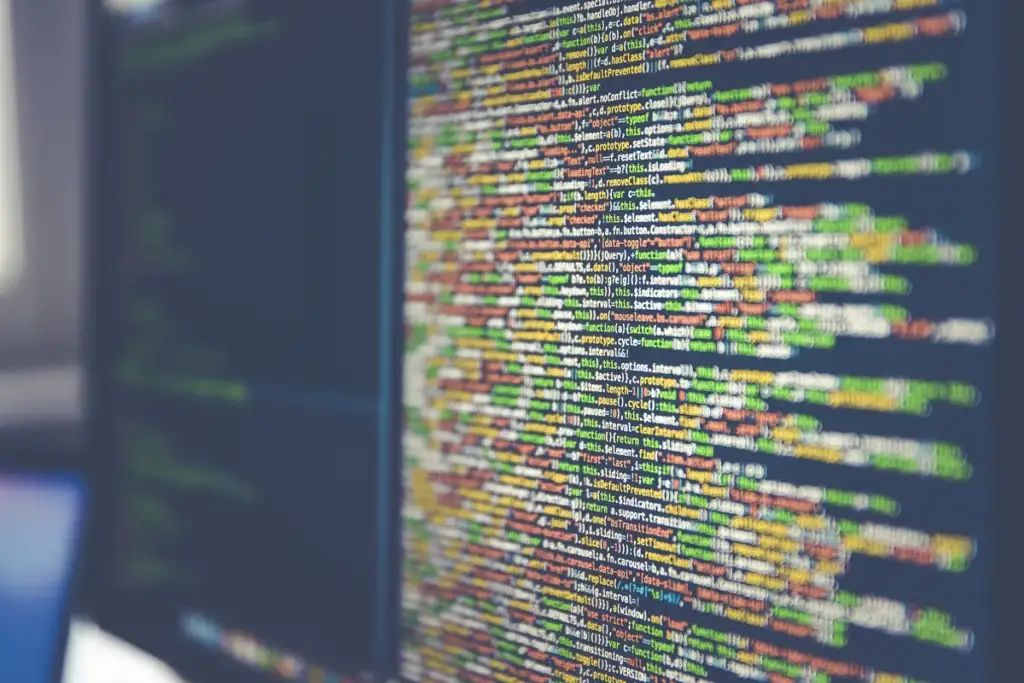
Photo credits: Man working on laptop in a modern cafe with coffee by Shixart1985, CC BY 2.0, via Wikimedia Commons. Code on computer monitor (Unsplash) by Markus Spiske markusspiske, CC0, via Wikimedia Commons.

Join the discussion