
An invoice number is the unique reference that identifies one invoice and no other. VAT and GST rules in the UK, the European Union and India require one, customers use it to match and pay what they owe, and a gap or duplicate in the sequence is among the first things a reviewer notices when looking through your records.
Updated September 2026. General information, not tax or legal advice. Rules vary by country.
What the rules say about an invoice number
- European Union. Article 226 of the VAT Directive lists the particulars every VAT invoice must carry, and point 2 requires “a sequential number that uniquely identifies the invoice”. The same point allows the sequence to be based on one or more series.
- United Kingdom. HMRC’s VAT Notice 700 requires VAT invoices to be numbered in sequence, and VAT Notice 700/21 confirms that the number can be based on one or more series, provided it uniquely identifies the document.
- India. Rule 46 of the CGST Rules requires a consecutive serial number of no more than sixteen characters, using letters, numerals, hyphens and slashes, in one or more series, unique for a financial year. Rule 53 applies the same format to credit and debit notes.
- United States. There is no federal format rule for private businesses. Federal contractors are a notable exception: under FAR 52.232-25, a proper invoice must show the invoice date and number, and the standard 30 day payment period runs from receipt of a proper invoice.
Outside these systems the details change, but the principle rarely does: one number, one document, in an order that can be followed.
5 habits for an invoice number system that holds up
- Never reuse a number. A cancelled invoice keeps its number. If it was sent, cancel it with a credit note rather than recycling the reference.
- Keep the sequence unbroken. If a number is skipped through a software error, write down why at the time. A note made the same day is far more convincing than an explanation reconstructed a year later.
- Use series on purpose. Separate series for branches, sales channels or years are permitted in the EU and UK, and India expressly allows several series. Give each series a fixed prefix so a number can never collide with another series.
- Keep it short and plain. India caps the length at sixteen characters, and structured e-invoicing formats read the number as a data field. Avoid spaces and unusual symbols.
- Assign the number at issue, from one system. Numbers taken from a spreadsheet by two people will eventually clash. Let one tool issue them.
Invoice number formats that work
Each of these is illustrative. The best format is the one your business will apply consistently.
- Simple running number: 000142. Easy, and enough for a small business with one sales channel.
- Year prefix: 2026-0142. Makes it obvious which year an invoice belongs to. Under a year-based series, 2027-0001 starts a new series and does not break the previous one.
- Financial year for India: INV/26-27/0042 is 14 characters, inside the sixteen character limit, and restarts each financial year.
- Branch or channel prefix: LDN-2026-0142 and WEB-2026-0142 are two different invoices in two series, and neither number is ever repeated within its own series.
Keep proforma invoices, quotes and credit notes in their own series with a distinct prefix. A proforma invoice numbered inside your real invoice sequence creates an apparent gap whenever the buyer does not proceed.
Choosing a starting number
None of the rules quoted above sets a starting value, so a new business can begin at 1, at 1001 or at 2026-0001. What matters is what happens next: each number follows the one before and appears only once. If you move from one invoicing tool to another, either carry the sequence across or start a clearly new series with a different prefix, and keep a note of the last number issued in the old system. That single line answers the obvious question about why the numbering changed.
Worked example: repairing a broken sequence
An invented example. A consultancy reviews September and finds two problems in invoices 2026-0101 to 2026-0110.
- 2026-0105 is missing. It was drafted, sent to the client by mistake, then deleted. The fix is to restore the record, issue a credit note that quotes 2026-0105, and file both. The sequence is whole again and the history is honest.
- 2026-0108 appears twice, for two different clients. The fix is to leave the first one alone, credit the second in full, and reissue that work as 2026-0111. Do not renumber invoices already sent.
The rule behind both repairs is the same: corrections are added, never erased.
Why the invoice number matters more with e-invoicing
Invoices are moving from documents people read to data that software reads. Belgium has required structured e-invoices between VAT-registered businesses since 1 January 2026. Germany requires businesses with turnover above 800,000 euros to issue them from 1 January 2027, and all businesses from 1 January 2028. At EU level, the VAT in the Digital Age package, adopted on 11 March 2025, brings digital reporting requirements for cross-border business sales from 1 July 2030. In each case the invoice number is one of the fields that ties a transaction together, so a duplicate becomes much harder to explain.
Where the number gets used
- Customers quote it on remittances, so a clear number speeds up payment matching.
- Credit notes must refer to it, so it has to be findable years later.
- Buyers match it against their purchase order. See our guide to purchase order vs invoice.
- Receipts can cite it when confirming payment, as our invoice vs receipt guide explains.
Our invoice generator lets you set a prefix and number for each invoice and lays out the other required fields, which removes most of the room for error on smaller volumes.
Common questions
What is an invoice number? A unique reference given to each invoice, normally in a sequence. VAT and GST rules in the UK, EU and India require one so each invoice can be identified.
Can I restart invoice numbers every year? EU and UK rules allow more than one series as long as each number stays unique, so a year prefix works. India requires numbers to be unique for a financial year.
Can an invoice number contain letters? Yes. India explicitly allows letters, numerals, hyphens and slashes up to sixteen characters, and EU and UK rules focus on uniqueness and sequence rather than character type.
What should I do if I skip an invoice number? Do not renumber sent invoices. Record why the number was skipped, and if a document with that number reached a customer, cancel it with a credit note.
Do I need to number invoices if I am not VAT registered? The VAT rules apply to registered businesses, but numbering still helps customers pay, lets you chase debts and keeps records orderly.
Sources and further reading
Where the figures and rules above come from, so you can check them:
- EU invoicing rules, Articles 219 to 240: Council Directive 2006/112/EC (EUR-Lex)
- VAT invoices, numbering and the 30 day issuing limit: HMRC VAT Notice 700
- Record keeping and invoice numbering series: HMRC VAT Notice 700/21
- Tax invoice particulars and serial numbers, Rule 46: CBIC, Government of India
- Prompt payment due dates and proper invoice contents, FAR 52.232-25: Acquisition.gov
- Belgium B2B e-invoicing from 1 January 2026: European Commission
- Germany B2B e-invoicing phase-in: European Commission
- VAT in the Digital Age package and its timeline: European Commission
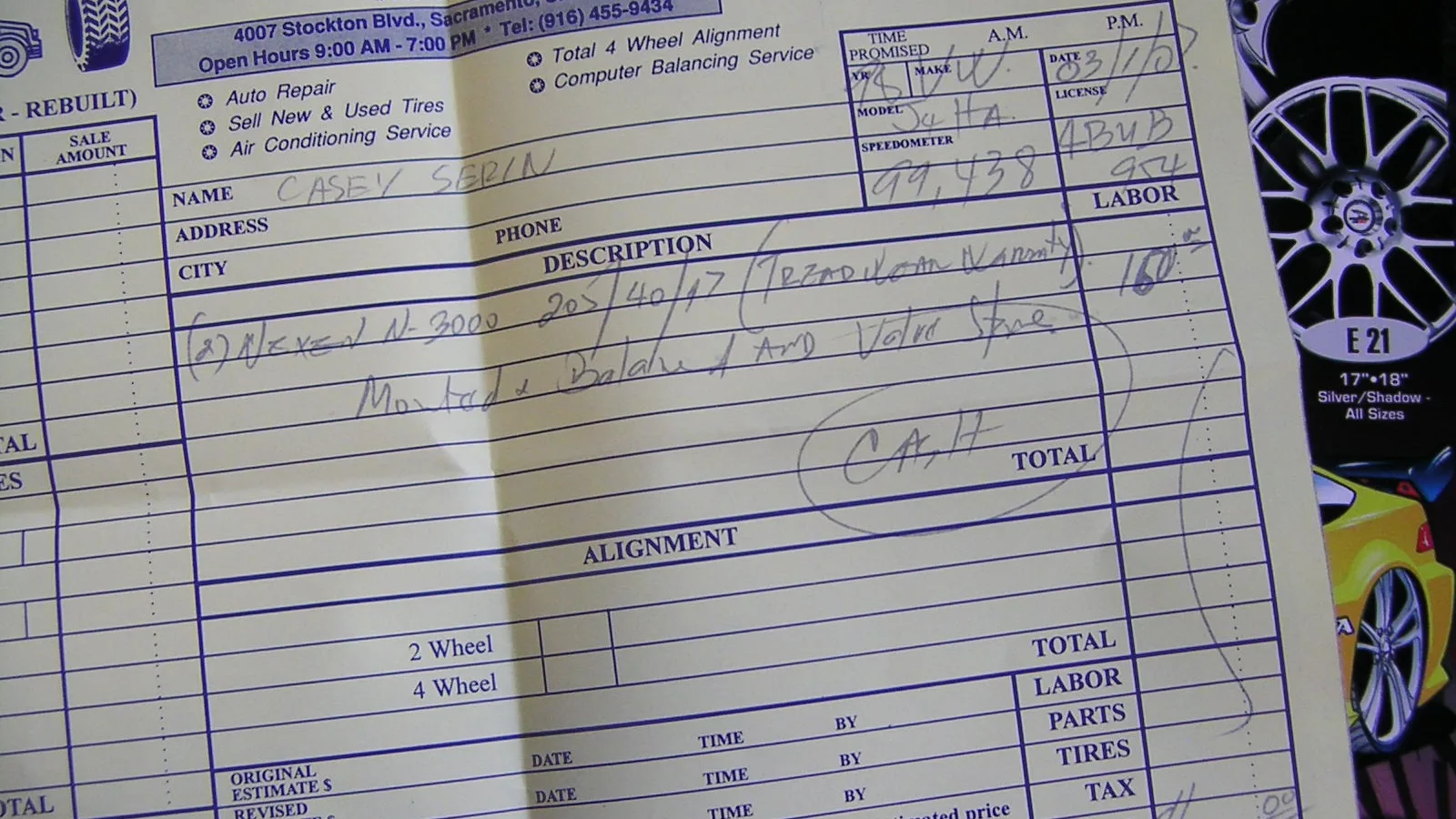
Photo credits: Volkswagen Invoice by Casey Serin, CC BY 2.0, via Wikimedia Commons. Accounting Finance by Wilfred Iven, CC0, via Stocksnap.

Join the discussion