

A Schengen visa is the short-stay permission that lets a traveller from outside Europe enter the 29 countries that have abolished checks at their shared borders. One application, at one consulate, covers the whole area. This guide sets out who needs one, what it costs, how long a decision takes, how the 90/180 day rule works, why applications are turned down, and where the EU’s two new border systems stand in October 2026.
Updated October 2026.
General information, not immigration advice; check your consulate.
Who needs a Schengen visa
The European Commission puts it plainly: citizens of certain non-EU countries must hold a short-stay visa when travelling to the Schengen area. Whether your nationality is on that list is decided by EU law, not by the country you want to visit, so the answer is the same whichever consulate you approach. Visa-exempt nationals do not apply at all; they will eventually need an ETIAS travel authorisation instead, which is a lighter process.
The Schengen area is also not the European Union. The Commission’s short-stay calculator manual lists 29 Schengen countries, including the non-EU members Iceland, Liechtenstein, Norway and Switzerland, and says stays in Cyprus and Ireland are not counted because they are not yet part of the area without internal borders. Stays in the United Kingdom do not count either, and Britain needs separate permission: see our guide to the UK ETA. Finally, a Schengen visa is permission to ask for entry, not a promise of it.
The categories you can apply for
- Uniform short-stay visa. The usual type, valid across the area within the 90/180 limit.
- Visa with limited territorial validity. Valid only for the countries named on it.
- Airport transit visa. Needed by some nationalities merely to pass through the international zone of a Schengen airport.
Frequent travellers can get longer validity: the Visa Code lets consulates issue multiple-entry visas of increasing length to applicants with a record of lawful use. For Indian nationals, the European External Action Service says a two-year multiple-entry visa can follow two visas lawfully used in the previous three years, normally followed by a five-year visa.
7 steps to a Schengen visa application
- Work out which consulate to use. Lodge the application at the consulate of the country you intend to visit. Visiting several? Apply where you will spend the longest time, or, if the stays are equal, at the first country you will enter.
- Get the timing right. No earlier than 6 months before the trip, and in at least 15 days before you travel.
- Book the appointment early. Availability, not the legal deadline, usually decides how soon you can apply.
- Complete the form and gather the documents. Consulates can ask for more than the standard list.
- Attend in person for biometrics. Fingerprints are collected when you submit, with exemptions for some categories of applicant.
- Pay the fee. It is not refunded if the application fails.
- Check the sticker when it comes back. Read the dates and the number of entries.
Documents, fees and how long it takes
The Commission lists the core supporting documents as a passport valid at least three months beyond your intended departure, a completed application form, an ICAO-standard photograph, medical insurance covering emergency care and repatriation, and evidence of the purpose of the stay, your financial means, accommodation and intention to return.
The current Schengen visa fees, also from the Commission, are 90 euro for adults and 45 euro for children aged six to under twelve, with under-sixes exempt. Visa facilitation agreements set 35 euro for applicants from Armenia, Azerbaijan and Belarus and 67.50 euro for applicants from Cabo Verde. Those figures took effect on 11 June 2024, when the adult fee rose from 80 euro and the children’s fee from 40 euro after the Commission’s periodic review, which weighs euro area inflation and the average salary of a civil servant in EU countries.
On timing, the Commission states that the normal processing time is 15 days, extendable to up to 45 days if a more detailed examination or additional documents are required. Treat 45 days as the number to plan around, not 15.

The 90/180 day rule, with a worked example
The limit on a short stay is no more than 90 days in any 180-day period. The Commission’s calculator manual explains what the word “any” does: it means a moving 180-day reference period, looking backwards from each day of the stay. Two further details settle most arguments. The date of entry is the first day of stay and the date of exit is the last, so both count. Periods spent under a residence permit or a long-stay visa are left out altogether.
Worked example. Suppose you visit from 10 to 24 January, which is 15 days, and again from 1 to 30 April, which is 30 days. You now want to arrive on 1 September. Count back 180 days from 1 September and the window opens on 6 March. The January trip sits outside that window, so it no longer counts. The April trip sits inside it, using 30 of your 90 days. You may therefore stay up to 60 days from 1 September, recounting on each later day as the window slides forward.
An absence of 90 uninterrupted days allows a new stay of up to 90 days, which is the cleanest reset. But if your Schengen visa authorises fewer than 90 days, the shorter figure binds you.
EES and ETIAS: where the systems stand
Both projects have slipped before, so the current position matters. The Entry/Exit System, which replaces passport stamping with a digital record of entries, exits and refusals for non-EU nationals on short stays, began a progressive roll-out on 12 October 2025 and, according to the Commission, became fully operational on 10 April 2026. It registers facial image, fingerprints and passport data.
ETIAS is not running. The Commission’s smart borders page states that ETIAS is currently not in operation and no applications for travel authorisations are collected at this point, and that the EU will give notice of the start date several months in advance. When it launches it will cover visa-exempt nationals of 59 countries travelling to 30 European countries, so it never replaces a Schengen visa. Our explainer on ETIAS and the new EU border checks tracks the detail.
Why a Schengen visa gets refused
Refusals arrive on a standard form with numbered boxes, and the version in the Commission’s visa handbook has sixteen. The grounds that recur most in ordinary tourist and family applications are these:
- Justification for the purpose and conditions of the intended stay was not provided, or the information submitted about it was not reliable.
- No proof of sufficient means of subsistence for the stay and the return journey, or of being able to acquire such means lawfully.
- Reasonable doubts about the reliability or authenticity of the supporting documents, or the truth of their contents.
- Reasonable doubts about your intention to leave before the visa expires.
- No adequate and valid travel medical insurance.
- You have already stayed 90 days in the current 180-day period.
- A Schengen Information System alert, or a member state objection on grounds of public policy, internal security, public health or international relations.
- A false, counterfeit or forged travel document.
The form adds that the person concerned may appeal as provided for in national law, and that each member state must state the appeal route and the time limit, so two people refused for the same reason can face different next steps.
Read practically, most refusals are evidential rather than punitive. Dates that match across the booking, the invitation and the form, bank statements that plainly cover the trip, and insurance issued before you apply remove several boxes at once. Keep copies, which helps if you lose your passport abroad.
Common questions
How much does a Schengen visa cost in 2026? 90 euro for adults, 45 euro for children aged six to under twelve, free under six, with reduced fees for a few nationalities.
How long does it take? A normal processing time of 15 days, extendable to up to 45 days where a more detailed examination or extra documents are needed.
How early can I apply? No earlier than 6 months before the trip, and at least 15 days before you travel. Appointments are often the real constraint.
Does the 90 day limit reset on 1 January? No. It is a moving 180-day window counted backwards from each day of your stay. A break of 90 uninterrupted days allows a fresh 90-day stay.
Sources and further reading
Where the figures and rules above come from, so you can check them:
- Deadlines, decisions, fees, documents: European Commission, Applying for a Schengen visa
- Fee rise on 11 June 2024: European Commission
- EES and ETIAS status: European Commission, Smart Borders
- The moving 180-day window: European Commission calculator manual
- Standard refusal form: Commission visa handbook, via the Danish Immigration Service
- Longer visas for Indian nationals: European External Action Service
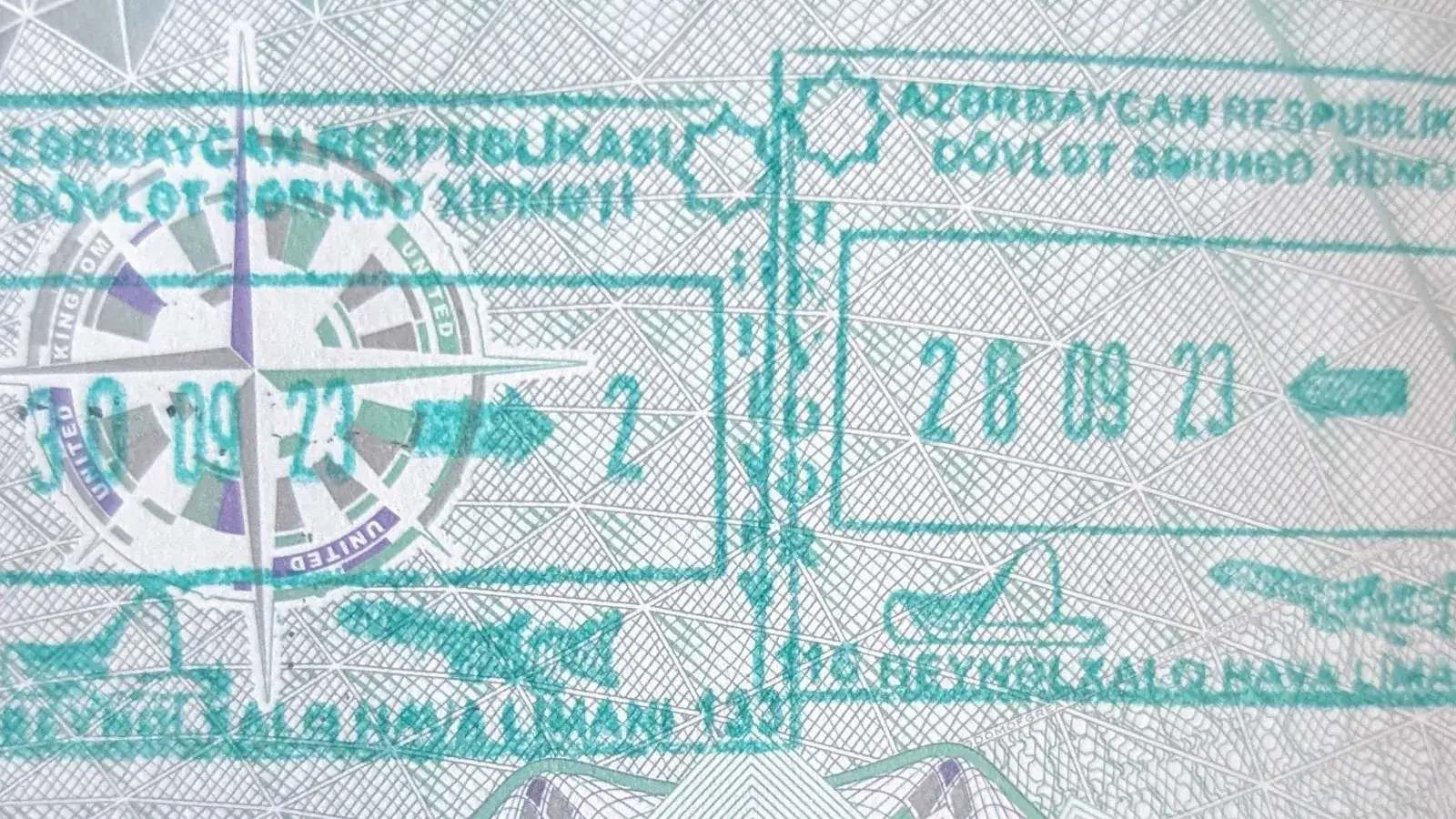
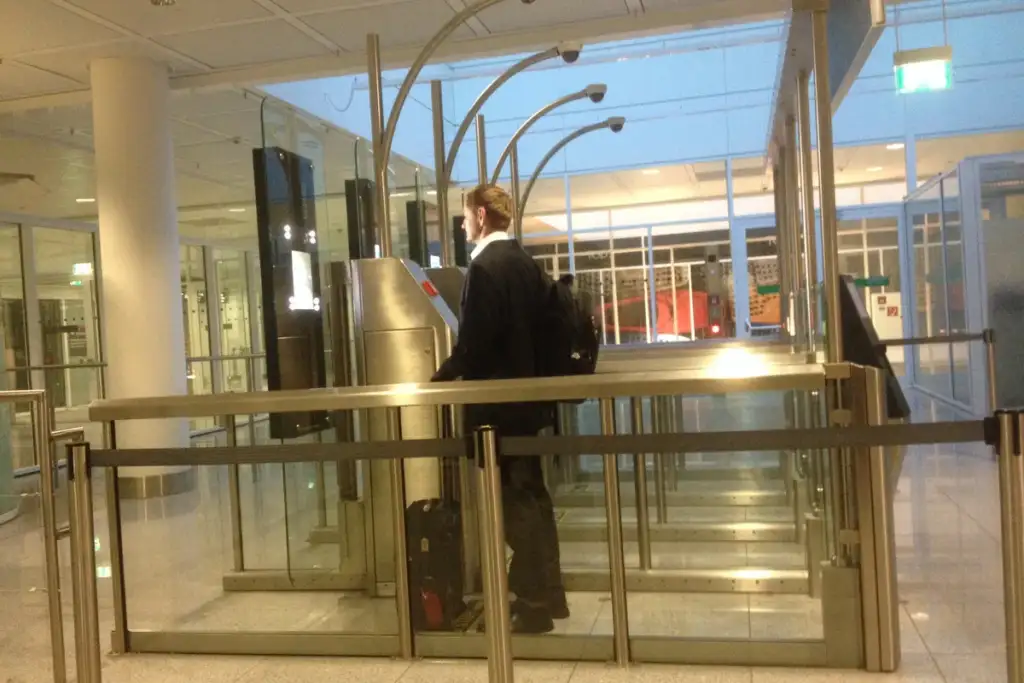
Photo credits: Azerbaijan 2023 passport stamps entry and exit by Ash Thawley, CC BY-SA 4.0, via Wikimedia Commons. Man using the automatic gate in Munich airport 02 by Subhashish Panigrahi, CC BY-SA 4.0, via Wikimedia Commons. Flutting European Union flag by Gioele Serra, CC BY-SA 4.0, via Wikimedia Commons.
Consulates often want documents in a particular format. Here is how to convert a PDF to Word cleanly.


Join the discussion