

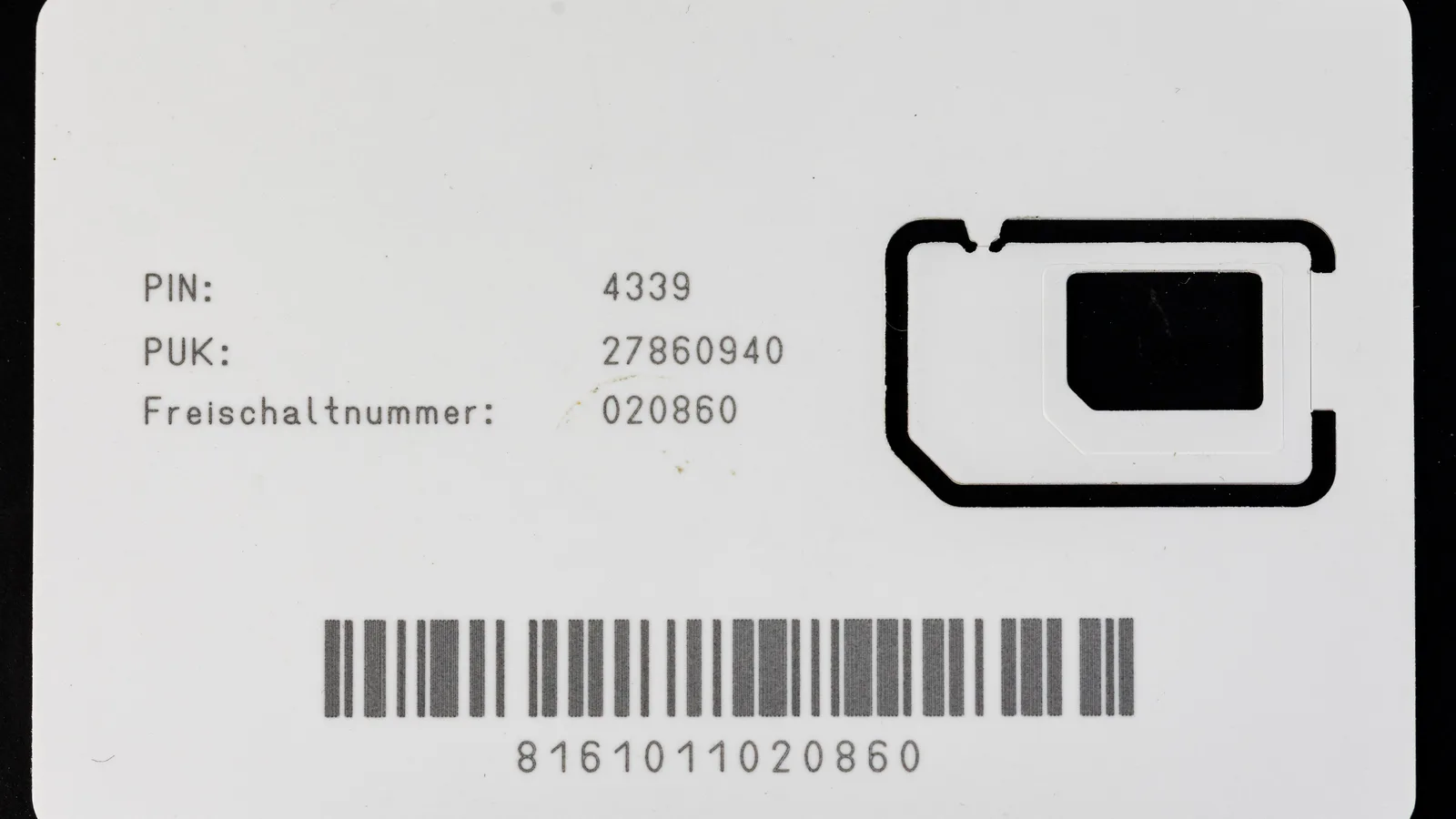
A SIM swap scam moves your mobile number onto a SIM card or eSIM that a criminal controls. From that moment, your calls and texts go to them, including the one-time codes banks, email providers and crypto exchanges send to confirm it is really you. The phone in your pocket still works as a device, but it has quietly stopped being your phone number.
Updated September 2026.

How a SIM swap works
The FBI’s Internet Crime Complaint Center describes this fraud as using simple social engineering against mobile providers to move a victim’s service to a device the criminal holds. Typically the criminal gathers personal details first, from data breaches, social media or phishing, then contacts the carrier pretending to be the customer and asks for a replacement SIM or an eSIM transfer. If the carrier’s checks rely on facts the criminal already has, the request goes through.
A close relative is port-out fraud. Here the criminal opens an account with a different carrier in the victim’s name and asks for the number to be transferred there. The effect is the same: the number, and everything tied to it, changes hands. If you are unsure how eSIMs change this, our explainer on how eSIMs work covers the basics.
Why a SIM swap does so much damage
A phone number has become a master key. Many services use it to reset passwords or to send login codes, so whoever receives your texts can often take over your email first and then everything linked to that email. The FTC points out that text message verification may not stop an account takeover once the SIM has been swapped. UK fraud prevention body Cifas makes the same point: control of the number lets criminals intercept the codes that protect other accounts.
How big the problem is
Reported figures are only the visible part, because many victims report to their bank or carrier rather than to the police. Even so, the trend is clear.
- United States: the FBI’s 2025 Internet Crime Report recorded 971 SIM swap complaints with losses of about $17.4 million, compared with 982 complaints and $26.0 million in 2024, and 1,075 complaints and $48.8 million in 2023. People aged over 60 filed 222 of the 2025 complaints, losing about $6.7 million.
- United Kingdom: Cifas reported almost 3,000 unauthorised SIM swap cases on its National Fraud Database in 2024, a rise of 1,055 percent on the previous year. Its Fraudscape 2026 report, published in March 2026, found a further 38 percent increase in 2025, driven by stolen personal data and more automated attacks.
Regulators have responded. In November 2023 the US Federal Communications Commission adopted rules requiring wireless carriers to use secure methods of confirming a customer’s identity before a SIM change or number transfer, and to notify customers when such a request is made.
5 warning signs of a SIM swap
- Your phone suddenly loses service in a place where it normally works, showing no signal or emergency calls only, and a restart does not fix it.
- Your carrier tells you a SIM or eSIM was activated on a new device that you did not set up.
- You receive a notice about a number transfer or an account change you did not request.
- Verification texts stop arriving, or you are locked out of accounts that rely on codes sent to your phone.
- Emails report password resets or new sign-ins you did not make, often for your email, bank or crypto accounts.
If you notice the first sign together with any of the others, treat it as urgent. Speed matters, because criminals usually move money within hours.
How to protect your number
- Add a PIN or passcode to your mobile account. The FTC recommends this so that changes need something a criminal is unlikely to know. Choose one unrelated to your birthday or address.
- Ask your carrier about SIM and port-out locks. Many providers let you block SIM changes or number transfers until you remove the lock yourself.
- Move important accounts off text message codes. Use an authenticator app, a security key or passkeys, which do not depend on your number.
- Use unique passwords stored in a password manager, so one leaked password cannot unlock several accounts.
- Share less personal information publicly, such as your full address, date of birth and phone number, since these answer security questions.
- Ignore unexpected requests for codes or account details, and contact companies through numbers or websites you already know. Our guide to spotting a phishing email shows how these first approaches often look.
Keep a way back into your accounts
The hardest part of recovery is often proving who you are when your phone number no longer works for you. Prepare now, while everything is under your control. Save the backup or recovery codes that email and banking services offer, and store them in your password manager or on paper somewhere safe. Add a second recovery email that does not depend on your mobile number. If you use an authenticator app, turn on its backup or add a second device, so losing access to one phone does not lock you out. Finally, keep your carrier account login details written down, because you may need to sign in from a different device in a hurry.
What to do if you are a SIM swap victim
- Contact your carrier immediately, using another phone or its online chat, and ask it to restore your number and lock the account.
- Secure your email first, because it is usually the route to everything else. Change the password and remove unknown devices and recovery options.
- Call your bank and card providers to flag possible fraud and check recent transactions.
- Change passwords on other key accounts and review their security settings. Our step-by-step guide to recovering a hacked account covers the order to work in.
- Report it. In the US, the FTC points victims to IdentityTheft.gov, and complaints can be filed with the FBI’s IC3. Elsewhere, use your national fraud reporting service.
Common questions
What is SIM-swap fraud? It is a fraud in which a criminal persuades a mobile carrier to move your phone number to a SIM or eSIM they control, so they receive your calls, texts and security codes.
How do I know if my number has been taken over? The clearest sign is a sudden loss of mobile service, often combined with a carrier message about a new SIM or device, missing verification texts, or alerts about password changes you did not make.
Can an eSIM be swapped too? Yes. The fraud targets the phone number held by the carrier, not the physical card, so an eSIM number can be moved to another device in the same way.
Does a carrier PIN stop this kind of fraud? It makes it much harder, because the request should need information the criminal does not have. Combine it with a SIM or port-out lock and app-based sign-in codes for stronger protection.
Sources and further reading
Where the figures and rules above come from, so you can check them:
- 2025 Internet Crime Report, SIM swap complaints and losses: FBI IC3
- SIM swap scams: how to protect yourself: Federal Trade Commission
- Order on the SIM swap and port-out fraud rules (DA 24-649): Federal Communications Commission
- 1,055% surge in unauthorised SIM swaps (May 2025): Cifas
- Fraudscape 2026 findings (March 2026): Cifas
Photo credits: Full-size SIM card with PIN and PUK-2459 by Raimond Spekking, CC BY-SA 4.0, via Wikimedia. person holding smartphone their hand by Rawpixel, CC0, via Rawpixel.
This is why text message codes are the weakest option. See our guide to two-factor authentication.



Join the discussion