
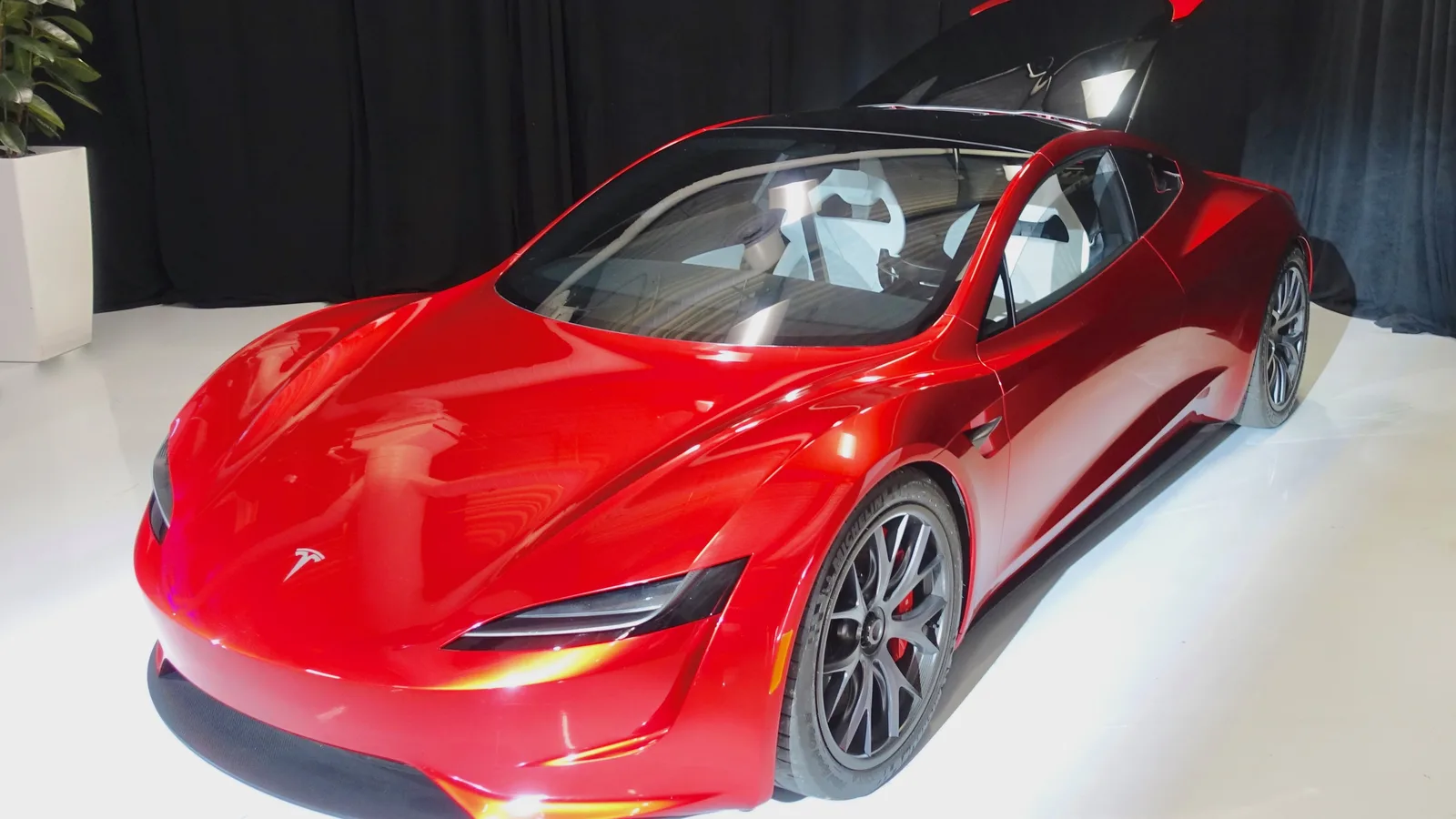
The Tesla Roadster flying car is the version of the new Roadster that actually leaves the ground. It is not the one most buyers will get. This guide walks through the three versions, the numbers Tesla has published, and the parts nobody has confirmed yet.
Updated October 2026. This story is moving quickly, so check the official pages linked at the end before you rely on any detail here.
1. Three versions, and only the top one flies
Tesla has described three trims. The names matter, because only one of them does the stunts you saw in the video.
- Performance. The road car. NBC News calls it road ready. It gets the suction fan, not the thrusters.
- Thrust. NBC calls this the race ready one. It adds thrusters at the rear to help it accelerate.
- Rocket. The flying one. NBC calls it air ready. It has cold gas thrusters around the edge of the car, seats one person, and is offered by invitation only.
CBS News describes the Rocket as the one with the full flight system. So if you want the Tesla Roadster flying car specifically, you cannot simply order it. You have to be invited.
2. What the thrusters actually are
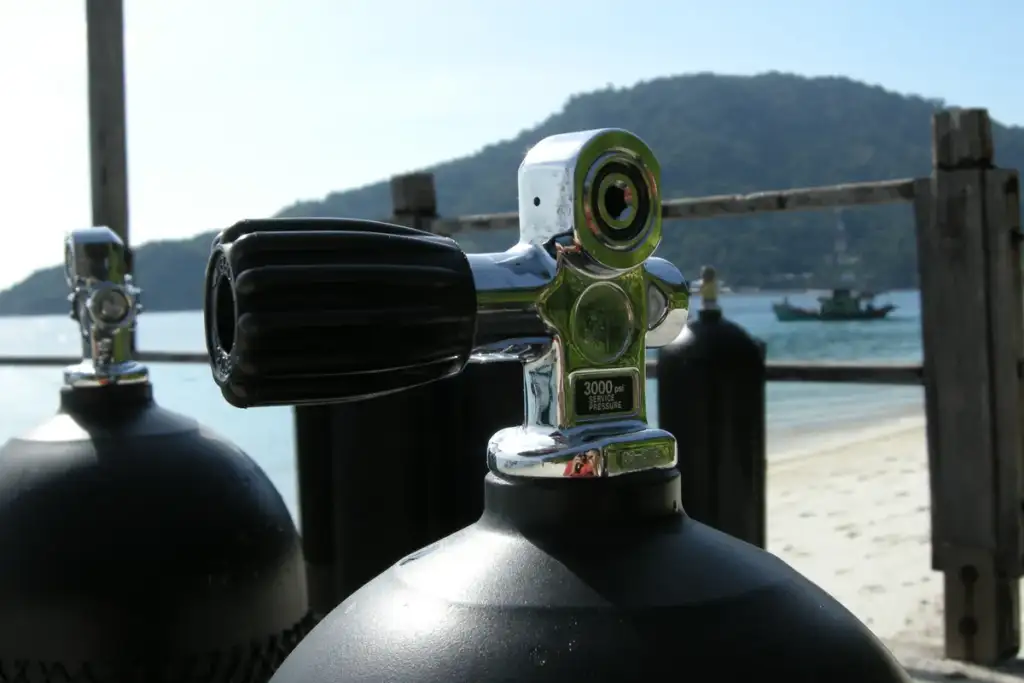
A cold gas thruster sounds like science fiction. It is simpler than that. It is a tank of compressed gas and a nozzle. Open the nozzle and the gas rushes out, and the push moves the car the other way. There is no burning and no flame, which is why it is called cold.
Tesla says the thrusters refill themselves. CBS reported Musk describing ultra high pressure air tanks. SpaceX builds pressure tanks and thrusters for rockets, and Musk said the car is what happens when “the world best car company” works with “the world best rocket company.”
3. The published numbers
Here is everything with a figure attached, and who said it:
- 0 to 60 mph in 0.81 seconds, from Tesla via NBC News.
- Around 300 miles of range, from Musk via NBC News. NBC notes this is less than half what was first promised.
- 27 feet of jump height on the barrel roll, from Tesla.
- Production in 2028, from Musk, reported by both NBC and CBS.
Notice what is missing. There is no confirmed top speed, no power figure, no battery size and no final price. CBS states plainly that prices were not announced.
4. The deposit numbers do not agree
Be careful here, because this is where a lot of posts get it wrong. Two serious news organisations reported different numbers on the same day.
- NBC News reported a $50,000 deposit for the base car, and $250,000 for the Thrust version.
- CBS News reported a $5,000 deposit for a non flying model, and said the Thrust model cannot currently be reserved at all.
Both said they were reading Tesla own website. We could not check the page directly, because it blocks automated visits. So the sensible move is to open Tesla page yourself before sending anyone any money.
5. The rules have not caught up
Tesla says the Rocket version is not approved for public roads. The FAA told CBS News that the vehicle does not meet its definition of an aircraft. A senior Transportation Department official told CBS they were sceptical it would really take off, and also said there was no clear answer about who regulates it.
That leaves the car in an odd gap. It is not a normal car when it is in the air, and it is not a plane either. Our guide to whether flying cars are real explains why that gap is so hard to close.
6. The history is the best guide
This Roadster was first shown in 2017. Production was promised for 2020. It did not arrive, and Tesla kept taking reservations through the delay. The car finally appeared on stage in October 2026.
None of that makes the jump fake. It was livestreamed and the car really left the ground. It just means a 2028 date is a plan, not a promise. For the event itself and what the stunt involved, see our guide to the Tesla flying car.
What a Tesla Roadster flying car would still need
Suppose Tesla builds exactly what it showed. A few hard problems sit between that and anyone using it. None of them is impossible, and none of them is small.
- Somewhere legal to do it. If it is not approved for public roads in flying form, the obvious place is private land or a track.
- Gas supply. Thrusters use stored compressed air. Tesla says the system refills itself, but how many jumps you get between refills has not been published.
- Landing repeatably. The demonstration landings were on a prepared surface in a controlled place. Real roads are uneven, wet and busy.
- Crash protection. Musk said it is “not necessarily a safety optimized car”. Normal road cars have to pass crash tests.
Should you put money down?
That is your call, but two facts are worth weighing. Production is set for 2028, and this car has slipped before, from a 2020 promise made in 2017. Money placed as a deposit is money you cannot use for years.
If you are interested, read the terms on the reservation page itself, especially whether the deposit is refundable. Do not rely on a figure quoted in a news story, including this one, because the two major reports disagreed by a factor of ten on the day.
What each version is really for
The three names describe three different products that happen to share a shell. Thinking about them that way makes the invite-only part less strange.
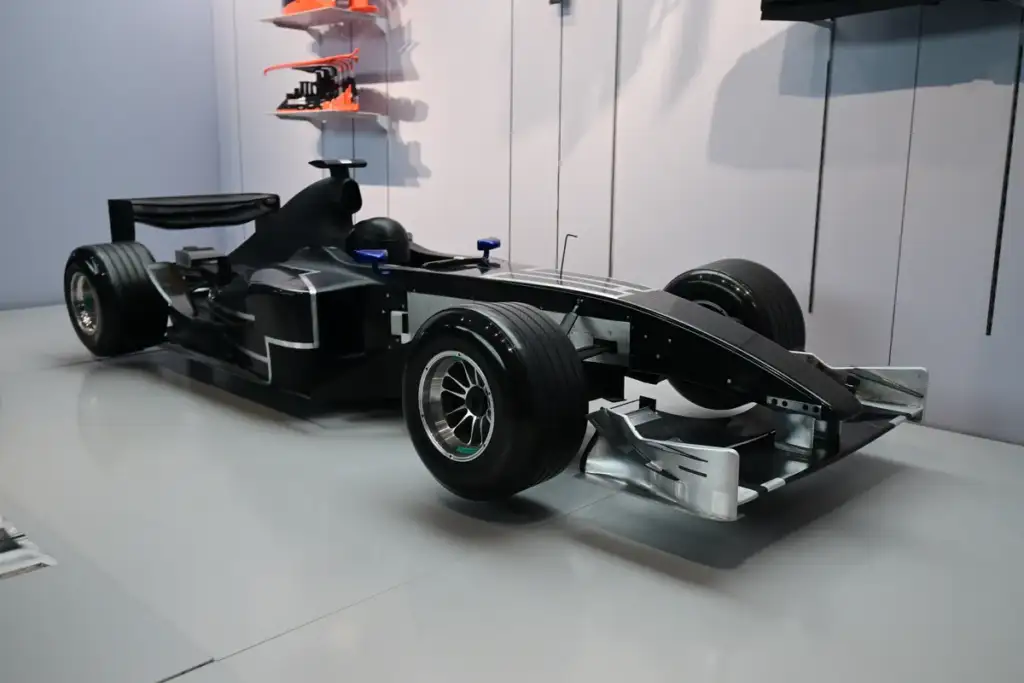
Performance is a road car. It has the suction fan, which is a handling feature rather than a flying one: it pulls the car down onto the surface so the tyres grip harder. Downforce is normally produced by wings and body shape, and those only work once you are moving fast. A fan works at any speed, which is why the idea keeps reappearing in racing.
Thrust adds rear thrusters. Pointed backwards, a burst of gas is simply extra shove, which is how a car gets to 60 mph in under a second. This is the version aimed at straight line and track numbers.
Rocket puts thrusters around the car so it can control its attitude in the air, which is what the barrel roll needs. It seats one person. That detail tells you a great deal: a single seat means weight is critical and that this is a demonstration machine, not transport.
What SpaceX actually contributes
Musk described the car as what happens when the world best car company works with the world best rocket company. Stripped of the sales language, there is a real engineering point underneath.
Rockets are mostly an exercise in holding gas under enormous pressure safely, releasing it precisely, and keeping a vehicle pointed the right way while it happens. Those are exactly the three problems a jumping car has. Pressure vessels that will not fail, valves that open in milliseconds, and control software that decides which thruster fires and for how long.
So the parts of this that look most impressive, the soft landing and the roll, are the parts where rocket experience transfers directly. The parts that remain hard, like doing it on a public road next to other traffic, are not engineering problems at all.
Reading the reservation page properly
If you get as far as Tesla reservation page, a few things are worth checking carefully, because the reporting on the day disagreed and we could not verify it automatically.
- Is the deposit refundable? This is the single most important line and it is not something to assume.
- Which version are you reserving? The flying one is invite only, so a reservation is probably not for the car in the video.
- What is the stated delivery expectation? Production is said to begin in 2028, which is not the same as a car arriving in 2028.
- What does the page say about road approval? Both NBC and CBS report Tesla own site saying the Rocket version is not approved for public roads.
None of this is a reason not to reserve one if you want to. It is a reason to read rather than skim, given the sums involved and the fact that two major news organisations published deposit figures ten times apart on the same day.
What is still unknown about the Tesla Roadster flying car
Being clear about the gaps is more useful than repeating the specifications, because the gaps are where the risk sits for anyone thinking about reserving one.
- No price. CBS News states plainly that prices were not announced.
- No confirmed top speed. Only Musk aspiration of reaching about halfway to the speed of sound, which NBC renders as roughly 383 mph.
- No power, battery or weight figures in either report.
- No answer on gas endurance. How many jumps between refills has not been published.
- No regulator. CBS reported it was not clear which agency would oversee it.
That is a long list for a product taking reservations. It is not unusual for a car shown years before production, but it is worth seeing written down.
How the suction fan differs from the thrusters
These two systems get muddled together in coverage, and they do opposite jobs.
The fan pulls the car down. It lowers the pressure underneath so the car is pressed onto the road, which makes the tyres grip harder for cornering and braking. It is a driving aid, and it works at any speed, unlike a wing which needs airflow.
The thrusters push the car up and around. They are only useful when it is already leaving the ground, and they are what makes the Tesla Roadster flying car land flat instead of nose first.
So the base Performance car gets the fan and stays firmly on the road. Only the Rocket version gets the full set of thrusters. If what appeals to you is the cornering rather than the stunts, the version you want is the ordinary one.
Judging the 2028 date
Every specification above depends on the car existing. The published target is production beginning in 2028, and the most useful context is this car own record.
It was first shown in 2017 with production promised for 2020. That did not happen. The company continued taking reservations throughout, and the range figure Musk gave in 2026, around 300 miles, is less than half what was promised at the original announcement according to NBC News.
A delayed car is not a scandal; most ambitious vehicles slip. The point is simply that for the Tesla Roadster flying car specifically, published dates and published figures have both moved before, so neither should be treated as settled.
What would change the picture
Rather than argue about whether the demonstration counted, it is more useful to name the things that would settle it. Each one is a public event you would be able to see for yourself.
- A journey. Not a jump, but the car leaving one place and arriving at another without touching the ground in between.
- A published price, with the flying package listed as a line on the order page rather than described in a presentation.
- A regulatory filing. Any machine meant to carry a person through the air has to be defined as something by the FAA before it can be sold as that thing.
- A second car. One prototype doing a stunt is a prototype. Two cars doing it on different days is the beginning of a product.
Until at least one of those happens, the Tesla Roadster flying car is best described as a working demonstration of a feature, which is genuinely impressive and is not the same as a car you can buy and use.
The short version
Everything above, in five lines.
- Three versions: Performance drives, Thrust accelerates, Rocket does the stunts.
- Only Rocket flies, it seats one person, and it is offered by invitation only.
- The fan pulls the car down for grip. The thrusters push it up and around.
- No price, no confirmed top speed, and reported deposits disagreed tenfold.
- Production is targeted for 2028, and this car has slipped before.
Common questions
Can anyone buy the Tesla Roadster flying car? No. The flying version, called Rocket, is offered by invitation only and seats one person.
What is the difference between Thrust and Rocket? Thrust adds rear thrusters to help it accelerate. Rocket has thrusters around the car and can do the airborne stunts.
How much is the deposit? Reports disagree. NBC News said $50,000 for the base car, CBS News said $5,000. Check Tesla own page before paying anything.
Does it have wings? No. It uses cold gas thrusters, which push the car using blasts of stored compressed air.
When does it come out? Musk said production begins in 2028. No release date for customers has been given.
A buyer checklist for the Tesla Roadster flying car
If you are seriously considering a reservation, these are the things worth settling before anything else. None of them is answered by the launch video.
- Which version am I actually reserving? The flying one is invite only. A standard reservation is for a road car.
- Is the deposit refundable, and on what terms? Read the page itself. Two major outlets published figures ten times apart on launch day.
- What am I promised, and what is aspiration? The 0.81 second sprint and roughly 300 mile range are stated. The 383 mph figure is a stated ambition, not a specification.
- Where could I legally use the flying features? Tesla own site says the Rocket version is not approved for public roads.
- How long am I prepared to wait? Production is targeted for 2028, on a car first shown in 2017 with a 2020 promise.
Answer those five honestly and the decision usually makes itself. The Tesla Roadster flying car is a remarkable piece of engineering and an uncertain purchase, and both of those can be true at the same time.
Sources and further reading
Where the figures and rules above come from, so you can check them:
- The ramp, the five cars, the 27 foot jump and the 0.81 second sprint: NBC News
- The quotes from the event, and what the FAA said about it: CBS News
- Tesla own page for the car, where reservations are taken: Tesla, Roadster
- Where real air taxi approval has actually reached: FAA, Air Taxis
Photo credits: Tesla Roadster 2.0 (47619421652) by Steve Jurvetson from Menlo Park, USA, CC BY 2.0, via Wikimedia Commons. Perhentian Islands, Scuba diving tank, Diving gas cylinder, Malaysia by Vyacheslav Argenberg, CC BY 4.0, via Wikimedia Commons. Tesla Factory, Fremont (CA, USA) (8763130149) by Maurizio Pesce from Milan, Italia, CC BY 2.0, via Wikimedia Commons. Wind Tunnel Model Car at Formula 1 Exhibition, London by Hullian111, CC BY-SA 4.0, via Wikimedia Commons. Electric car charging points – geograph.org.uk – 7322507 by Philip Halling, CC BY-SA 2.0, via Wikimedia Commons.

Join the discussion