

The most reliable ways to save money on groceries are planning what you will eat, comparing prices by unit rather than by pack, and throwing less food away. Food prices are still rising in 2026, though more slowly than a few years ago, so small habits applied every week add up to a noticeable sum over a year.
Updated September 2026. General information, not financial advice. Price figures are the latest official releases available on 15 September 2026.
Grocery prices in 2026: the latest figures
Official data shows food inflation has eased but not reversed:
- United States: the Bureau of Labor Statistics reported on 11 September 2026 that food at home prices were 2.2 percent higher in August than a year earlier, against 3.4 percent for all items.
- US outlook: the USDA Economic Research Service update of 25 August 2026 predicts food at home prices will rise 2.5 percent across 2026, within a range of 1.7 to 3.3 percent. It expects beef and veal to rise 9.8 percent and fresh vegetables 5.9 percent, while egg prices are forecast to fall 30.8 percent.
- United Kingdom: the Office for National Statistics reported on 19 August 2026 that food and non-alcoholic drink prices rose 1.3 percent in the year to July, down from 1.7 percent in June and the lowest rate since September 2021.
The category detail is useful. When one food rises much faster than the average, as beef is forecast to in the US, switching some meals to cheaper proteins saves more than the headline rate suggests. Our explainer on how tariffs affect prices covers one of the forces behind imported food costs.
Food waste is the hidden grocery cost
Before cutting what you buy, cut what you bin. WRAP, the UK waste charity, reported in March 2026 that UK households throw away 4.4 million tonnes of edible food a year, worth about 17 billion pounds, or roughly 1,000 pounds for a household of four. In the US, the Food and Drug Administration estimates that confusion over date labels accounts for about 20 percent of consumer food waste.
That makes waste reduction one of the few ways to save money on groceries without changing what you eat at all.
10 practical ideas to save money on groceries
- Plan meals before you shop. Decide the week’s main meals, then write a list of exactly what they need. The FDA recommends planning meals and using a shopping list as a first step against waste.
- Check the fridge, freezer and cupboards first. WRAP suggests this simple check to avoid buying what you already have.
- Compare the unit price, not the pack price. Shelf labels in many countries show a price per kilo, litre or item. A larger pack is only better value if the unit price is lower and you will use it all.
- Try own-brand products. Swap one branded staple at a time, such as pasta, rice or tinned tomatoes, and keep the swaps you are happy with.
- Be careful with bulk buys. The FDA advises caution with bulk purchases of food that has a short shelf life, since waste cancels the discount.
- Buy imperfect produce. The FDA points out that fruit and vegetables with cosmetic flaws are fine to eat when they are not damaged or rotten, and they are often sold for less.
- Understand date labels. UK government guidance explains that a best before date is about quality, and food is usually safe to eat afterwards, while a use-by date is about safety. Food can still be eaten after its use-by date if it was cooked or frozen on or before that date. Labelling terms differ between countries, so check the rules where you live.
- Freeze before it spoils. WRAP recommends freezing food that is close to its use-by date. Bread, cooked grains and many leftovers freeze well.
- Hold a use-it-up meal each week. WRAP calls this a “fridge freestyle” night: cook with what needs eating instead of buying something new.
- Store food at the right temperature. The FDA recommends keeping the fridge at 40 degrees Fahrenheit (about 4 degrees Celsius) or below and the freezer at 0 degrees Fahrenheit, which helps food last to its date.
Shopping habits that protect a food budget
- Set a weekly figure. A fixed grocery amount turns price rises into a visible choice rather than a slow drift.
- Shop with a full stomach and a list. Unplanned items are where budgets most often slip.
- Watch offers, not just prices. A multi-buy on food you would not otherwise buy is extra spending, not a saving. Our guide on how to shop sales events explains how to tell real discounts from marketing.
- Review the receipt. Once a month, check which items you bought and did not use, and leave them off the next list.
Groceries are one of several household costs worth reviewing together. If subscriptions are also stretching the budget, our guide to cutting streaming costs uses the same audit-then-trim approach.
Where to start this week
Pick three ideas rather than all ten. For most households the best starting trio is a meal plan with a list, a quick check of what is already at home, and one use-it-up meal. Those three reduce both overbuying and waste, the two leaks that official figures point to, and they cost nothing to try. Add unit price comparisons and own-brand swaps once the habit is in place, and to save money on groceries over the long term, repeat the receipt review every month.
Common questions
What is the easiest way to save money on groceries? Plan meals for the week and shop from a list. It reduces impulse buys and food waste together, and it needs no special apps or cards.
Are grocery prices still rising in 2026? Yes, but more slowly. US food at home prices were 2.2 percent higher in August 2026 than a year earlier, and UK food prices rose 1.3 percent in the year to July 2026.
Is it safe to eat food after the best before date? UK guidance says food is usually safe after its best before date but may be lower in quality. A use-by date is about safety, so do not eat food after it unless it was frozen or cooked by that date.
Is buying in bulk always cheaper? No. It is only cheaper if the unit price is lower and you use all of it. The FDA advises caution with bulk buys of foods that do not keep long.
How much food does a typical household waste? WRAP estimates a UK household of four wastes about 1,000 pounds of edible food a year. Reducing that is one of the simplest ways to cut grocery spending.
Sources and further reading
Where the figures and rules above come from, so you can check them:
- Food Price Outlook, August 2026 update: USDA Economic Research Service
- Consumer Price Index summary, August 2026: US Bureau of Labor Statistics
- Consumer price inflation, UK: July 2026: Office for National Statistics
- UK household food waste figures, March 2026: WRAP
- Tips to reduce food waste and date label confusion: US FDA
- Best before and use-by dates explained: GOV.UK
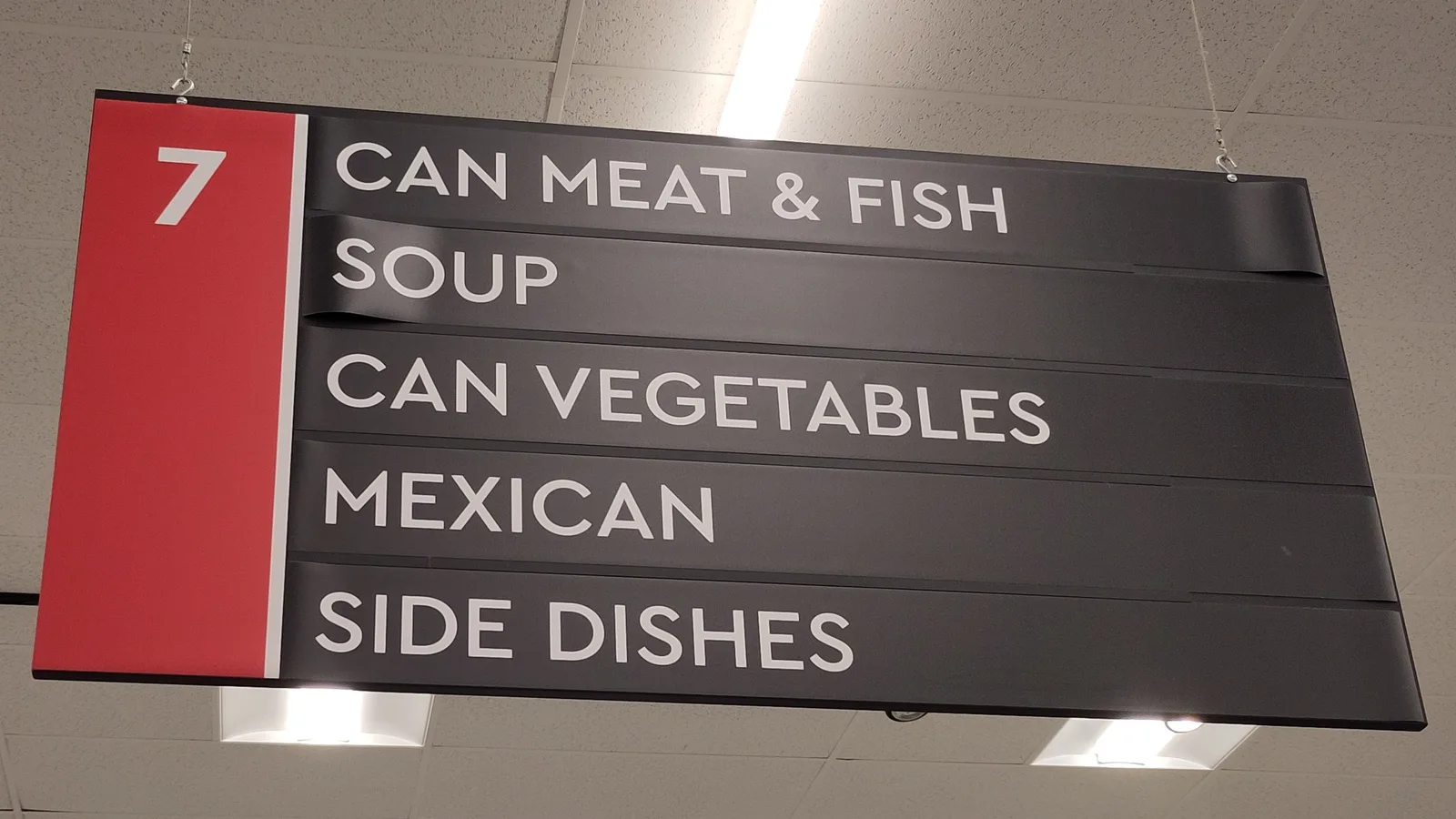
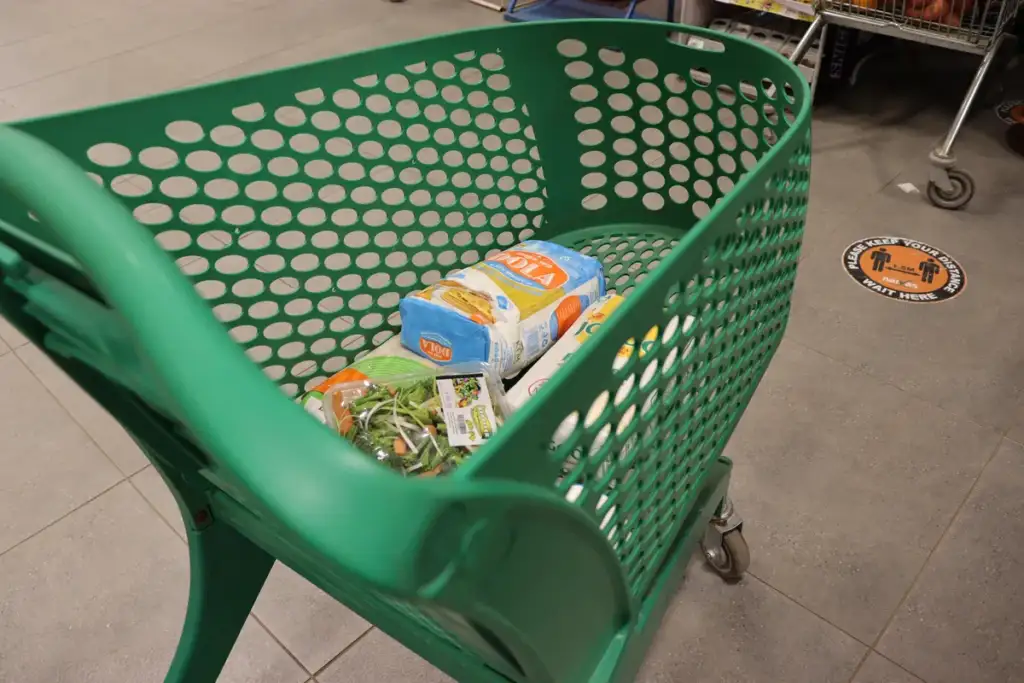
Photo credits: Supermarket aisle sign in Calgary, Alberta, Canada by Alarichall, CC0, via Wikimedia. Shopping Cart Supermarket by safaritravelplus, CC0, via Wikimedia.
The same discipline applies to sale season. Our guide to Black Friday deals shows how to tell a real discount from a fake one.
Cooking in batches is where most of the saving actually lands. Our guide to meal prep ideas covers the method and the food safety rules.



Join the discussion